
Last updated November 16, 2026
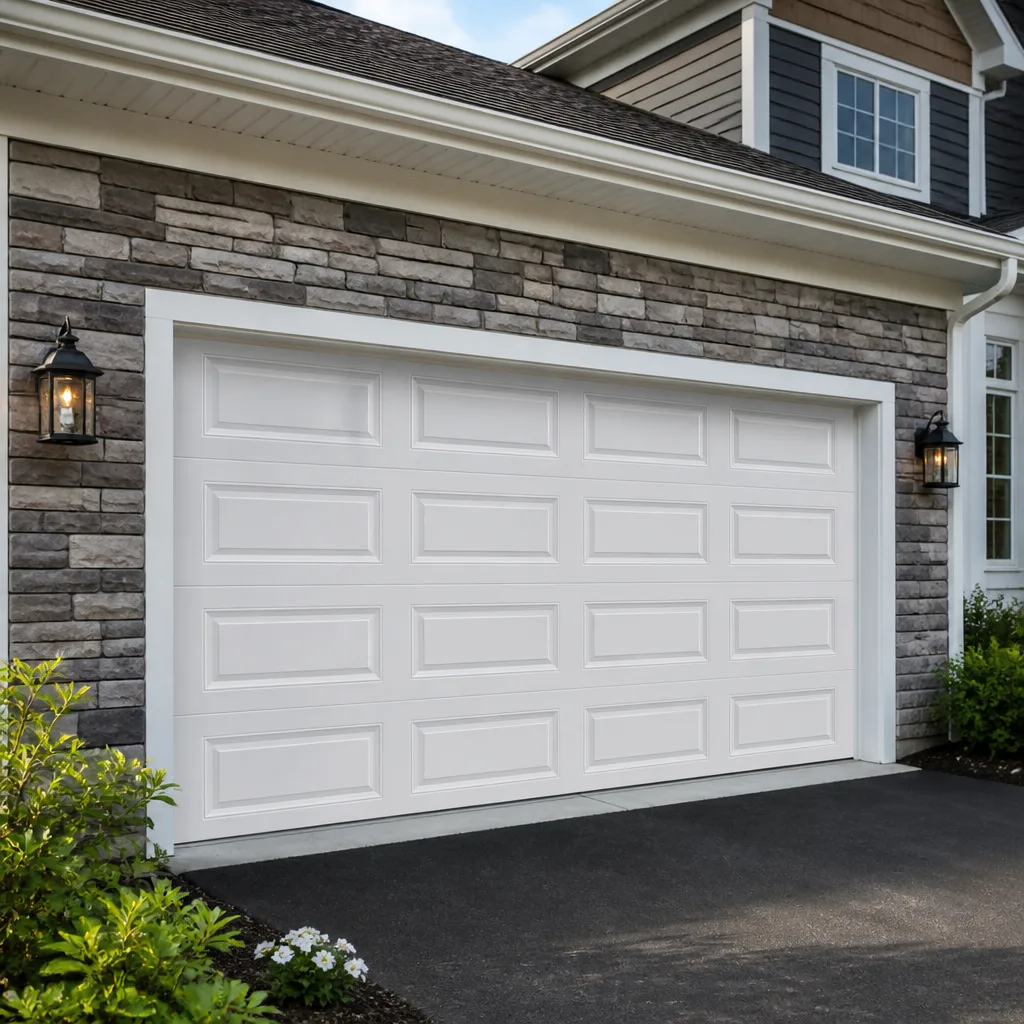 Raised-panel steel
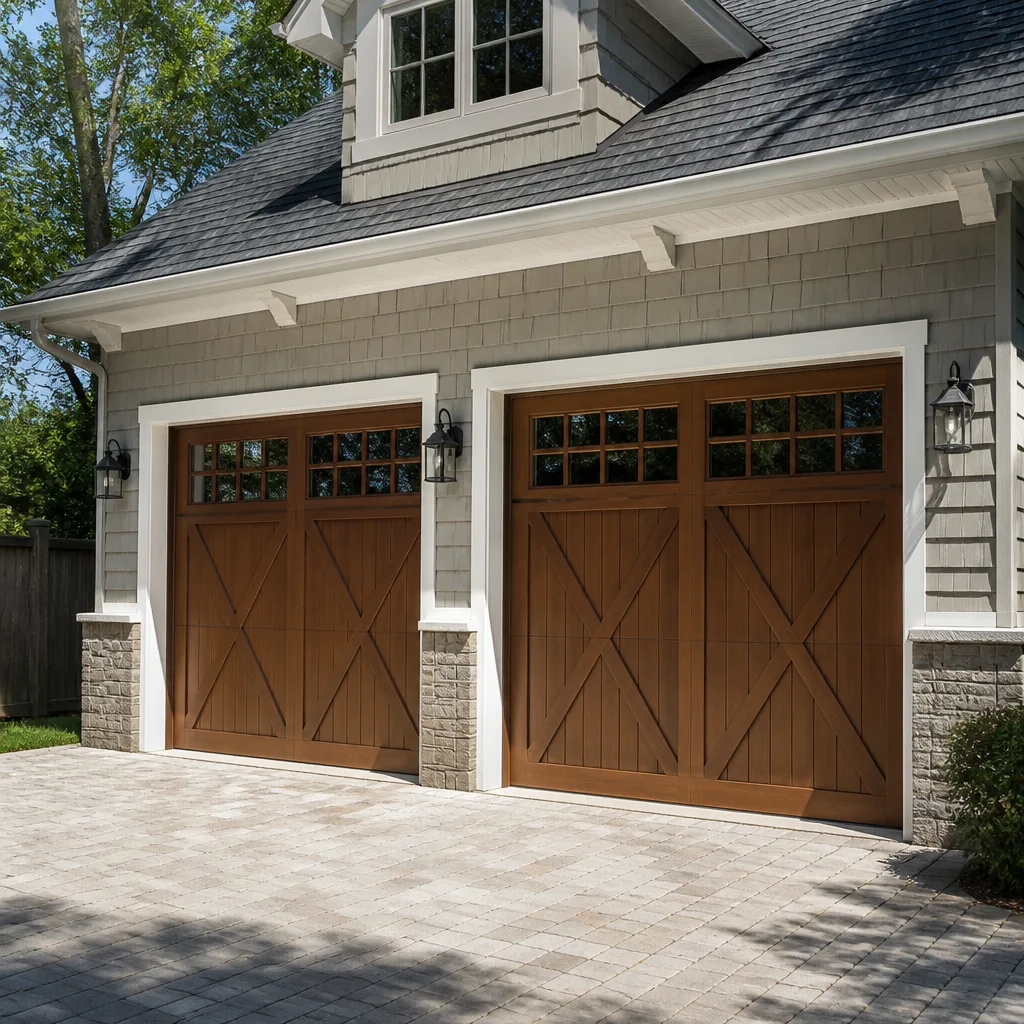 Carriage house
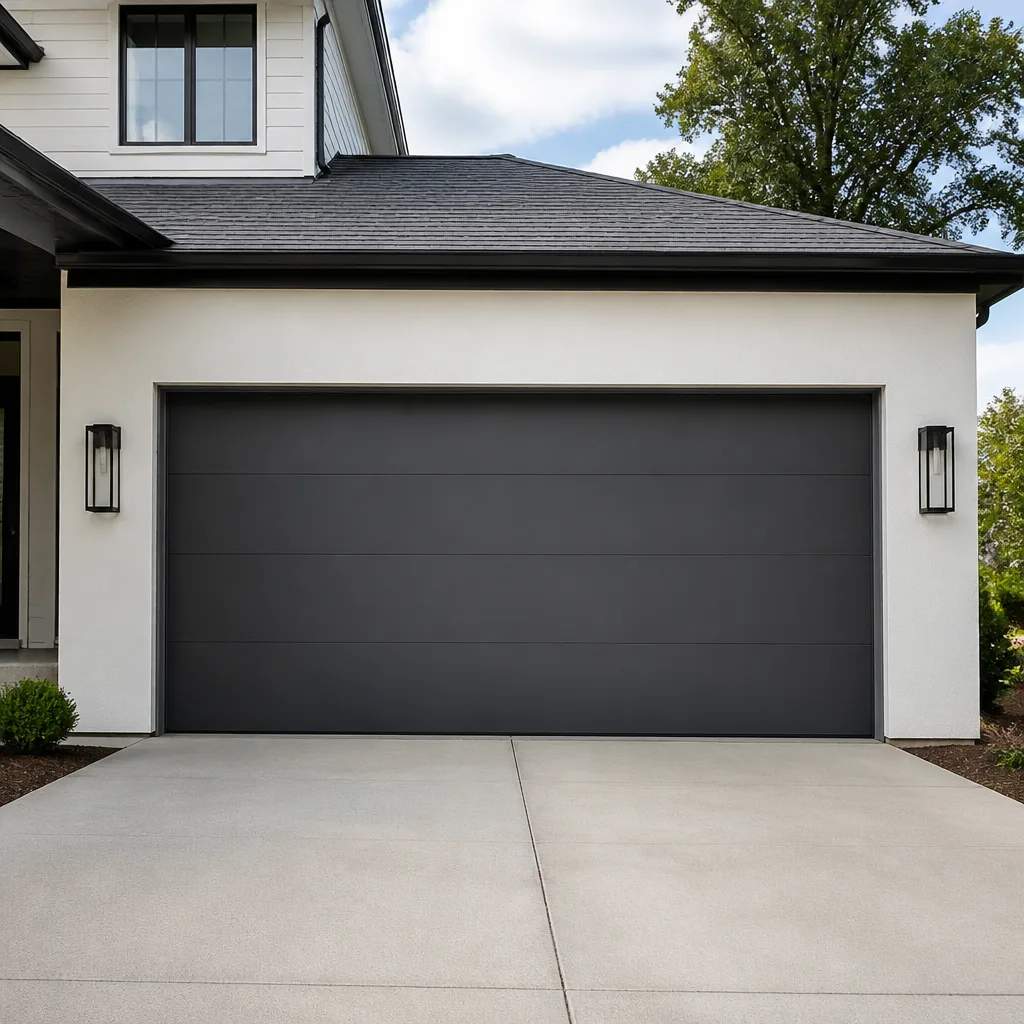 Modern flush
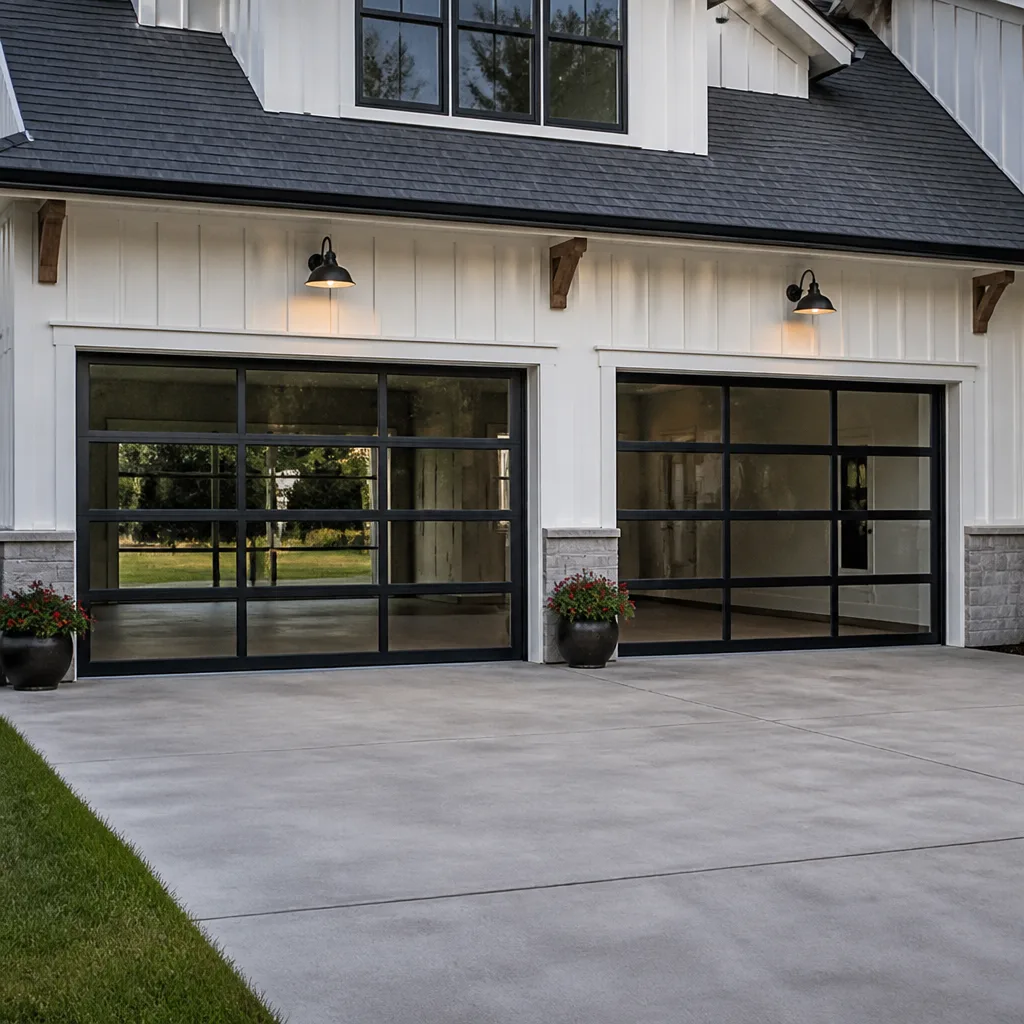 Full-view glass
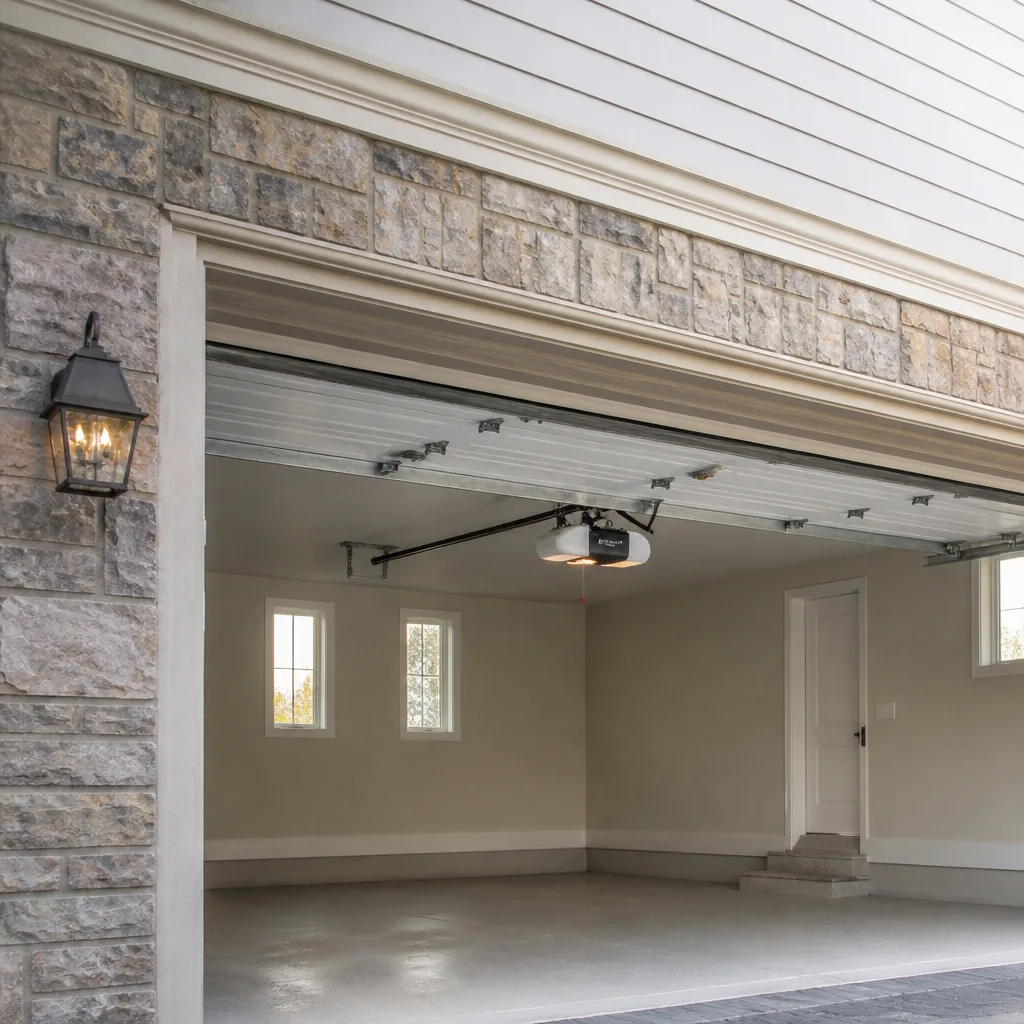 LiftMaster openers
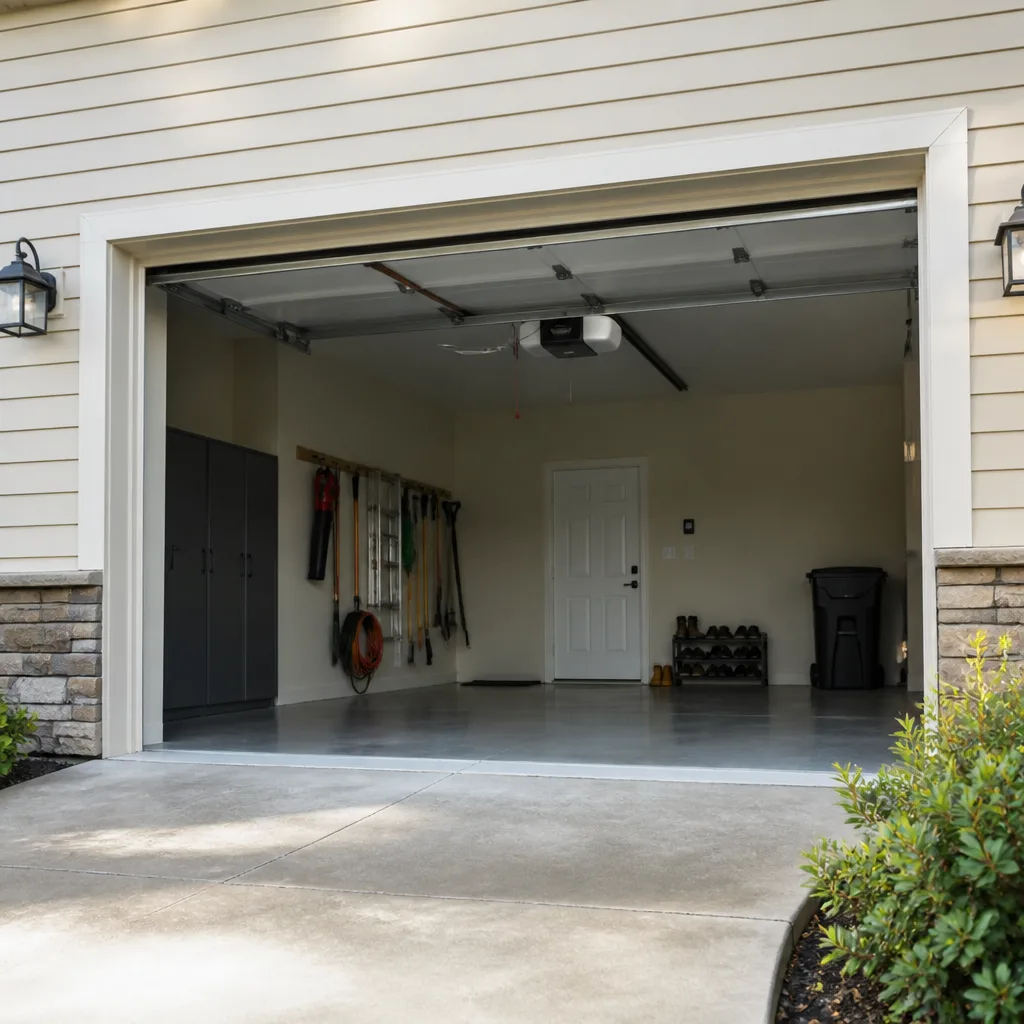 Chamberlain openers
Full 25-point door and opener safety check with every visit - springs, cables, rollers, tracks, and your LiftMaster or Chamberlain opener included
You get a price before we start. It does not change when the pro arrives.
Get your free estimateGarage Door Repair Troubleshooting in Spring Hill: Common Problems and How to Fix Them
Most garage door problems get misdiagnosed because homeowners troubleshoot the symptom instead of the system. A door that reverses before closing looks like a broken opener, but it’s often a dirty photo-eye lens. A door that opens six inches and stops looks like a failed motor, but it’s frequently a travel limit that drifted in the heat. Spring Hill’s humidity and summer temperatures create their own failure patterns that generic national troubleshooting guides ignore entirely. This guide maps each common failure back to its actual root cause, shows you which checks are genuinely safe to do yourself, and tells you plainly when to stop and call a specialist.
Quick Answer
Most garage door problems in Spring Hill trace back to one of four systems: the photo-eye safety sensors, the travel limits, the torsion springs, or the tracks and rollers. Start by checking whether the door is balanced (lift it halfway by hand with the opener disconnected), whether the sensors are clean and aligned, and whether the opener is blinking a diagnostic code. If the door is heavy, slams down, or has a visible gap in a spring, stop and call a professional. Spring tension and cable tension are genuinely dangerous and should never be adjusted by a homeowner.
Styles & brands we work with
- Raised-panel steel
- Carriage house
- Modern flush
- Full-view glass
- LiftMaster openers
- Chamberlain openers
Table of Contents
- The Troubleshooting Decision Tree: Opener vs. Spring vs. Track vs. Panel
- Why Garage Doors Fail Differently in Spring Hill’s Climate
- Safe DIY Checks vs. Genuinely Dangerous Repairs
- How to Decode Your Opener’s Blink Codes
- “It Worked Yesterday” Failures: Heat, Surges, and Drift
- Why Brand Matters Less Than the Diagnosis
- Seasonal Maintenance That Actually Prevents Failures
The Troubleshooting Decision Tree: Opener vs. Spring vs. Track vs. Panel
Before you touch anything, run the door by hand. Pull the emergency release cord (usually red, hanging from the opener rail), lift the door to about waist height, and let go. A properly balanced door stays put or drifts slowly. A door that drops fast has a spring problem. A door you can barely lift has a spring problem too. This one test tells you more than any amount of button-pressing.
Once you know whether the door is balanced, the symptoms narrow quickly. Here’s the decision tree we walk through on every diagnostic call:
- The door doesn’t move at all, and the opener hums or clicks. That’s an opener problem, not a door problem. Could be a stripped gear, a failed capacitor, or a burned-out motor. Any qualified garage door opener repair technician can usually diagnose this in a few minutes.
- The door moves a few inches and stops, or reverses immediately. That’s usually a travel limit or force setting, or a sensor issue. Not a motor failure.
- The door is heavy, drops fast, or won’t stay up when you lift it by hand. That’s a spring problem. Stop here. Don’t try to fix it yourself.
- The door binds, scrapes, or runs crooked. That’s a track, roller, or hinge issue. Usually visible on inspection.
- The door closes but leaves a gap, or a panel is visibly bent. That’s a panel or alignment issue. Sometimes repairable, sometimes a panel replacement.
Most Spring Hill homeowners skip the balance test and start pressing buttons. That’s the single biggest reason people pay twice: they replace an opener that was working fine, only to discover the springs were the actual problem, or vice versa. If you’re not sure which system is at fault, our garage door repair team can identify it in a single visit.
Why Garage Doors Fail Differently in Spring Hill’s Climate
Spring Hill’s humidity and heat create a distinct set of failure patterns that national troubleshooting guides rarely address. The air here stays humid for much of the year, and summer temperatures push metal and wood components well past what a typical guide assumes. That combination stresses different parts of a garage door system in different ways.
Three failure patterns stand out in Spring Hill homes:
- Humidity and wood sections: Wood garage doors, and wood-framed sections on some composite doors, absorb moisture during humid stretches and swell. The swelling warps sections, throws off alignment, and can cause the door to bind against the tracks. You’ll see the door running slightly crooked or hear scraping on one side. This shows up on older Clopay and Wayne Dalton wood-feature doors more than on all-steel doors.
- Heat and torsion springs: Torsion springs are under constant tension. Heat accelerates metal fatigue, so springs in Spring Hill often fail earlier than springs in cooler climates. A spring that snaps is one of the loudest, most dramatic failures a garage door can have, and it always happens under load.
- Limit switch drift: Opener travel limits are set to stop the door at a specific point. In extreme summer heat, the metal components of the opener expand slightly, and limits set in cooler weather can drift enough to make the door stop short or reverse before it closes. This is a real, common cause of “my door won’t close all the way” calls in July and August.
Wood doors need more frequent inspection here than in drier markets. Check for swelling at the bottom sections, peeling finish, and any place where the door sticks at the tracks. If you’ve been putting off a wood door repair, the humidity is working against you every week.
Safe DIY Checks vs. Genuinely Dangerous Repairs
Some troubleshooting is safe for any homeowner. Some is not, and the line matters. Garage door springs, torsion tubes, and cable drums store enormous energy. A torsion spring under tension can cause serious injury if it releases unexpectedly, and the cables under a spring are just as dangerous. There’s no safe way to adjust, wind, or release a spring without proper tools and training.
Here’s how we sort it:
Safe to check yourself:
- Clean the photo-eye lenses with a soft cloth (pollen and humidity film build up fast in Spring Hill).
- Run the balance test with the door disconnected from the opener.
- Look at the tracks for visible dents or debris.
- Check the opener’s diagnostic LED for a blink code.
- Test the wall button and the remotes separately.
- Look at the door panels for visible damage.
Stop and call a professional:
- Adjusting, releasing, or replacing a torsion or extension spring.
- Touching the cables or cable drums.
- Replacing a torsion tube or resetting a cable that’s slipped off a drum.
- Anything that requires removing the door from the tracks.
If you can see a gap in the coil of a torsion spring, or the door drops when you lift it halfway by hand, that’s your stop signal. Don’t try to force the door open. Call a specialist. Our technicians have up to 13 years of experience and have worked on every kind of spring failure you’ll see in a Spring Hill home.
How to Decode Your Opener’s Blink Codes
Most modern openers blink a diagnostic LED to tell you what’s wrong. The pattern is a code, not just a random flicker. On a LiftMaster or Chamberlain unit, the LED near the learn button blinks in a numbered pattern: five blinks, pause, five blinks, for example. Each brand uses a different set of codes, and the code maps to a specific failure (sensor issue, travel limit, force limit, logic board fault).
Here’s how to read it without hunting down the manual:
- Watch the LED near the learn button or the motor head while the door is trying to move. Count the blinks between pauses.
- Write the pattern down. A pattern of “five blinks” is different from “four blinks,” and the fix is different.
- Look up that specific pattern in your opener’s manual, or ask a technician who works with that brand. LiftMaster, Chamberlain, and Genie use different code sets, and knowing which one you have saves time.
- Repeat the test once to confirm the pattern. Codes that flash inconsistently usually mean a logic board issue, not a clean code.
The most common codes in Spring Hill homes point to one of three things: a misaligned or dirty safety sensor, a travel limit that needs adjusting, or a force setting that’s too low. None of these are motor failures. That’s why we always start with codes before recommending an opener replacement. Our Carrington Garage Door Repair team handles opener repair as a distinct service, so you’re not pushed into a full replacement when a code adjustment is what you actually need.
“It Worked Yesterday” Failures: Heat, Surges, and Drift
A door that worked fine yesterday and won’t open today is one of the most common calls we get in Spring Hill. These failures fall into two categories: environmental drift and genuine component failure. Knowing which one you’re dealing with tells you whether a simple adjustment will fix it or something actually needs replacing.
Environmental drift (usually a cheap fix):
- Thermal expansion: Hot afternoons expand the metal in the opener track and limits. A door that closed fine at 7am might reverse at 2pm. If the problem comes and goes with the heat, that’s a limit adjustment, not a broken opener.
- Power surges: Florida storms bring power surges, and a small surge can reset an opener’s travel limits without killing the motor. The door still moves, but it stops in the wrong place. Re-training the limits usually fixes it.
- Humidity on the sensors: Pollen and moisture film on the photo-eye lens mimics a sensor failure. The door reverses because the opener thinks something is in the way.
Genuine component failure (needs repair):
- The door won’t move by hand or drops fast (spring issue).
- The opener hums but the door doesn’t move (stripped gear or failed capacitor).
- Physical damage to tracks, rollers, or panels.
- Repeated blink codes that don’t change after re-training.
If your door “worked yesterday” and the problem disappears by itself, don’t ignore it. Thermal drift gets worse over time, and a limit adjustment now prevents a stuck door later. If you need help sorting an intermittent failure, call our team at Spring Hill and we’ll walk you through the difference.
Why Brand Matters Less Than the Diagnosis
One of the biggest myths in garage door repair is that you need a “brand specialist.” You don’t. A Craftsman opener and a LiftMaster opener fail in similar ways because they’re built around similar mechanical principles. The same goes for the door itself. A Clopay panel and an Amarr panel can both warp with humidity, and both can be repaired. When we work on your door, we work on what the system actually does, not on who made it.
The reality is that most garage doors in Spring Hill homes come from a handful of manufacturers. You’ll find LiftMaster and Chamberlain openers in a large share of homes, Genie in another chunk, and doors from Clopay, Amarr, Wayne Dalton, and Raynor covering most of the rest. A brand-agnostic approach means we look at the symptoms, not the label. That’s why we can diagnose a Genie opener with a limit problem, a Wayne Dalton door that’s warped from humidity, and a Craftsman opener with a stripped gear, all in the same week.
What actually matters is opener repair capability, not brand allegiance. Plenty of companies replace openers rather than repair them, because it’s simpler for them. We diagnose the opener itself first. If the motor is fine and the logic board is fine, we troubleshoot the sensors, limits, and force settings before recommending a new unit. That saves you the cost of an unnecessary replacement and gets you back up and running faster.
Seasonal Maintenance That Actually Prevents Failures
Most garage door failures don’t start suddenly. They build over weeks and months, and a little maintenance prevents most of them. In Spring Hill’s climate, a twice-a-year inspection catches the things that lead to emergency calls.
Here’s a simple checklist:
- Run the balance test every few months. Lift the door halfway by hand with the opener disconnected and let go. If it drops, your springs are losing tension.
- Clean the photo-eye lenses. A dry cloth is enough. Do this more often during pollen season.
- Look at the tracks for dents, debris, or buildup. Don’t try to bend tracks back into place yourself; a track that’s been dented needs proper realignment.
- Listen for scraping, squealing, or grinding. Squealing rollers or hinges mean they need lubrication. Grinding usually means a track or roller problem.
- Test the safety reverse. Put a 2×4 flat on the floor under the door and close the door. It should reverse on contact. If it doesn’t, the opener’s force setting is too high.
- Check the weather seal at the bottom. In humid climates, seals wear faster. A loose seal lets critters and heat in.
- Watch for limit drift. If your door stops short or reverses on hot afternoons, the limit needs re-tuning.
Most of these checks take ten minutes. The one that matters most is the balance test. If your door doesn’t pass it, the springs are the likely culprit and you shouldn’t rely on the opener to do the lifting.
Common Mistakes to Avoid
- Replacing the opener when the springs are the problem. If the door is heavy, a new opener will just strain against the same heavy door and fail. Diagnose the balance first, every time.
- Ignoring a “worked yesterday” failure. Intermittent problems from thermal drift or power surges get worse. A small limit adjustment today prevents a stuck door next month.
- Force-closing a door that reverses. If the photo-eye is blocked or the door reverses repeatedly, don’t hold the button down and force it. That burns out the opener and can damage the door panels.
- Adjusting travel limits without checking the balance first. If the springs are weak, adjusting limits just moves the problem around. The door will still drop when it shouldn’t.
- Treating a warped wood section like a mechanical problem. In Spring Hill’s humidity, a wood door that sticks at the tracks may need panel repair, not a track adjustment. Diagnose the material, not just the hardware.
- Spraying WD-40 on the rollers. It attracts dust and gum up the bearings. Use a proper garage door lubricant, and don’t spray it on the springs or cables.
- Ignoring the weather seal. A loose bottom seal in a humid climate lets in moisture, insects, and heat. It’s a cheap fix that pays for itself.
See the difference
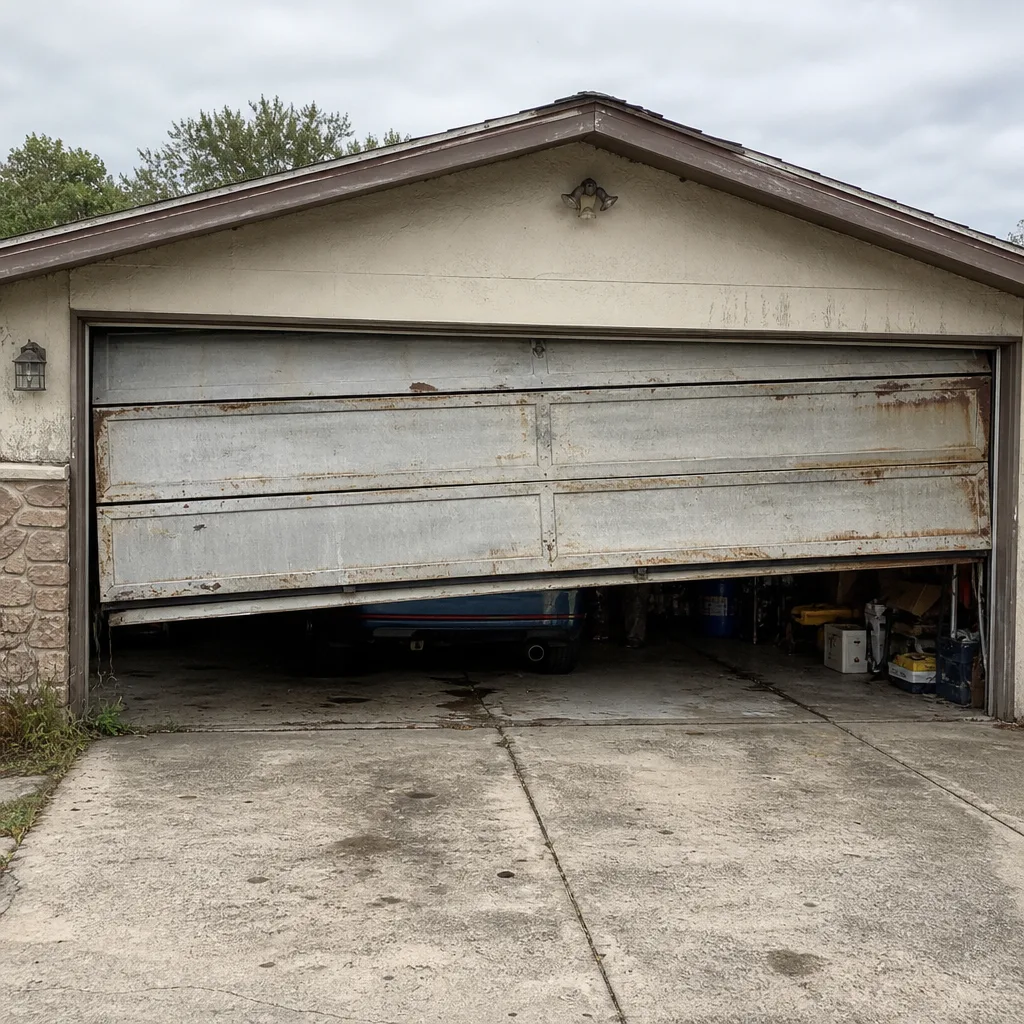 Before
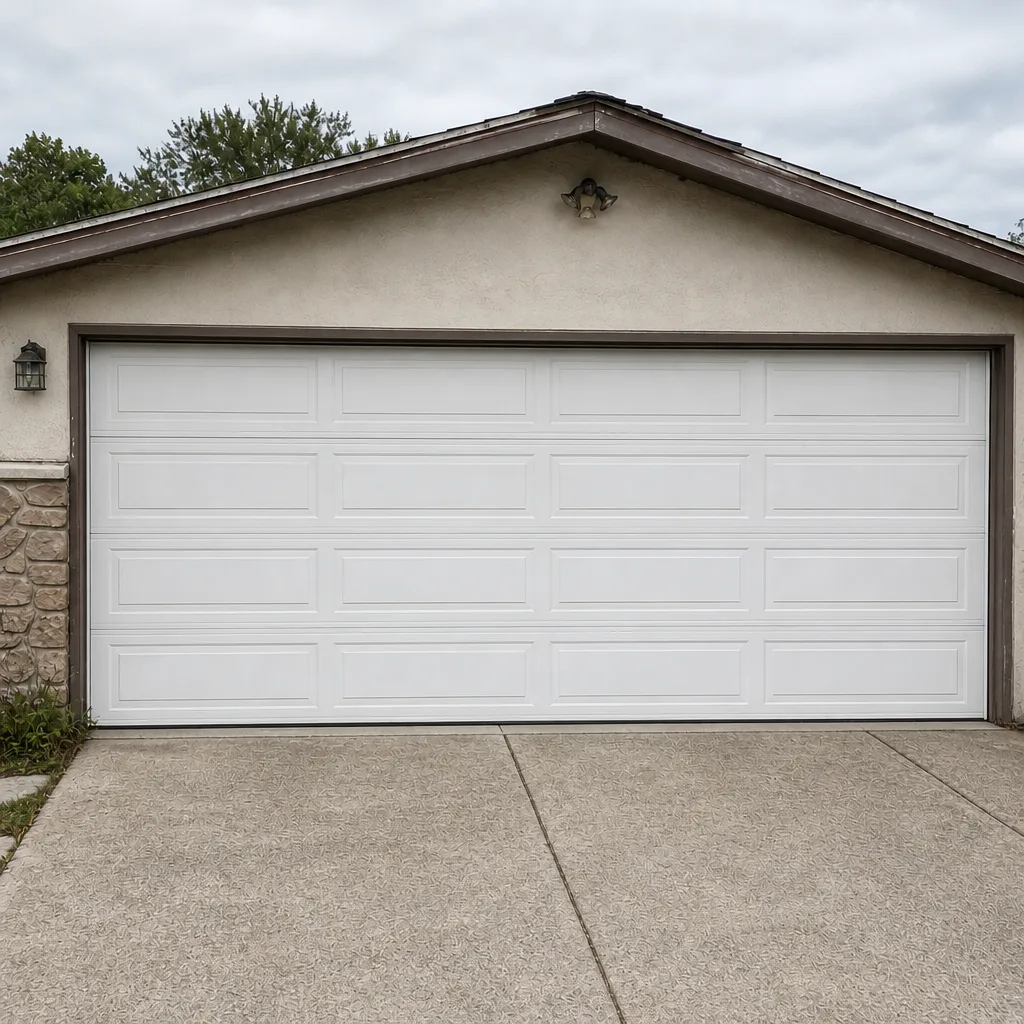 After
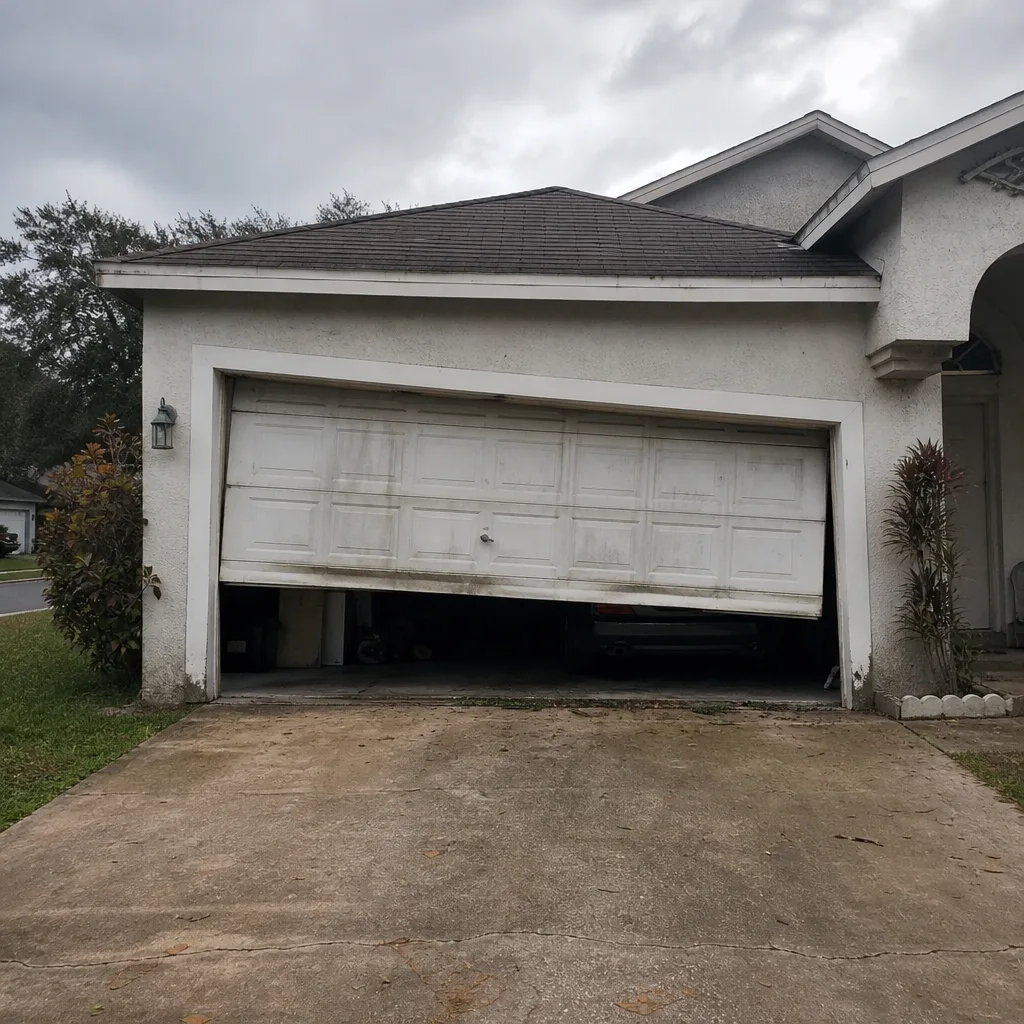 Before
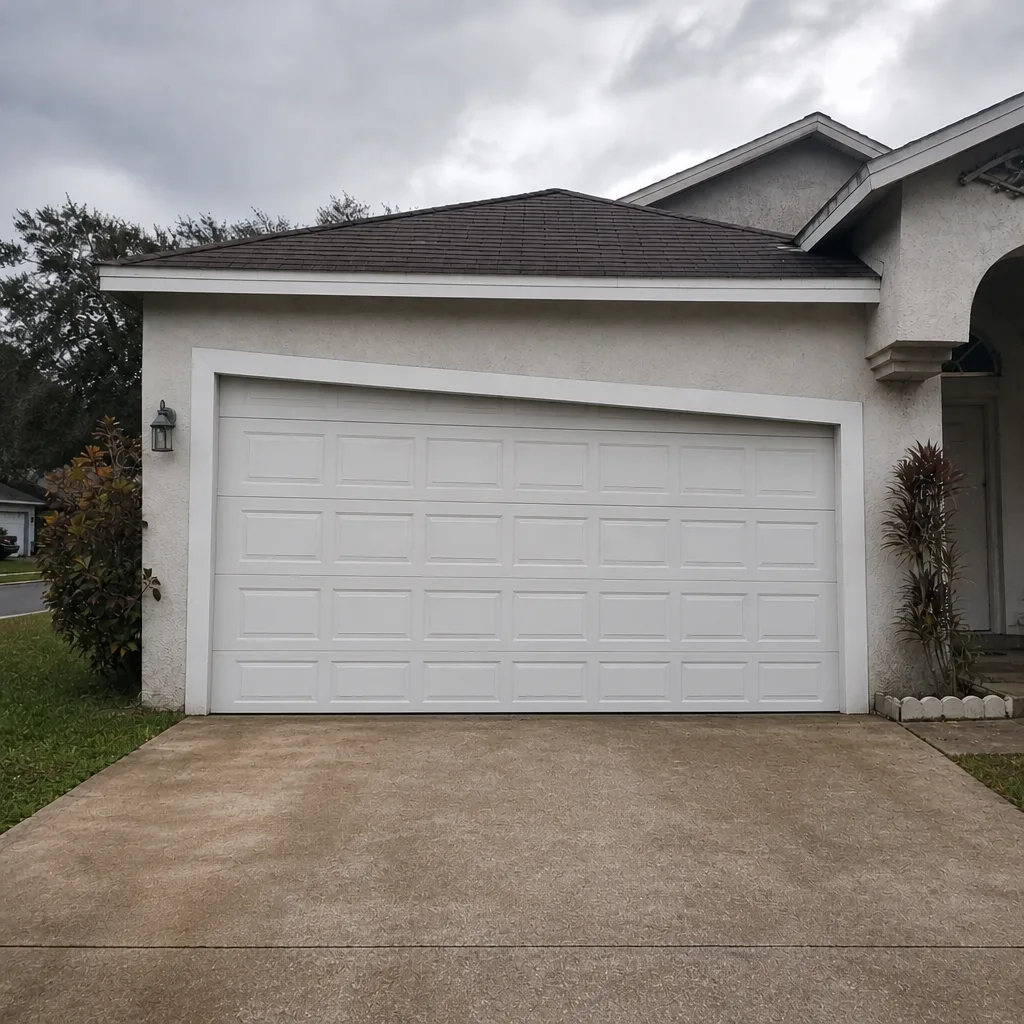 After
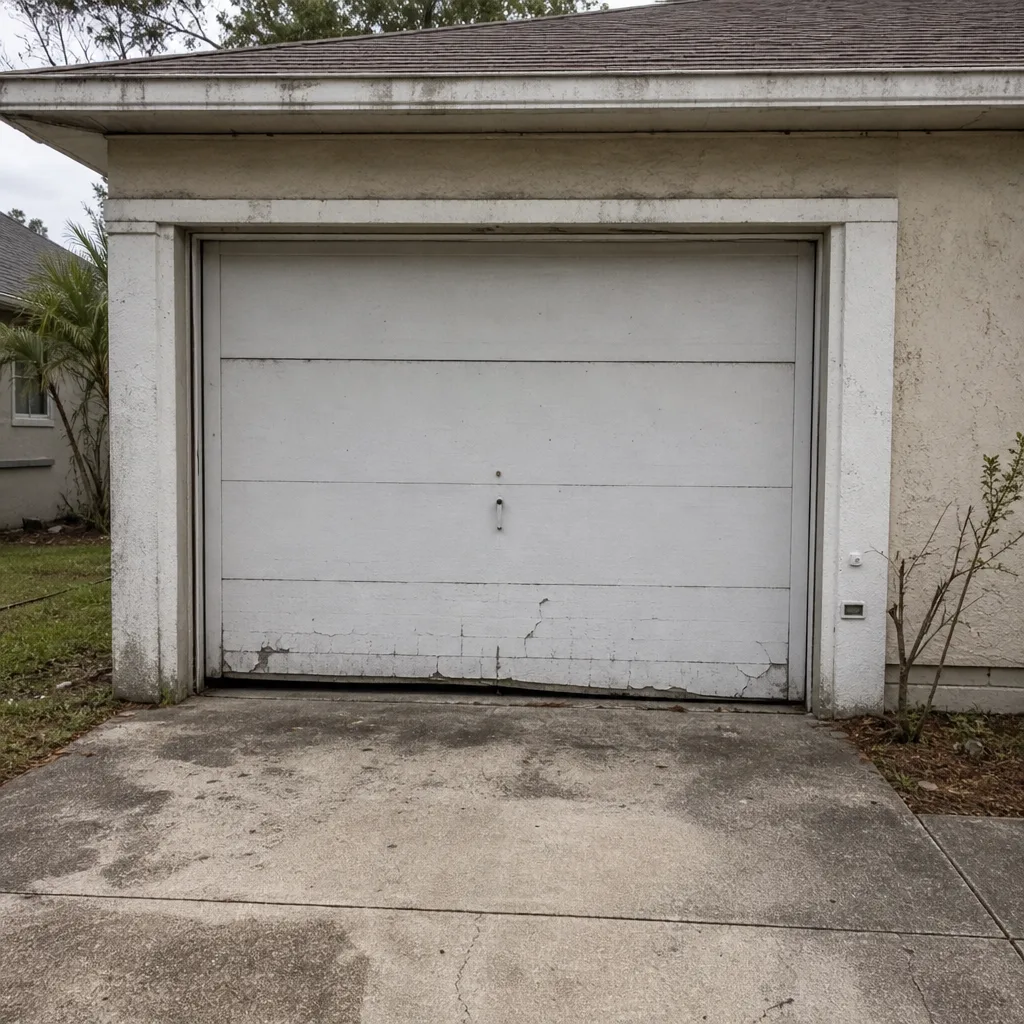 Before
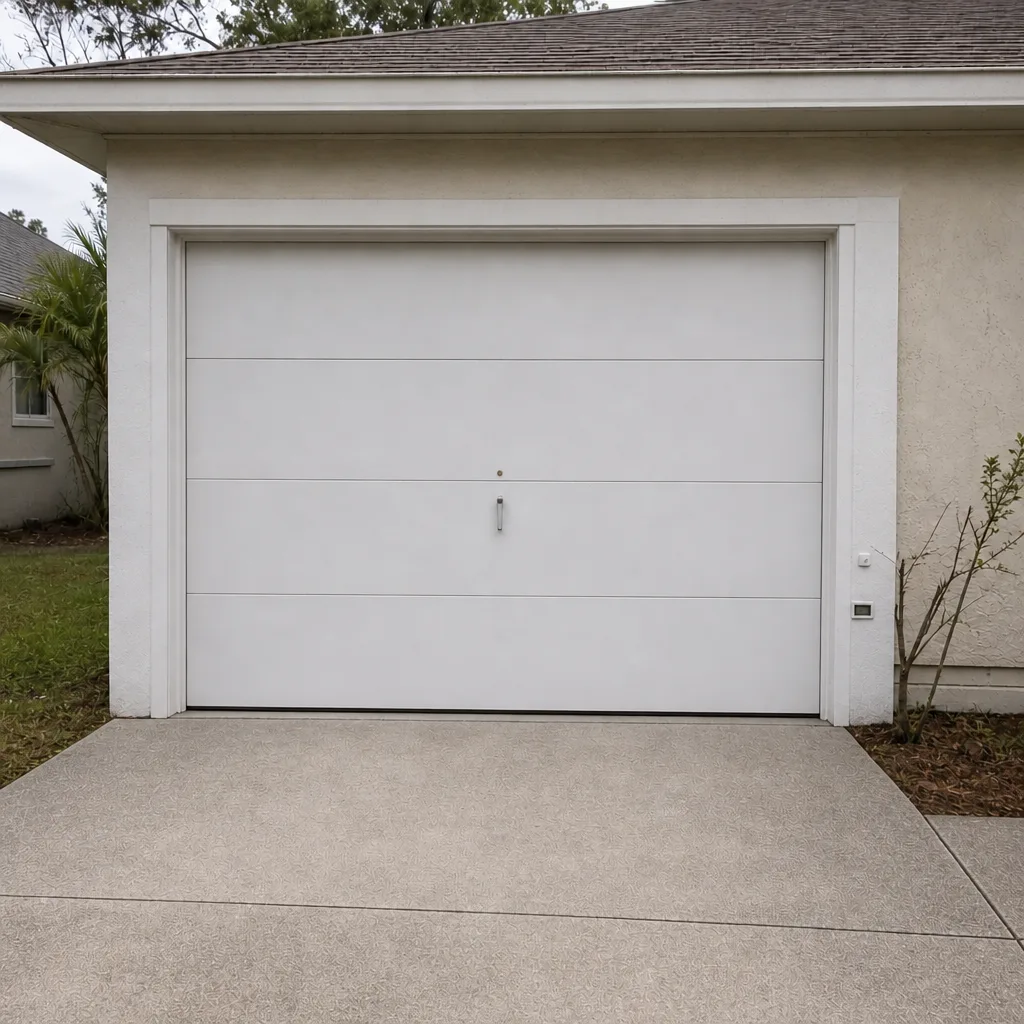 After
When to Call a Professional
Call a specialist when the balance test fails, when you see a gap in a torsion spring, when the door drops faster than you can catch it, or when the cables look slack or off-track. Call when your opener hums but the door doesn’t move, when the door reverses without obstruction, or when the door binds on one side and no amount of track cleaning helps. Call when the door’s panels are visibly bent, cracked, or warped. And call if the door has been making noise that’s gotten worse over weeks. Any of these are signs that the fix involves spring tension, cables, or a full system diagnosis. Carrington Garage Door Repair offers free estimates in Spring Hill. Call (844) 560-6506 to schedule. We answer 24/7, with fast dispatch from 7am to 7pm, Sunday through Friday.
Frequently Asked Questions
The most common cause is a dirty or misaligned photo-eye safety sensor, followed by a travel limit that drifted in the heat. Clean both sensor lenses with a cloth and check that nothing is blocking them. If the door still reverses, check for a blink code on the opener. If the door reverses with nothing in the way and the sensors look clean, the opener’s logic board or force setting may need adjustment. Call (844) 560-6506 for a free estimate.
Usually not. In Spring Hill’s heat, the opener’s travel limits often drift, and the door will stop partway through its cycle because the limit was set for cooler weather. Re-training the limits usually fixes it. A stripped gear or failed capacitor can cause similar symptoms, so check for a blink code before assuming the motor is gone. Call (844) 560-6506 if you’re not sure which issue you’re dealing with.
A broken torsion spring usually shows a visible gap in the coil, and the door becomes very heavy, sometimes impossible to lift by hand. Extension springs that snap often hang loose. If you see either of these, don’t try to open the door. Spring replacement is genuinely dangerous and should only be done by a trained professional. Call (844) 560-6506 for a free estimate, and we’ll tell you exactly what to expect.
You can safely clean the sensors, run the balance test, check the wall button, and read the blink code. You should not adjust springs, cables, or the opener’s internal gear assembly. If the code points to a sensor or limit issue, that’s usually a technician-level fix. If you’re getting a code that changes each time you test, that’s a logic board issue and needs a technician. Call (844) 560-6506 for a free estimate.
That’s almost always thermal drift in the opener’s travel limits. Metal expands in the heat of the day, and a limit set in the morning can drift enough to cause the door to stop short or reverse by afternoon. This is common in Spring Hill from late spring through early fall. A limit adjustment fixes it. If the problem persists after adjustment, there’s a component failure to diagnose. Call (844) 560-6506 for a free estimate.
Yes. Humidity swells wood door sections, corrodes metal hardware faster than in drier climates, and leaves a moisture film on photo-eye lenses that mimics sensor failures. Wood doors need more frequent inspection here, and metal components including hinges and roller bearings benefit from regular lubrication. If your wood door is warping or sticking, that’s often a humidity issue rather than a mechanical one. Call (844) 560-6506 for a free estimate.
The Bottom Line
Most garage door problems in Spring Hill come down to four systems: springs, tracks, panels, and openers. Diagnosing the right one saves you from paying for a repair you don’t need. Start with the balance test, check the photo-eye lenses, and read your opener’s blink code before assuming anything is broken. Spring tension and cables are genuinely dangerous, so stop and call a professional if the door is heavy, drops fast, or has a visible gap in a coil. Keep the sensors clean, run the balance test every few months, and don’t ignore a “worked yesterday” failure. In this climate, the small maintenance items are what prevent the big repair bills. If you’re not sure where the problem is, call (844) 560-6506 for a free estimate. We answer 24/7, with fast dispatch from 7am to 7pm, Sunday through Friday. We’ll tell you exactly what’s wrong and quote the price before any work starts.
Written by the team at Carrington Garage Door Repair.