
Last updated November 16, 2026
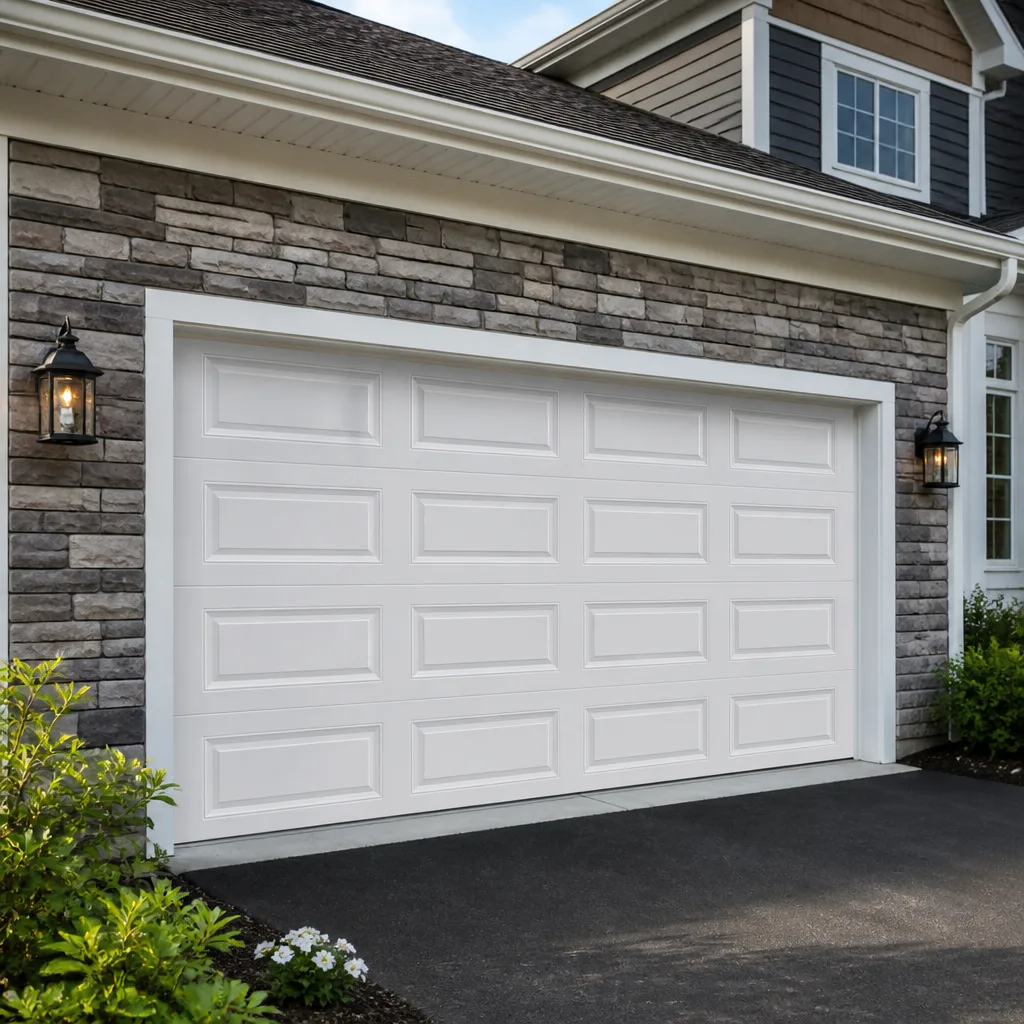 Raised-panel steel
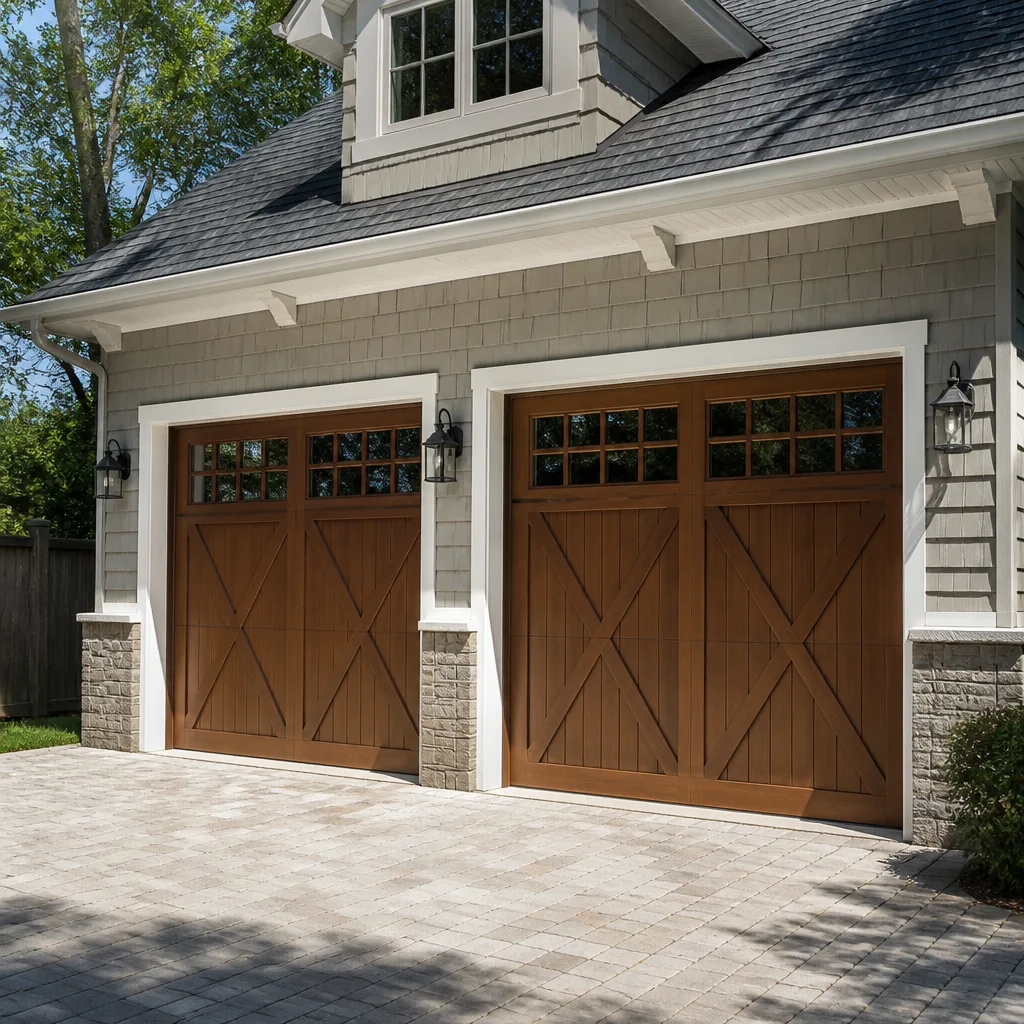 Carriage house
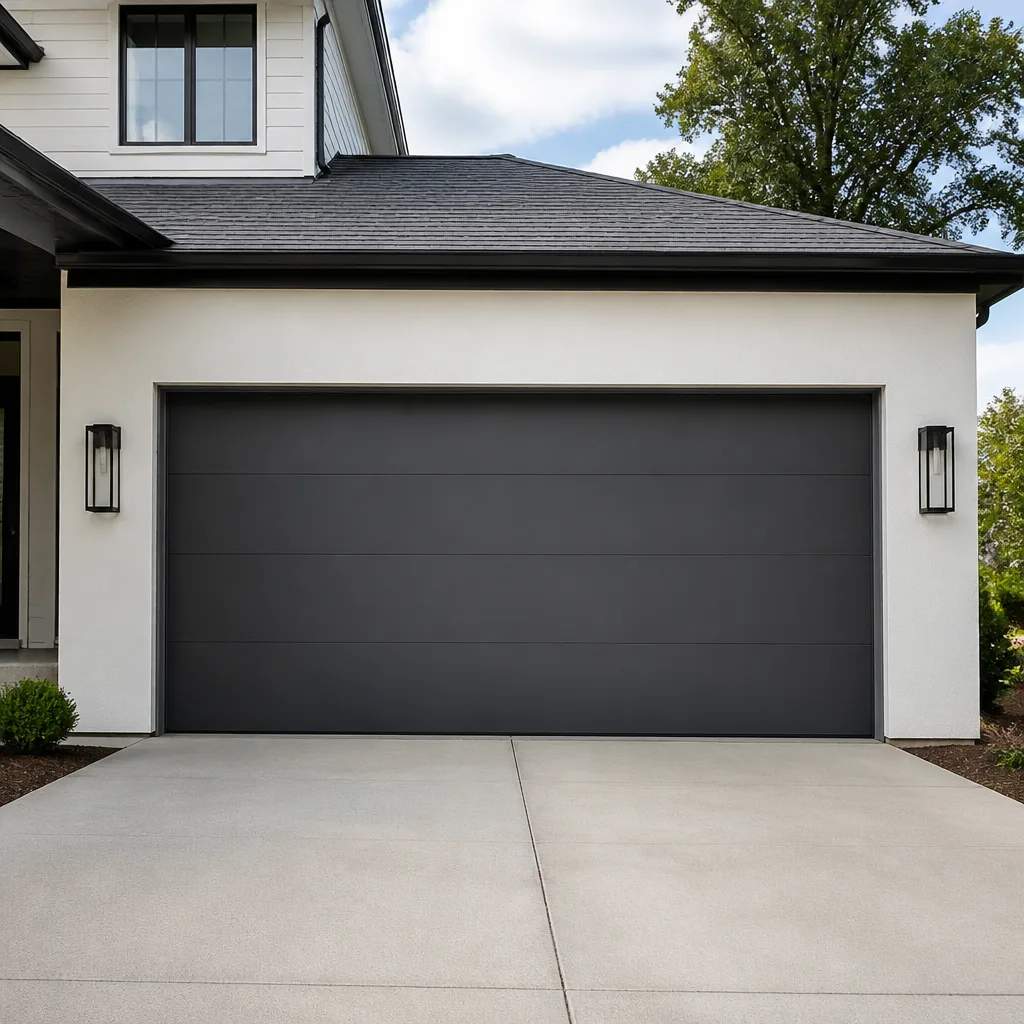 Modern flush
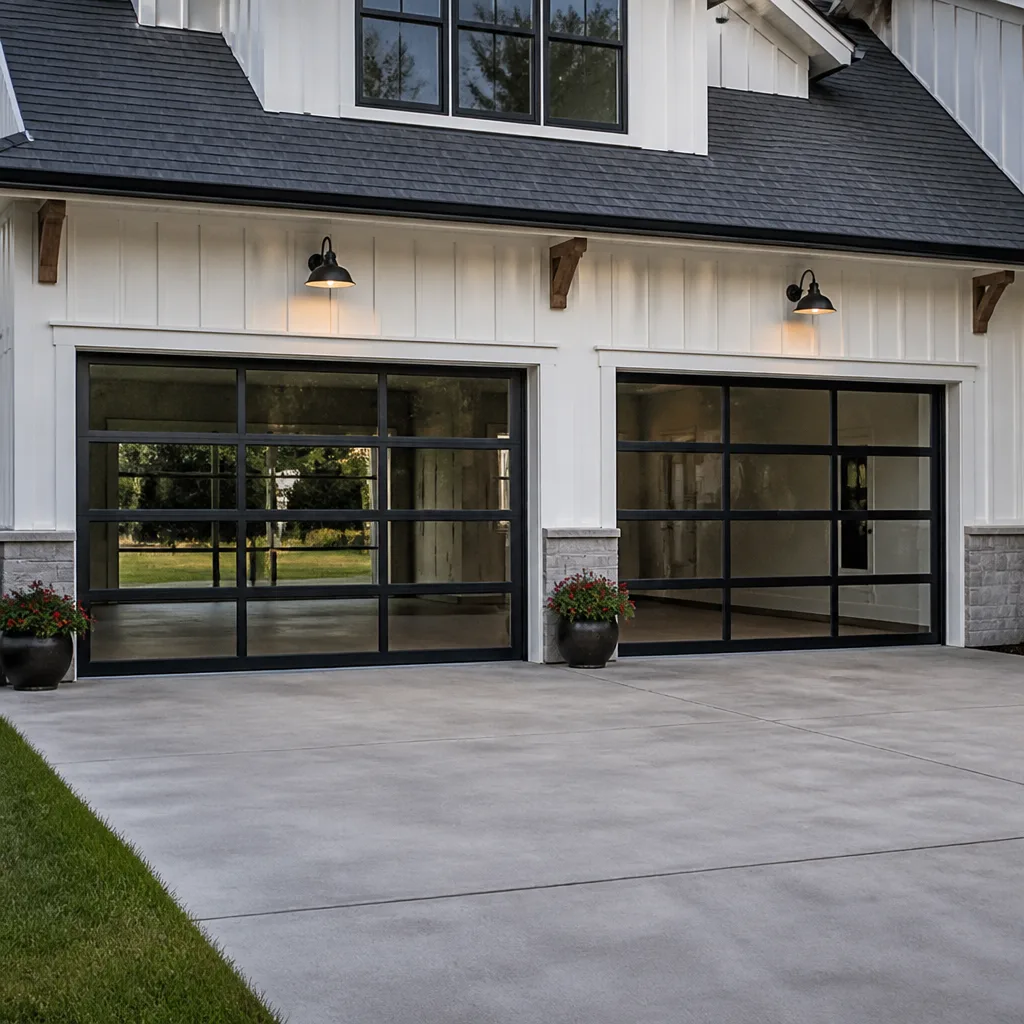 Full-view glass
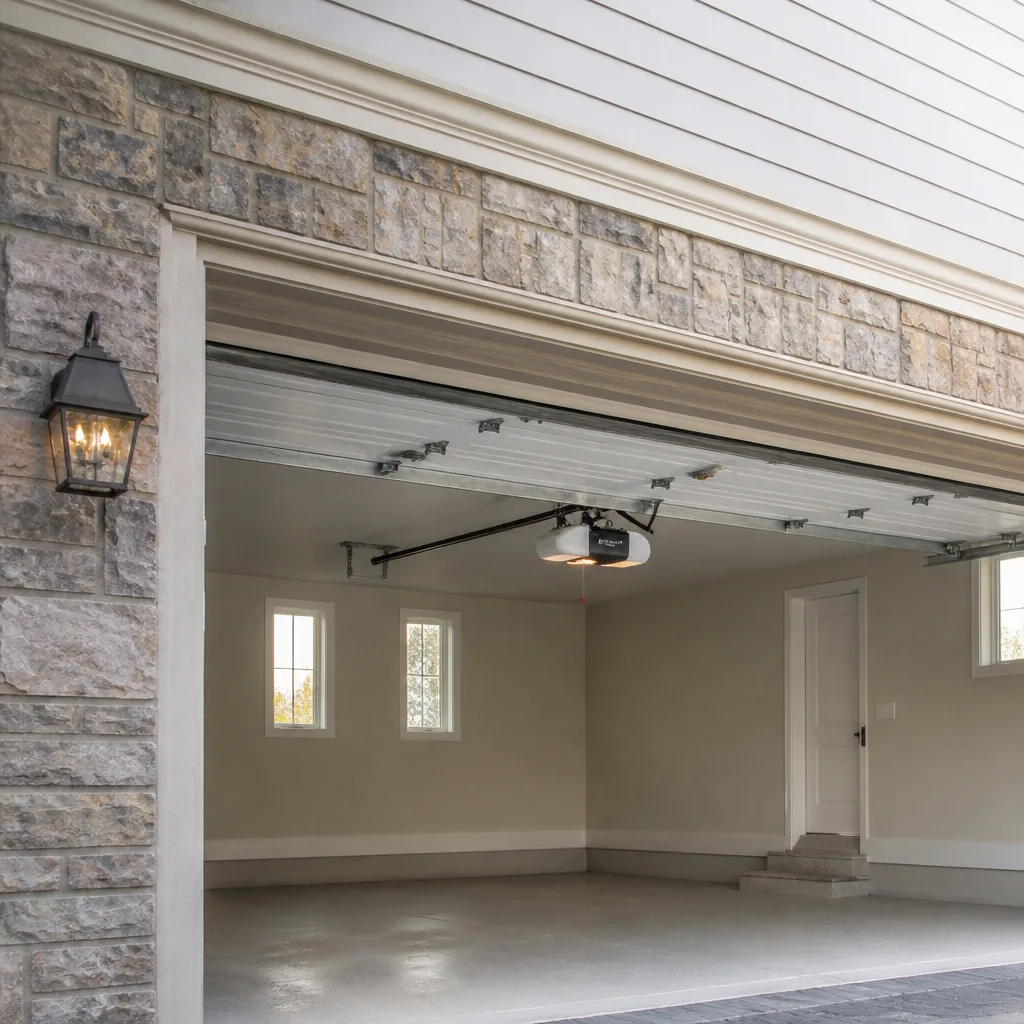 LiftMaster openers
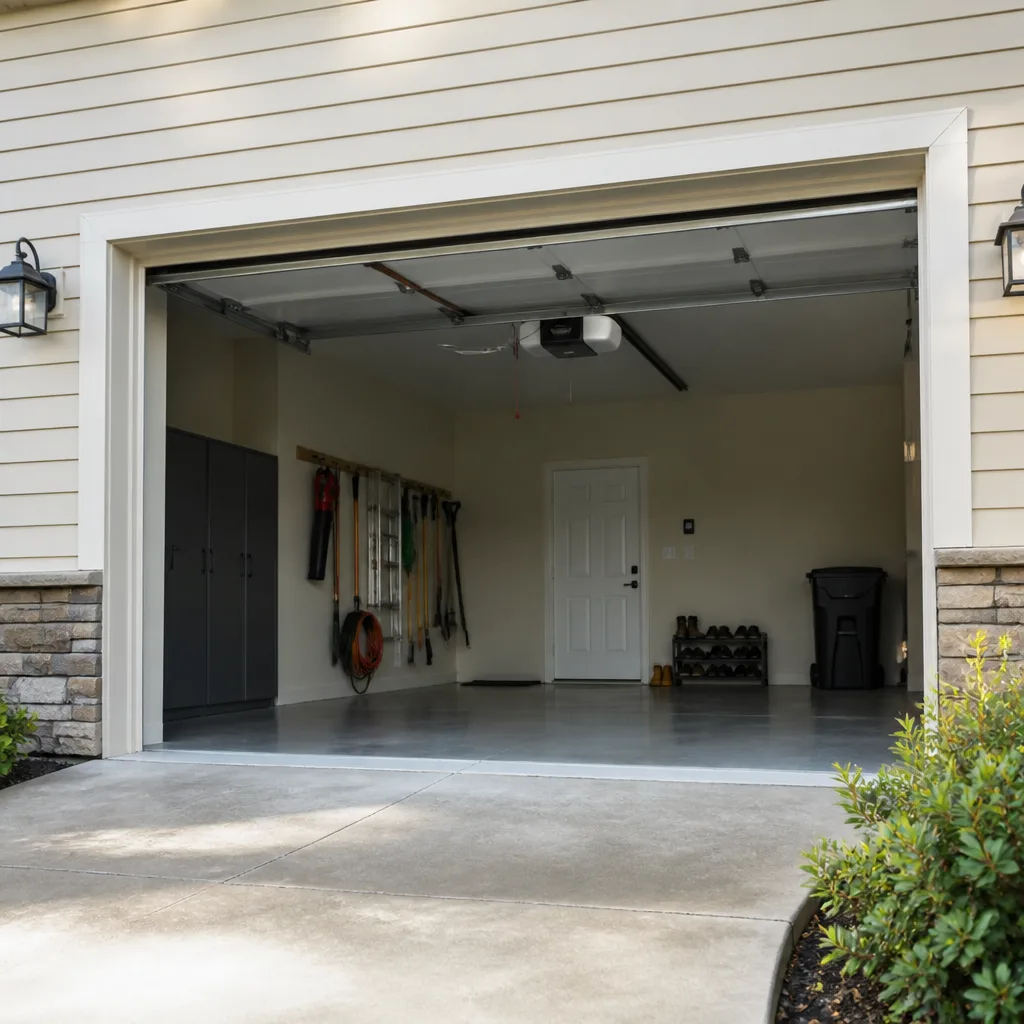 Chamberlain openers
Full 25-point door and opener safety check with every visit - springs, cables, rollers, tracks, and your LiftMaster or Chamberlain opener included
You get a price before we start. It does not change when the pro arrives.
Get your free estimateHow to Hire a Garage Door Contractor in Spring Hill: A Step-by-Step Guide
The phone diagnosis is where most garage door hiring decisions go wrong. A homeowner describes a door that won’t close, gets three answers from three callers, and picks the one who sounds most confident. But the words “broken spring” get used for a snapped torsion coil, a stretched extension spring, a bent track, and a stripped opener gear, and they all carry different repair work and different costs. Spring Hill sits in a stretch of Florida where new subdivisions mix with older homes and a lot of veteran-owned properties, and the mix of doors, openers, and install vintages reflects that. This guide walks you through how to hire a garage door contractor in Spring Hill: how to check licensing, how to spot a franchise passing work to a subcontractor, what to ask before anyone touches a spring, and how to read a written estimate line by line.
Quick Answer
To hire a garage door contractor in Spring Hill, confirm the contractor is a dedicated garage door specialist (not a general handyman), verify they’re state-licensed and insured, ask whether they’re an independent specialist or a franchise subcontracting locally, and insist on a written estimate before any work starts. A qualified technician should be able to name your brand on the spot and tell you why they’re recommending repair over replacement. If they can’t do both, keep calling.
Styles & brands we work with
- Raised-panel steel
- Carriage house
- Modern flush
- Full-view glass
- LiftMaster openers
- Chamberlain openers
Table of Contents
- Step 1: Verify the Contractor Is Licensed for Garage Door Work
- Step 2: Understand Specialist vs. Franchise vs. Handyman
- Step 3: Questions to Ask Before Anyone Touches Your Springs
- Step 4: Red Flags Specific to the Spring Hill Market
- Step 5: How to Read a Written Estimate Line by Line
- Step 6: Confirm Brand Fluency Before You Commit
- Step 7: Decide Repair vs. Replace Without Being Sold
- Step 8: What Happens When You Call
Step 1: Verify the Contractor Is Licensed for Garage Door Work
Garage door work in Florida is not a single-license trade with one obvious box to check. A general contractor license does not necessarily cover a garage door specialist, and a handyman working under a limited license may not be permitted to do certain structural work at all. Before you book, ask the contractor directly what their license covers and whether it specifically allows garage door installation and repair.
Verification usually happens in three places:
- Ask for the license class and number in writing. Not just “licensed and insured” – a specific license number you can look up.
- Check the state licensing database. Florida’s Department of Business and Professional Regulation lets you search a license by number or name. Confirm the contractor is listed as active, not expired or suspended.
- Ask about insurance. General liability is what protects you if a door falls on your car or a spring damages your wall. Ask for a certificate of insurance before work starts. A legitimate contractor doesn’t blink at the request.
For any permit question, the safest move is to call the city’s building department directly. Most municipalities require a permit for replacing a garage door or altering the opening, so ask your city’s building department whether your specific job needs one. Never take a contractor’s word that “no permit needed” is standard – some projects are exempt, some are not, and the answer depends on whether you’re swapping panels or resizing the opening.
One more thing: licensing and insurance are the two things you cannot verify after the fact. If a technician is on your property and a spring snaps and damages the door, the licensing and insurance question becomes a big deal quickly. Ask first. It takes five minutes.
Step 2: Understand Specialist vs. Franchise vs. Handyman
Three different contractors can show up to fix the same broken torsion spring in Spring Hill and give you three wildly different experiences – not because the spring is different, but because the operator model behind each one is. Knowing which model you’re hiring matters more than the brand on the truck.
The dedicated garage door specialist
A specialist does garage doors and garage door openers. That’s the whole job. They see enough doors that they recognize your equipment quickly, and they handle the full system – panels, springs, tracks, and opener – under one company. No handoffs. No “we’ll have a guy for the opener.” If a specialist is diagnosing a LiftMaster opener that won’t reverse, they’re not guessing their way through it because they rarely see one.
The national franchise with a local subcontractor
National franchise brands look reassuring. The truck wraps are consistent, the call centers are polished, and there’s a “national reputation” to lean on. The catch is that many franchise operations are locally owned and locally staffed, but they may subcontract certain job types – installation, opener work, sometimes the whole appointment – to independent local technicians. When that happens, the accountability chain gets confusing. If the work fails, who fixes it? The franchise or the subcontractor? The warranty usually tells you if you read it, but the answer isn’t always what you expect at the sales call.
The general handyman advertising garage work
A good handyman is a real professional. A good handyman is also not a garage door specialist. Garage door springs carry serious force, and an installer who’s never disassembled a torsion bar assembly or replaced a cable under tension can cause injury or property damage if they treat it like any other repair. Do not hire a handyman for springs, cable replacement, or opener motor work unless they can show you dedicated garage door experience.
At Carrington Garage Door Repair, we’re the independent specialist model. One company, one accountable team, covering doors, springs, tracks, and openers together. That’s the model that most homeowners in Spring Hill actually want once they understand the difference.
Step 3: Questions to Ask Before Anyone Touches Your Springs
The window between “we’ll be out tomorrow” and “let’s take the spring off” is where you learn whether you’ve hired a specialist or a generalist. Ask these questions before that window closes.
- “What brand of door and opener am I looking at?” A specialist should name it quickly. LiftMaster, Chamberlain, Genie, Clopay, Amarr, Wayne Dalton, Craftsman, and Raynor are the brands that show up most in residential homes, and a good tech recognizes most on sight, tells you what model family it’s likely from, and explains what they’ll check.
- “Can you repair what I have, or does it need replacing?” A specialist has an actual answer. A generalist guesses and defaults to replace.
- “How many garage door brands do you work on?” If the answer is “one,” ask whether that’s because they only stock that brand or because it’s the only one they’re trained on. Both matter differently.
- “Do you repair opener motors or just replace them?” Not every opener failure requires a new opener. Genie and Chamberlain motors especially are often repairable if the failure is a control board, gear, or sensor rather than the motor itself.
- “What’s your warranty on parts and labor?” A written warranty should specify both.
- “Will the price I’m quoted on the phone be the price I see on the invoice?” The answer should be: yes, because the written estimate sets the final price after on-site diagnosis. Not a phone guess.
That last question is the important one. Garage door pricing is diagnostic work, not a flat rate. The phone quote you get for a spring replacement is an estimate. The written estimate after the technician sees the actual spring size, condition of the cables, and condition of the track is the price you’ll pay. If the contractor won’t commit to a written estimate before any work begins, that’s a sign they don’t want you comparing line items.
Step 4: Red Flags Specific to the Spring Hill Market
Some hiring failures are general, but a few patterns show up more often in the Spring Hill area because of how installation work, franchise arrangements, and new construction interact here. Here’s what to watch for.
- Vague over-the-phone pricing. A contractor who won’t give any range at all is a problem, but a contractor who commits to an exact dollar figure on the phone without seeing the door is also a problem. Garage door spring pricing depends on spring size, door weight, and cable condition – none of which can be confirmed over the phone. Expect a range on the phone and a written estimate on-site.
- No verifiable physical address. National franchises are fine, but if a contractor won’t provide a street address and won’t provide a license number, that’s a sign they’re working from a cell phone. A legitimate independent local business has a traceable identity.
- Cash-only demands. Any legitimate contractor should accept a check, card, or electronic payment, provide a receipt, and put the agreed price in writing. A cash-only contractor is one you can’t trace if something goes wrong.
- “Your springs are dangerous” as an opener. Springs do carry serious force and do fail, but if the first thing anyone says is “your door is dangerous, we need to replace everything,” ask them to show you the problem on the door. A specialist can point to a snapped coil, a kinked cable, or a misaligned track.
- Vague branding on the truck or paperwork. The truck wrap should match the invoice, which should match the license, which should match the insurer. If any of those four things don’t match, ask why.
- No written estimate at all. Not a verbal “probably about…” but a printed or emailed estimate with line items. Missing that document is the single clearest red flag.
Spring Hill’s storm season adds another wrinkle. A door that’s been fine for years can look “suddenly broken” after a summer storm, when the actual issue is a misaligned track from a wind impact or a sensor knocked out of alignment. A specialist diagnoses that. A generalist just replaces the motor.
Step 5: How to Read a Written Estimate Line by Line
A written estimate should give you enough detail to know what you’re paying for. Here’s what good line items look like and what each one actually means.
- Parts. This is the physical equipment being installed or replaced: springs, cables, rollers, hinges, opener, control board, motor, sensor. Each part should be listed by name and quantity. “Torsion spring, pair, 2 inch inside diameter” is a real line item. “Spring kit” is not.
- Labor. Labor is the technician’s time, not a hidden markup on parts. A clean estimate shows labor as a separate line, not bundled into a single “yep, that’s $350” total. On a spring replacement labor is usually the smaller line. On an opener replacement, labor can be substantial because the header bracket and travel limits need to be re-set.
- Adjustment. After a spring or opener repair, the technician should adjust the door’s balance and travel limits before leaving. This line should appear on jobs where the door’s counterbalance or opener travel is affected. If it doesn’t, ask whether balance testing is included.
- Disposal. Old springs, old openers, old panels have to go somewhere. A written estimate should say whether removal is included or costs extra.
- Warranty terms. Written out: how long on the part, how long on the labor, what voids it.
The final line on the estimate should be a total, and that total is the price. We’ve seen estimates where the “final” number jumped because adjustment or disposal was billed on top. Ask directly: “Is this total everything, or is anything billed separately?” If the technician hedges, that’s an answer.
If you’re comparing two estimates side by side, compare line items, not totals. A cheaper total with no adjustment and no disposal is often the more expensive job by the end. A higher total with a written warranty, adjustment included, and disposal covered is worth the difference.
Step 6: Confirm Brand Fluency Before You Commit
Brand fluency is not universal. A technician who works on one brand day in and day out may not know the quirks of the others. If your home has a Chamberlain opener and a Clopay door, you want a service that recognizes both – and doesn’t reach for a new opener when a control board repair will do.
Here’s the practical test. When you call, name your brand and ask whether they work on it. If the answer is yes, follow up with a second question: “What’s the most common issue you see on that model?” A specialist has a real answer. A generalist deflects.
At Carrington Garage Door Repair, we service equipment from eight major brands – LiftMaster, Chamberlain, Genie, Clopay, Amarr, Wayne Dalton, Craftsman, and Raynor – so we can work on whatever you own rather than steering you toward a brand we’d prefer to sell. That’s the practical difference between a brand-agnostic diagnostic approach and one that starts with the brand in the truck.
If you want the repair-first approach on your door, call (844) 560-6506 for a free estimate. We answer 24/7. Fast dispatch from 7am to 7pm, Sunday through Friday. Sprung a spring, or just not sure what’s wrong? We’ll diagnose it before we recommend anything.
Step 7: Decide Repair vs. Replace Without Being Sold
“Repair or replace” is the single question most likely to get a homeowner over-purchased on a garage door. The honest answer depends on the door and the failure – not on what the contractor prefers to sell.
When repair usually wins
- A single spring has snapped. Springs are consumable parts, meant to be replaced. A spring replacement on a healthy door is a repair, not a signal to replace the door.
- An opener has a bad gear, control board, or sensor. Chamberlain and Genie motors in particular are often repairable if the electronics are the failure and the motor is sound.
- A track is bent or a roller is off. Correctable with track adjustment and roller replacement.
- A door is out of balance. Balance adjustment is a repair, not a replacement.
When replacement usually wins
- The door panel is dented or rotted beyond cosmetic repair, or the frame is compromised.
- The opener motor has failed and the unit is well past its expected service life.
- The door no longer fits a changing opening (opening resized, additions, etc.), so you’re not replacing the door, you’re replacing it with the right size.
- The door’s balance is chronically off after repeated adjustment, suggesting a structural issue with the track or the header.
If a technician recommends replacement for a single snapped spring on a healthy door, ask why. A specialist will have a reason. If the reason is “it’s just as expensive to replace it,” get a second estimate. Repair is almost always cheaper than a full door replacement on a single failed component of an otherwise sound door.
For new installations and door replacements, note that this is measured and scheduled work – not same-day work. Expect a measure, a written price, and a scheduled install date after the door is ordered. Installation is different from garage door repair, which is where same-day availability usually applies.
Step 8: What Happens When You Call
Once you’ve picked a contractor, here’s the sequence you should expect on a repair call in Spring Hill.
- Phone triage. You describe the problem. The contractor asks a couple of clarifying questions – door brand, opener brand, symptom pattern, whether anything is visibly broken. If they can’t ask specific questions about the door and opener, that’s a sign.
- Same-day dispatch (for repair calls). Spring-loaded door problems and opener failures usually qualify for same-day service. Fast dispatch from 7am to 7pm, Sunday through Friday.
- On-site diagnosis. The technician inspects the door, spring, cable, track, and opener. This is where brand fluency shows up: a Chamberlain opener that won’t close is often a safety sensor problem, while a LiftMaster that won’t close is often a travel limit problem. Different diagnosis, different repair.
- Written estimate before work. This is the line in the sand. You see the price before anyone takes a spring off. If the number changes after they start, you have a problem.
- Repair, test, adjust. Post-repair, the technician tests the door’s balance and, if applicable, the opener’s travel and force limits. The door should open and close smoothly by hand and under power.
- Warranty and receipt. You should leave the visit with a written warranty on parts and labor and a receipt that matches the estimate.
For opener-specific problems, we have a dedicated walkthrough on garage door opener repair that covers what a diagnosis looks like for LiftMaster, Chamberlain, and Genie units specifically. The garage-door-only side of the business is covered in Spring Hill, so if your question is more about the local area or neighborhoods we work in, that page is the place to start.
Common Mistakes to Avoid
- Hiring on price alone. A quote $100 lower than the next might be a cheaper tech, a cheaper part, or a misdiagnosed job. Compare line items, not totals.
- Skipping the license check. “Licensed and insured” is a verbal claim until you see a number you can look up and a certificate of insurance you can read. Verify before work starts.
- Trusting a phone diagnosis. A contractor who diagnoses your door over the phone is guessing. Spring size, door weight, and cable condition can’t be confirmed without a look.
- Letting a handyman touch the springs. Garage door springs carry serious force and are one of the highest-injury components in residential home repair. This is one of the jobs where a trained, specialized professional is non-negotiable.
- Accepting an unwritten estimate. Verbal “yeah, about $X” is not an estimate. Get it in writing, ask whether adjustment and disposal are included, and ask whether the total is the price.
- Assuming the franchise truck means local staffing. National franchises often subcontract locally. Ask directly who will actually be at your house and what their relationship is to the brand on the truck.
- Over-buying on repair vs. replace. One snapped spring on a healthy door is a spring replacement. If someone pitches a full door plus new opener for that job, ask for a second estimate.
See the difference
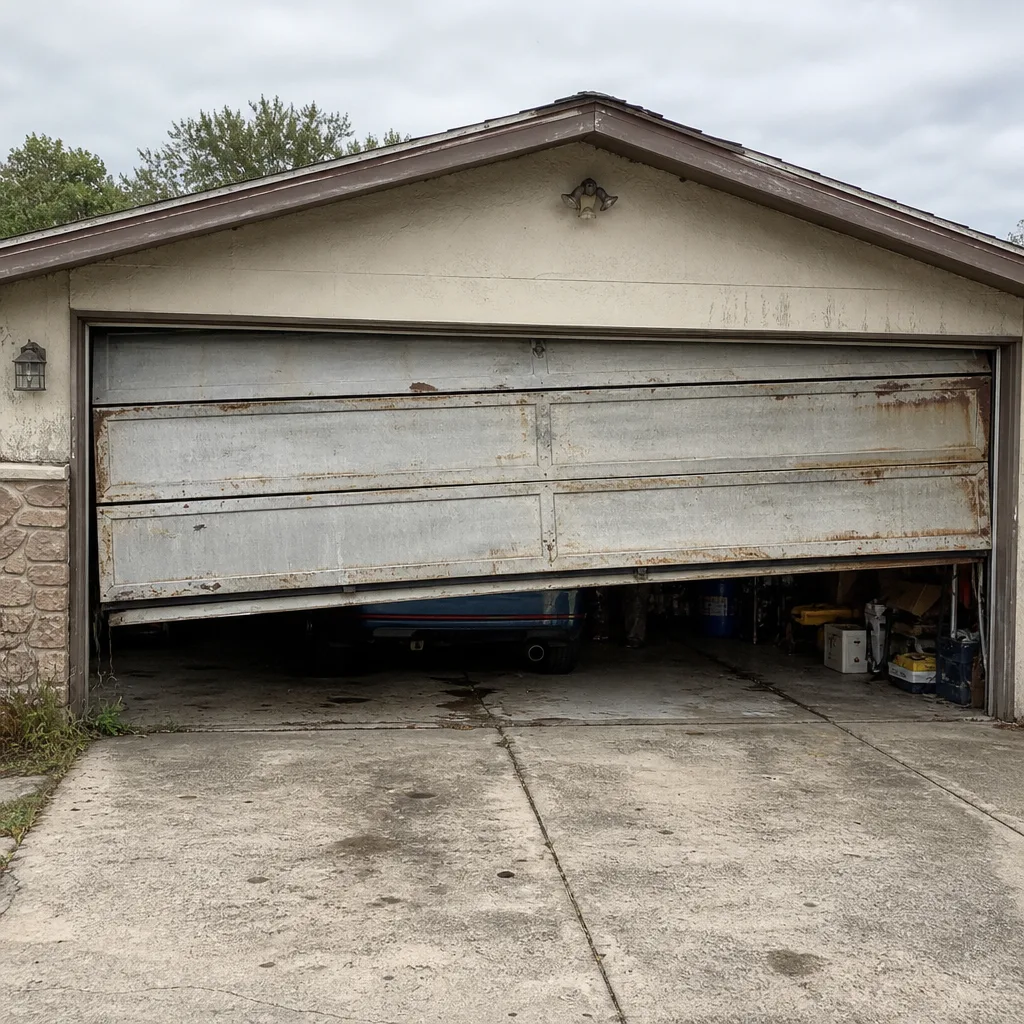 Before
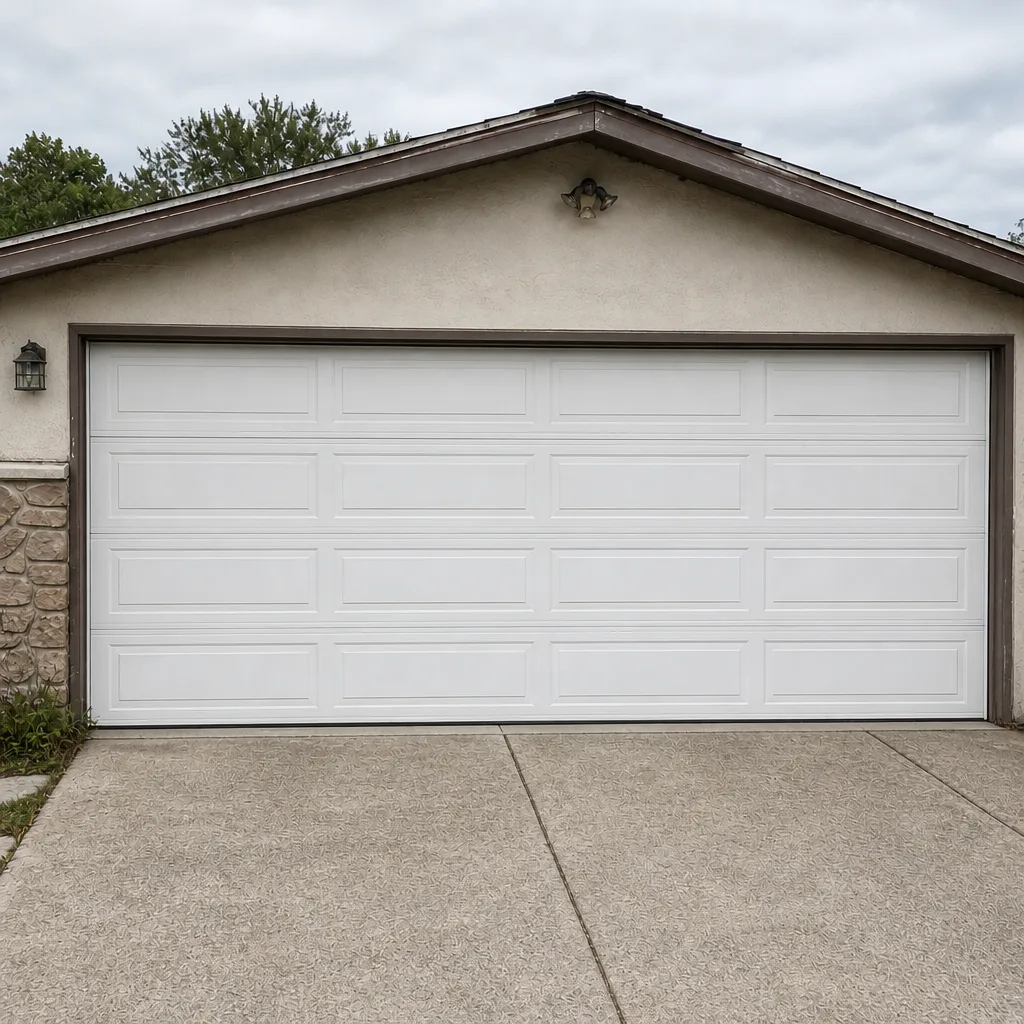 After
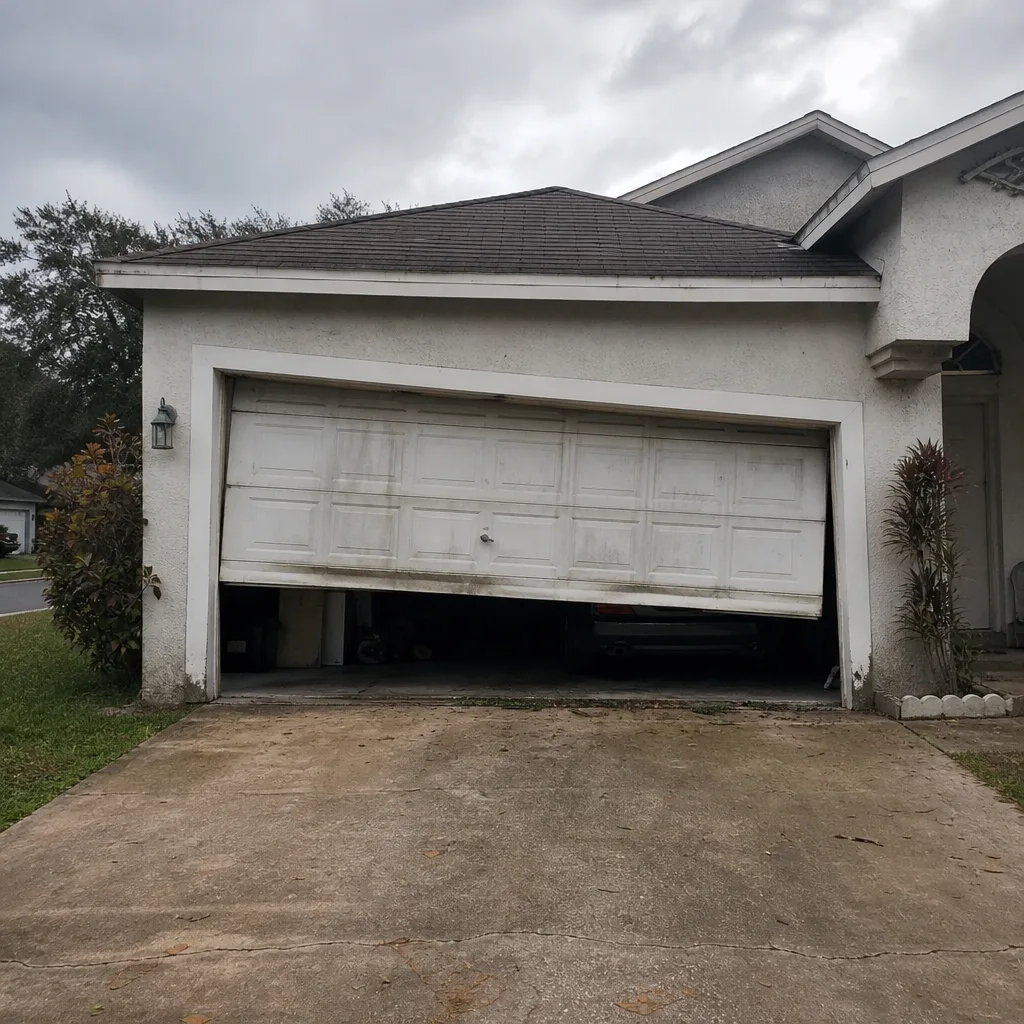 Before
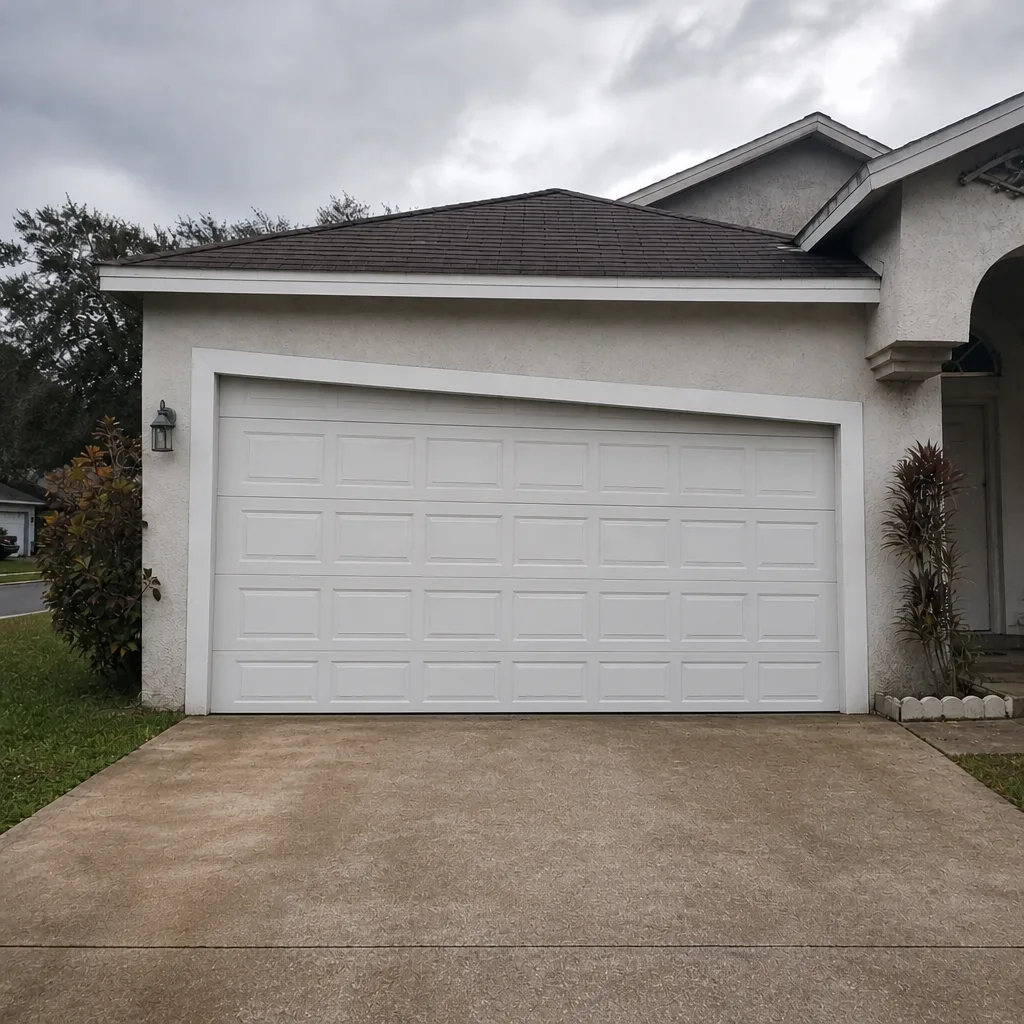 After
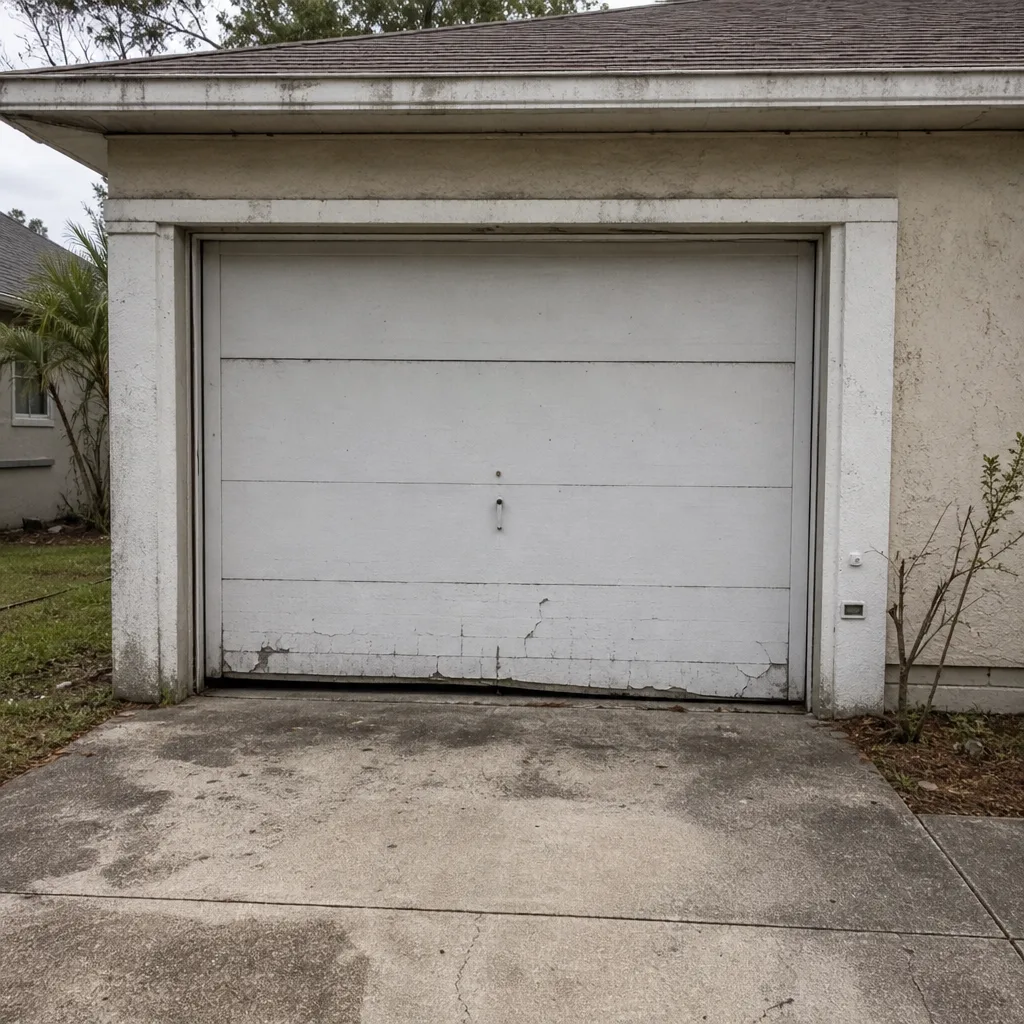 Before
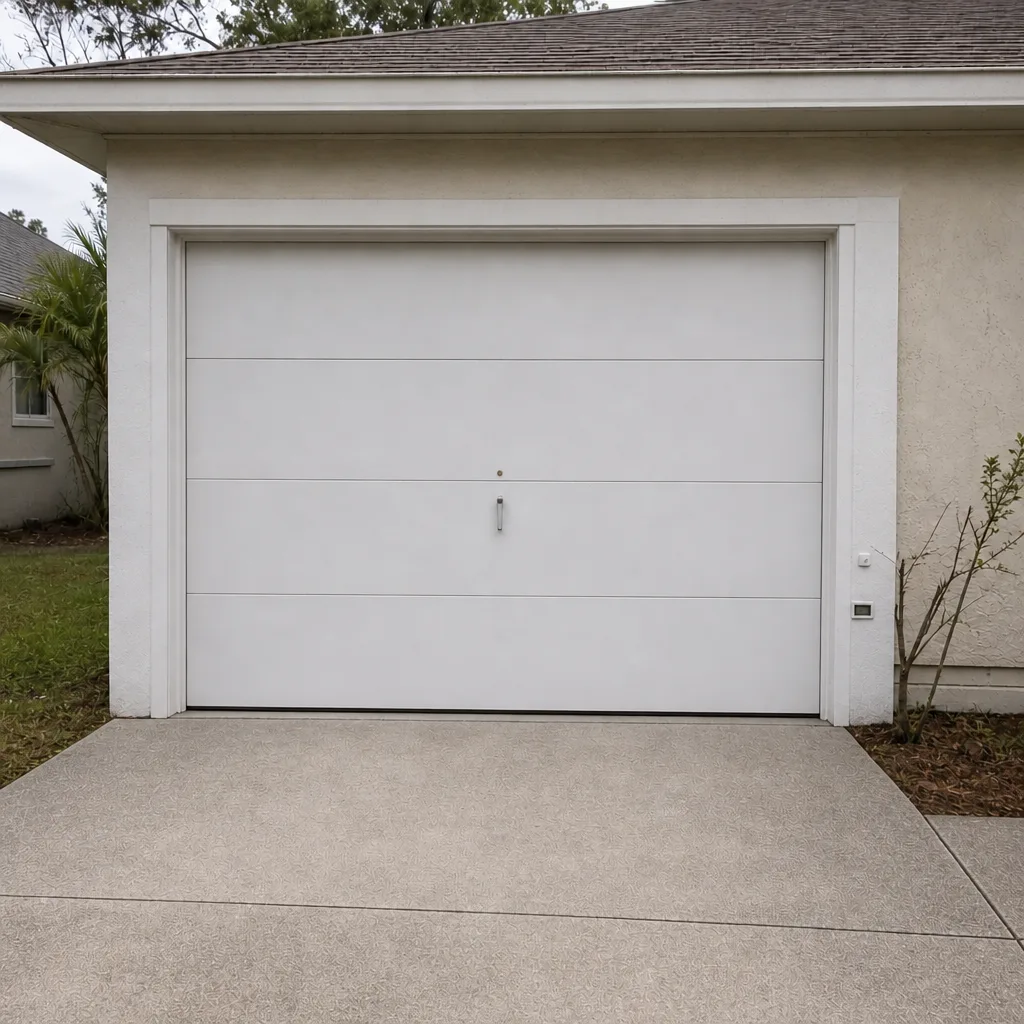 After
When to Call a Professional
If your door won’t close, or closes halfway and stops, or closes but doesn’t latch, or the opener runs but the door doesn’t move, or a spring is visibly snapped, or the door hangs crooked, or a cable is hanging loose, or the door is loud and jerky when it opens or closes – call a professional. Springs and cables are under enough tension that a DIY attempt at replacement can cause serious injury, and opener failure diagnosis requires specific tools and training. The door doesn’t need to be a complete failure for it to be dangerous to your car, your door, or your family; a partial failure often leads to a total failure under load. Carrington Garage Door Repair offers free estimates in Spring Hill – call (844) 560-6506. We answer 24/7. Fast dispatch from 7am to 7pm, Sunday through Friday.
Frequently Asked Questions
Ask for the license number and check it against Florida’s state licensing database before work starts. Confirm the license class covers garage door installation and repair specifically, not just general handyman work, and request a certificate of insurance. If a contractor won’t provide either, call someone else. For an exact quote on a specific repair, call (844) 560-6506 – estimates are free.
Independent specialists do garage door work as their entire business and handle doors, springs, tracks, and openers under one accountable team. National franchises may subcontract installation or repair work to independent local technicians, which can blur accountability if something goes wrong. Ask directly who’ll be at your house and under what arrangement. Call (844) 560-6506 for a clear answer on your specific job.
Most cities require a permit for replacing or resizing a garage door, so ask the city’s building department whether your specific job needs one. The answer often depends on whether you’re swapping panels at the same opening size or changing the opening itself. A licensed contractor will know the local rules; a handyman often won’t. Call (844) 560-6506 for a free estimate and take the guesswork out of it.
Repair usually wins for a single snapped spring, a bent track, a bad roller, or an opener with a failed control board or gear. Replacement usually wins when the door panel is structurally compromised, the opener motor has failed on an old unit, or the door size no longer fits the opening. Ask the technician to show you the problem on the door – a specialist can point to it. Call (844) 560-6506 for a free diagnosis and estimate.
Yes. The brand on the door and the brand on the opener aren’t always the same, and a good contractor should work on whichever you own rather than steering you toward one brand. We work on LiftMaster, Chamberlain, Genie, Clopay, Amarr, Wayne Dalton, Craftsman, and Raynor equipment. Call (844) 560-6506 for a free estimate and we’ll tell you exactly what you’re working with.
Quotes vary because the diagnosis behind the quote varies. Three technicians can look at the same door and see three different problems – a snapped spring, a stretched cable, or a stripped opener gear – depending on their training and the brands they work on. The right comparison is line items, not totals. Call (844) 560-6506 to get a written estimate with parts, labor, and adjustment shown separately.
The Bottom Line
Hiring a garage door contractor in Spring Hill comes down to a few verifications: confirm the contractor is a dedicated specialist, verify licensing and insurance, ask whether they’re an independent specialist or a franchise subcontracting locally, ask the brand-fluency questions before anyone touches a spring, and insist on a written estimate that spells out parts, labor, adjustment, disposal, and warranty. Then compare estimates line by line – not totals – and don’t let anyone sell you a full door replacement for a single snapped spring on a healthy door. If your door isn’t working, call (844) 560-6506 for a free estimate from Carrington Garage Door Repair. We answer 24/7. Fast dispatch from 7am to 7pm, Sunday through Friday.
Written by the team at Carrington Garage Door Repair.