
Last updated November 16, 2026
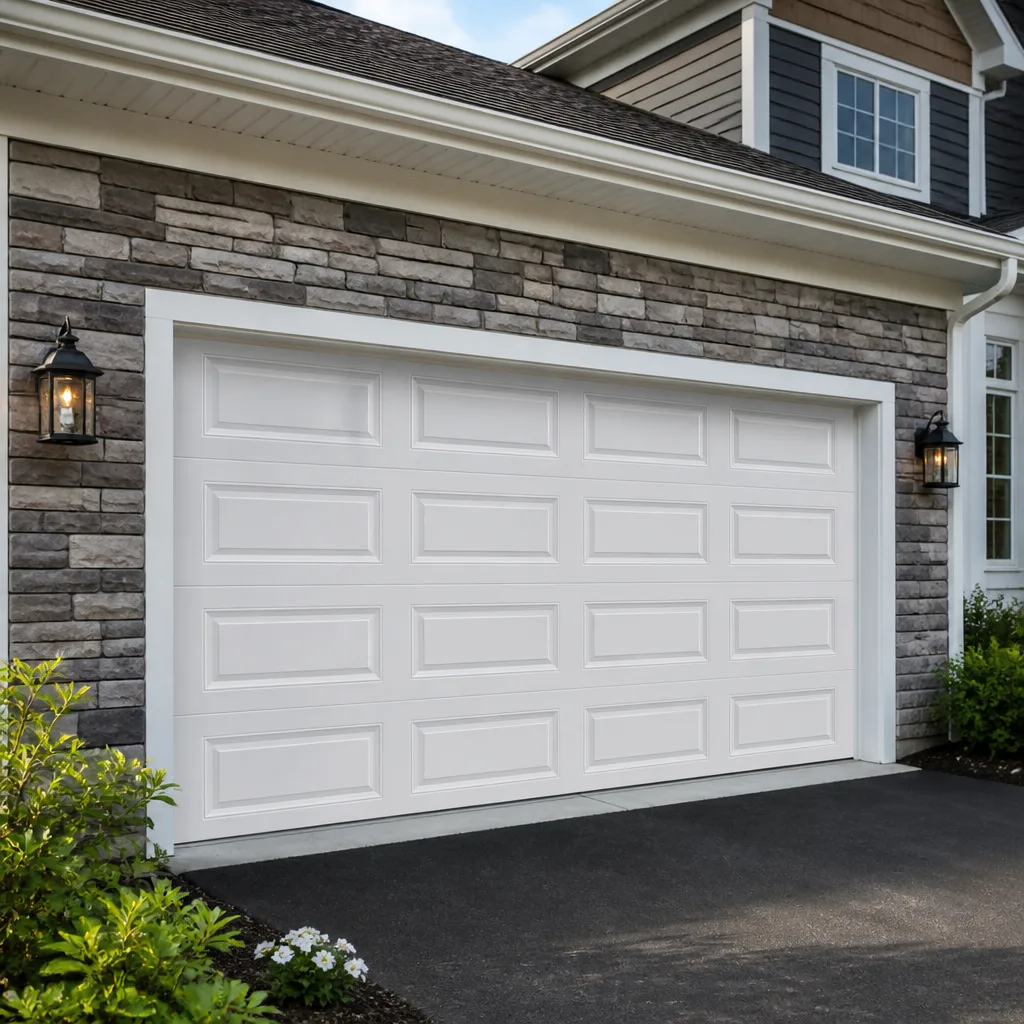 Raised-panel steel
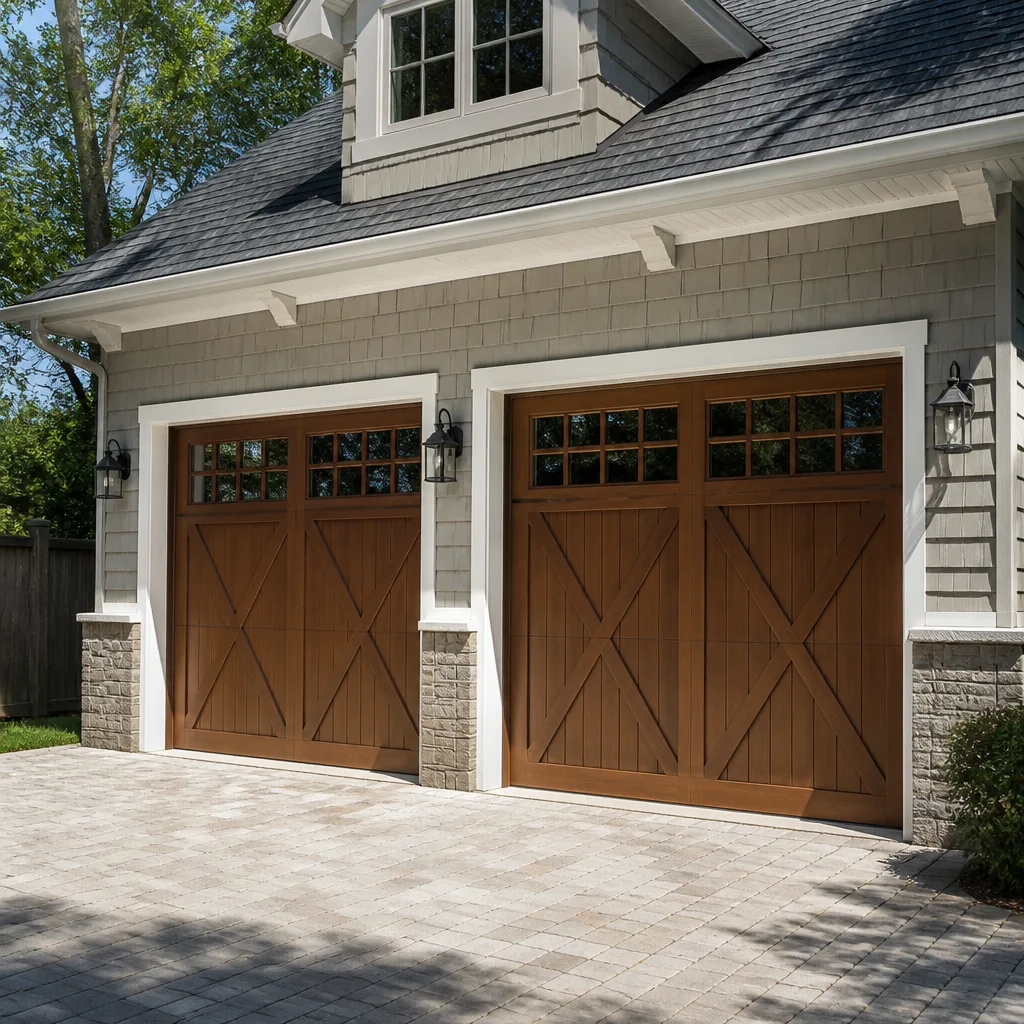 Carriage house
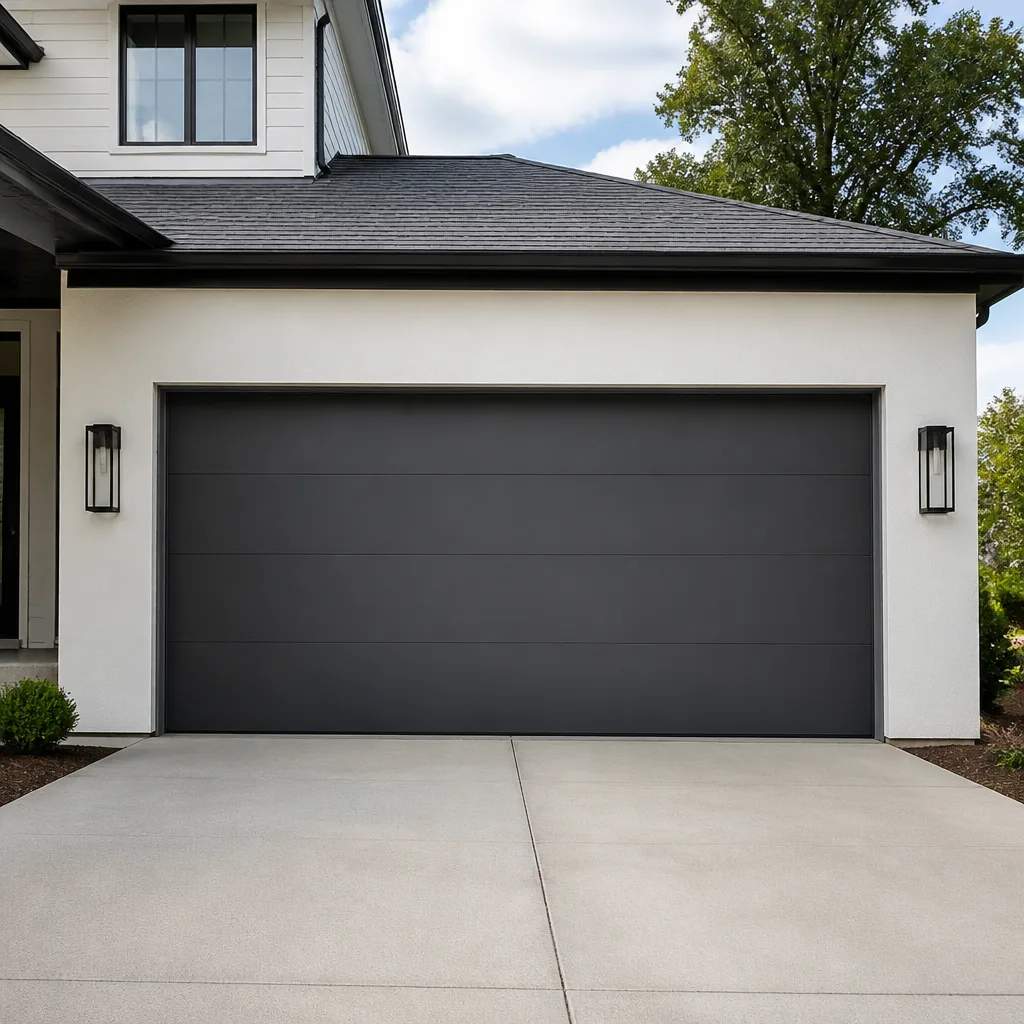 Modern flush
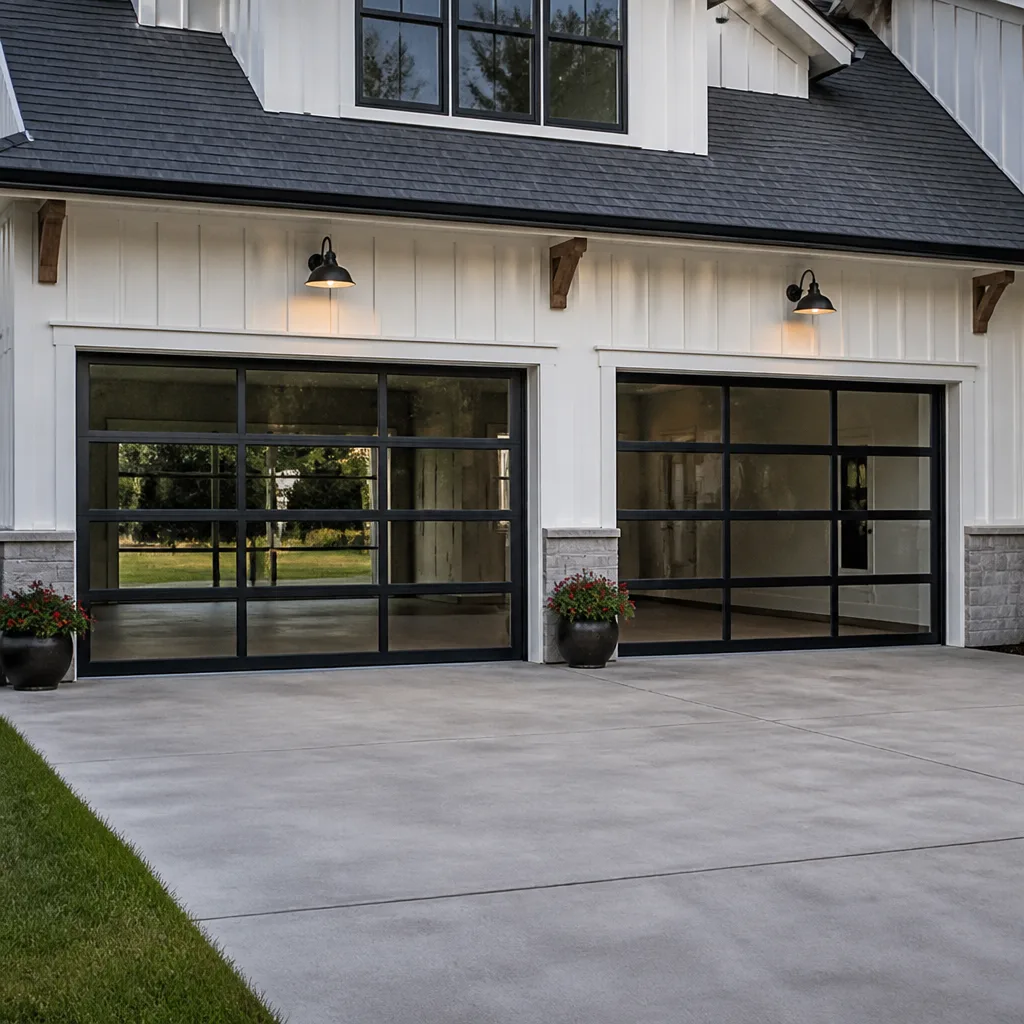 Full-view glass
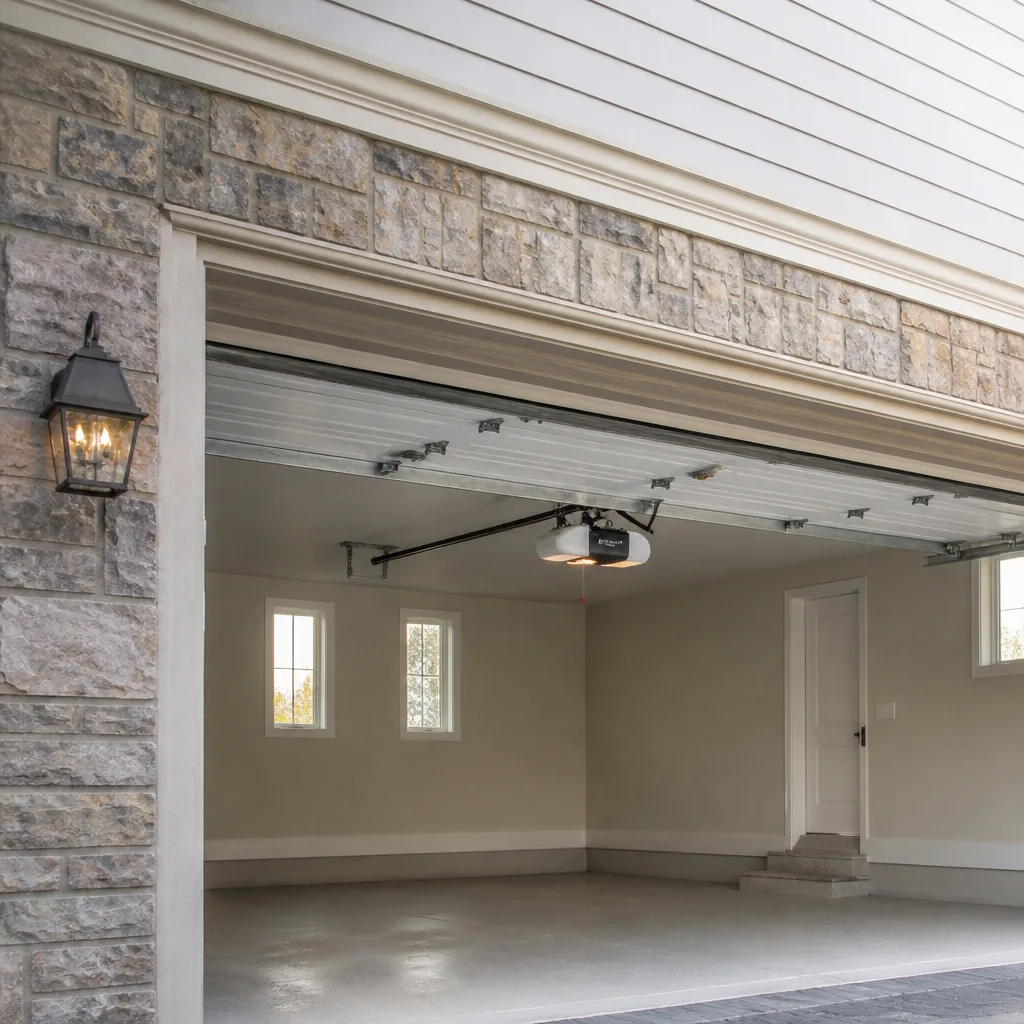 LiftMaster openers
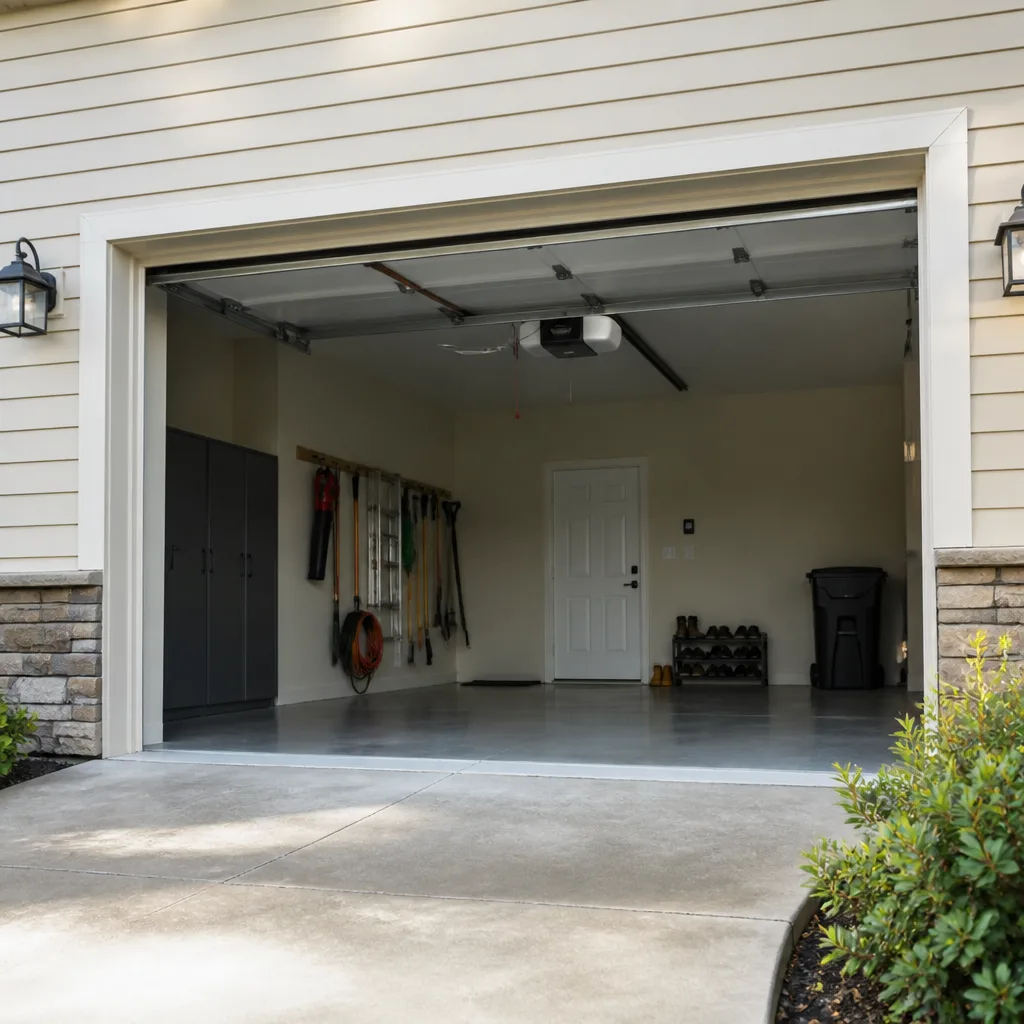 Chamberlain openers
Full 25-point door and opener safety check with every visit - springs, cables, rollers, tracks, and your LiftMaster or Chamberlain opener included
You get a price before we start. It does not change when the pro arrives.
Get your free estimateGarage Door Permits, Codes & Inspections in Spring Hill, FL: What You Need to Know
Most homeowners in Spring Hill assume a garage door is too small a job to involve the county. That assumption costs people at the worst possible moment: closing. When a door, a panel set, or an opener gets swapped without the proper record, the work becomes an unpermitted alteration sitting on your property records, and a buyer’s inspector will find it. This guide walks through where Hernando County draws the line between a repair and a replacement, how Florida’s wind-load rules shape which doors are even allowed here, how to check whether previous work was permitted, what a final inspection actually looks at, and why your HOA and the county are two separate gates you have to pass in the right order.
Quick Answer
In Spring Hill, routine garage door repair generally does not require a permit, but a full door or panel replacement, a change to the opening’s structural framing, or a new door assembly usually does. Hernando County ties those requirements to the Florida Building Code, and garage doors in this part of Florida must meet wind-load standards for the local wind zone. When a permit is required, the work needs to be done to code and pass a final inspection, and skipping that step can complicate a future sale.
Styles & brands we work with
- Raised-panel steel
- Carriage house
- Modern flush
- Full-view glass
- LiftMaster openers
- Chamberlain openers
Table of Contents
- Repair or Replacement? Where Hernando County Draws the Line
- Florida Wind-Load Rules and Why They Matter for Spring Hill Doors
- How to Check Whether Previous Garage Work Was Permitted
- What an Inspector Actually Checks at a Garage Door Final
- HOA Approval vs. County Permit: Which Comes First
- Panel Count, Structural Changes, and the Gray Areas
- Why This Matters at Sale: Records, Disclosures, and Inspections
- Who Pulls the Permit, and What to Ask Before Work Starts
Repair or Replacement? Where Hernando County Draws the Line
The single most common misunderstanding we run into in Spring Hill is that “repair” and “replacement” are interchangeable words. For permit purposes they are not. A repair keeps the existing door assembly and its structural attachment in place. A replacement removes the door assembly, or a substantial portion of it, and installs new material in the opening. That second category is where the county’s interest begins.
Hernando County’s building department administers permits under the Florida Building Code, and the threshold questions are usually about scope, not about the label on the invoice. The practical distinction most homeowners should carry in their head looks like this:
- Usually a repair, no permit: spring replacement, cable replacement, roller and hinge swaps, track realignment, opener repair, sensor adjustment, and replacing a single damaged panel with a matching one where the door’s structural attachment is untouched.
- Usually a permit: installing a complete new door and track assembly, changing the size of the opening, altering the header or the framing that carries the door, or replacing enough panels that the door functions as a new assembly.
- Ask the county: converting a manual door to an opener on a door that was never set up for one, changing from a single door to a double, or replacing a door on a home where the opening has been modified previously and the records are unclear.
Panel count is where a lot of Spring Hill homeowners get caught. Replacing one section after impact damage is typically treated as repair. Replacing three of four sections on a sectional door starts to look like a new door, and a building department reviewer may treat it that way. If you’re replacing most of the door, it’s worth a phone call to the county before you order material, not after.
There’s also the question of who performs the work. Our garage door repair work is largely repair-category, and that’s why so much of it doesn’t involve a permit. Replacement is a different conversation, and the scope should be settled before anyone touches the door.
Florida Wind-Load Rules and Why They Matter for Spring Hill Doors
Garage doors in Florida are not selected purely on looks and price. They’re selected against the wind-load requirements of the Florida Building Code, and the door’s rating has to match what the code requires at that opening. Spring Hill sits in a part of the state where those requirements are a real design constraint, not a formality. A door that would be perfectly fine somewhere inland and north may not be the right door here.
What this means in practice:
- Replacement doors need a wind-load rating appropriate to the opening and to the code in effect at the time of the permit. This is why the permit application asks for product information.
- Two doors that look identical from the street can carry different ratings. Panel gauge, reinforcement, and the track and hardware assembly all factor in.
- A door rated for the opening it’s installed in is a system: panels, tracks, brackets, and anchors. Swapping only the panels onto older hardware, or the reverse, can undermine the rating the door was evaluated under.
- Impact-rated glazing, where a door has windows, is a separate consideration from the door’s structural rating.
We work across Clopay and Amarr doors regularly, and both publish wind-load information for their product lines. That’s part of why brand familiarity matters on a replacement job: the spec sheet has to line up with the code requirement before the permit is filed. A technician who only knows one brand will push that brand whether or not it fits the opening.
If you’re choosing a door for a Spring Hill home, ask for the wind-load documentation before you sign anything. If the answer is vague, that’s your answer.
How to Check Whether Previous Garage Work Was Permitted
If you bought a Spring Hill home and the garage door looks newer than the house, there’s a reasonable chance the work was done at some point, by someone, with or without a permit. You can find out, and it’s easier than most people expect.
- Start with Hernando County’s building department. Permit records are public. Give them the property address and ask for the permit history, specifically anything related to the garage, the door, or the opening.
- Check the closing documents from your purchase. Seller disclosures sometimes mention garage door replacement. If a disclosure mentions the work but the county has no record, that’s a discrepancy worth understanding.
- Look at the door itself. Most manufacturers apply a label or stamp to the door, often on the inner face of a panel or on the end stile. A label with a model and rating is useful information; a door with no identifying marks at all is a reason to look further.
- Compare the door to the surrounding construction. Fasteners that don’t match the rest of the home’s hardware, tracks that were re-drilled, or anchors set in patched concrete all suggest work happened at some point.
- Ask before you renovate. If you’re planning to change the door anyway, the permit for your new work will often surface the old records during review.
None of this is about finding fault with a previous owner. It’s about knowing what you own. An unpermitted door isn’t automatically a problem, but an unrecorded alteration to a structural opening is a question you want answered on your schedule rather than a buyer’s.
What an Inspector Actually Checks at a Garage Door Final
A garage door final inspection in Hernando County is not a cosmetic review. The inspector is verifying that what was permitted is what got built, and that the installed assembly meets the code requirements the permit was issued under. Here’s the general shape of what gets looked at:
- Product match. The installed door and hardware should correspond to what the permit application listed, including the wind-load rating.
- Attachment and anchorage. How the tracks and brackets are fastened to the framing, and whether the framing itself is sound and as described.
- Opening dimensions. The door fits the opening the permit covered.
- Balance and operation. The door should open and close under control and stay where it’s put. An inspector who raises a door that slams or drifts is going to write it up.
- Safety devices. For an opener-equipped door, the photo-eye sensors and the reversing function are part of the picture.
- Labeling. Manufacturer labels and rating information need to be present and legible.
What the inspector is not doing is grading your install for neatness or testing your opener’s remote range. The final is about code compliance and documentation. That said, a door that isn’t properly balanced or an opener that doesn’t reverse reliably will fail on function, which is why the install has to be right the first time rather than corrected at inspection.
If the door has an opener, the opener itself matters here too. We handle garage door opener repair on LiftMaster, Chamberlain, Genie, and Craftsman units, and safety-reversing behavior is one of the first things we check on any call. It’s also something an inspector will check.
HOA Approval vs. County Permit: Which Comes First
Spring Hill has a substantial number of deed-restricted communities, and many of them have architectural review requirements that apply to garage doors. That’s a second approval process running alongside the county permit, and the two are not substitutes for each other. An HOA approval does not satisfy the building department, and a county permit does not satisfy your HOA.
The order that usually works:
- Read your HOA’s architectural rules first. Find out what’s required for a garage door change: application form, product specs, color, style restrictions, and review timeline.
- Get the HOA approval in hand. Most architectural review committees want to see the product you intend to install before they approve it. Submitting after you’ve ordered material is a good way to own a door you can’t install.
- Then file the county permit. The permit application is where the code requirements and the product documentation come together.
- Install only after both are in place. This protects you if either party asks for documentation later.
There are exceptions. Some HOAs only require notification, and some don’t regulate garage doors at all. But if the community has architectural review, assume it applies until you’ve confirmed otherwise in writing. Getting this backwards means either re-ordering a door that doesn’t match the approved style, or installing a door the county won’t sign off on.
Panel Count, Structural Changes, and the Gray Areas
The permit question gets genuinely murky in the middle. Here’s how we think through it when a Spring Hill homeowner asks whether their specific job needs a permit.
One panel, matching, same hardware: typically repair. The door assembly is preserved.
Two panels on a four-panel door: usually repair, but this is where a building department reviewer might see it differently. Worth a call.
Three or more panels, or all panels: functionally a new door. Treat it as replacement and permit accordingly.
New track or new springs and hardware with existing panels: the door assembly is changing even if the panels aren’t. This is the case most likely to be misread as repair, and it’s the one where the attachment and rating of the assembly are in question.
Any change to the opening: widening, heightening, moving, or framing changes. Permit.
Opener-only work: swapping an opener on a door that was already opener-equipped generally doesn’t need a permit. Adding an opener to a door that was never set up for one, especially where the door’s balance or the header needs modification, is a different category and should be confirmed with the county.
The pattern is consistent: if the structural attachment of the door to the house is being changed, or if the door assembly is effectively being replaced, the county is interested. If you’re preserving the assembly and just restoring function, it usually isn’t.
We work on Wayne Dalton doors as well as the other major brands found in Spring Hill homes, and the panel-matching question comes up constantly on older installations where only part of the door is damaged. Matching an existing door’s profile and color is a material question as much as a permit question.
Why This Matters at Sale: Records, Disclosures, and Inspections
The permit question is quiet for years and then very loud during a real estate transaction. When a home in Spring Hill goes under contract, the buyer’s inspector walks the property, and garage doors get looked at. So do county records. When the two don’t match, the deal has a problem to solve.
What can happen:
- A buyer’s agent pulls permit history and finds a door replacement with no record. The buyer asks for documentation or a credit.
- An inspector notes the door appears newer than the home and flags it as needing verification. That verification takes time, and time is not what a closing schedule has.
- An insurer reviewing the property asks about the door’s wind-load rating. Without documentation, the answer is a shrug, and that’s not a good answer for a structural opening in this part of Florida.
None of this means every unpermitted door blows up a sale. Many don’t. But the exposure is real, and it’s entirely avoidable if the permit is pulled at the time of the work. If you’re the seller, gathering the records before you list is far easier than producing them under contract. If you’re the buyer, ask for them during your inspection period, when you still have leverage.
Who Pulls the Permit, and What to Ask Before Work Starts
In Florida, the permit for this kind of work can be pulled by the property owner or by a licensed contractor. Which one it is matters, because the permit carries responsibility for the work being done to code and for the inspection happening at all. Here’s the conversation to have before anyone starts.
- “Is a permit required for this scope?” Ask it explicitly, in writing if you can. A contractor who answers immediately and specifically has thought about it. A vague answer is information too.
- “Who is pulling it, and can I see the number?” Get the permit number when it’s issued. That number is how you or a future buyer verify the work.
- “What’s the product and what’s its wind-load rating?” For a replacement, you should be able to see the documentation before the door is ordered.
- “Who schedules the inspection, and who meets the inspector?” Someone needs to own the final inspection, and it should be settled in advance.
- “What does the final inspection require?” If the door has an opener, confirm the safety-reversing function is part of what gets checked.
If your community has architectural review, add a sixth question: “Do you handle HOA documentation, or do I need to have that approved before you order?” The answer tells you whether the timeline is realistic.
One more point, and it’s the one that protects your wallet: the price should be quoted and agreed before work starts, with the scope in writing. If a permit is part of the job, it should be in that scope, not a surprise line item later.
Common Mistakes to Avoid
- Treating a full panel set as repair. Replacing most or all of a door’s panels changes the assembly, and a building department reviewer may see it as replacement. Confirm the classification before you order material, not after the door is in the opening.
- Getting HOA approval after the door is installed. Architectural review committees approve products before installation. Installing first and asking later can mean removing a door that doesn’t match the community’s approved styles.
- Assuming a permit isn’t needed because the door “looks the same.” A replacement door that matches the original visually still needs to meet the wind-load requirement for the opening. Appearance doesn’t establish compliance.
- Not asking about the previous owner’s work before you renovate. If your garage opening was modified at some point, that history surfaces during your own permit review. Better to know early.
- Choosing a door without wind-load documentation. In this part of Florida, the rating is part of the product, not an optional extra. If a seller can’t produce it, keep looking.
- Leaving the opener out of the plan. An opener on a replacement door, or a door that was never set up for one, is often part of the same conversation. Including it in the scope from the start avoids a second round of paperwork.
- Letting the inspection become somebody else’s problem. A final inspection that nobody schedules is an open permit. Agree in advance who owns it.
See the difference
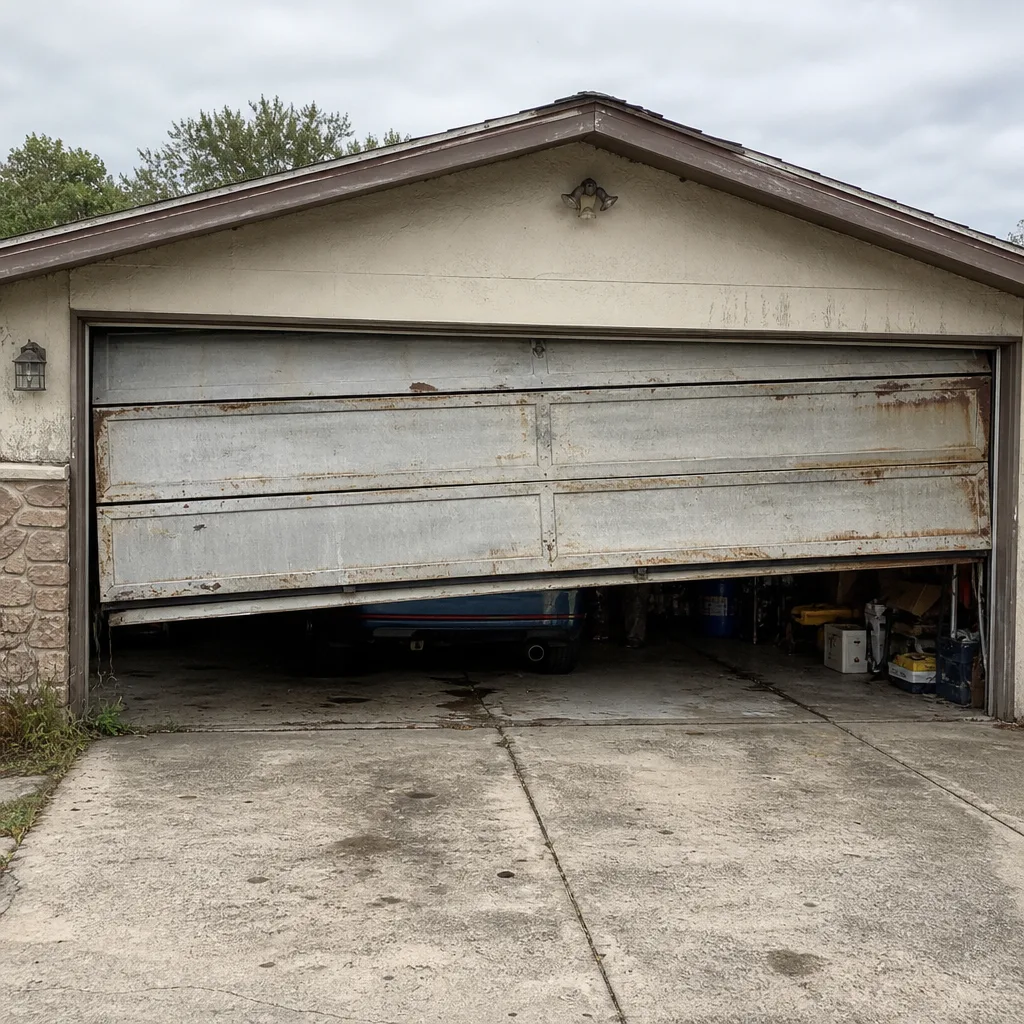 Before
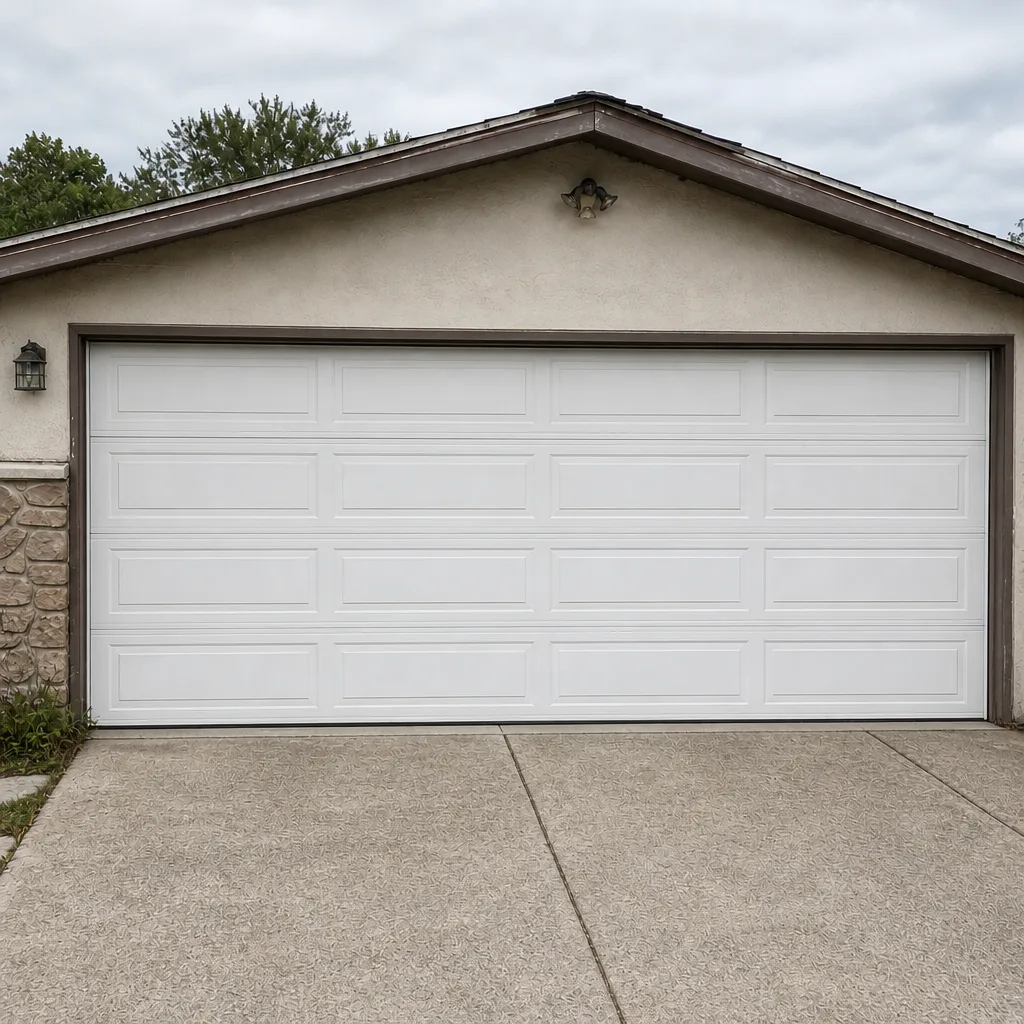 After
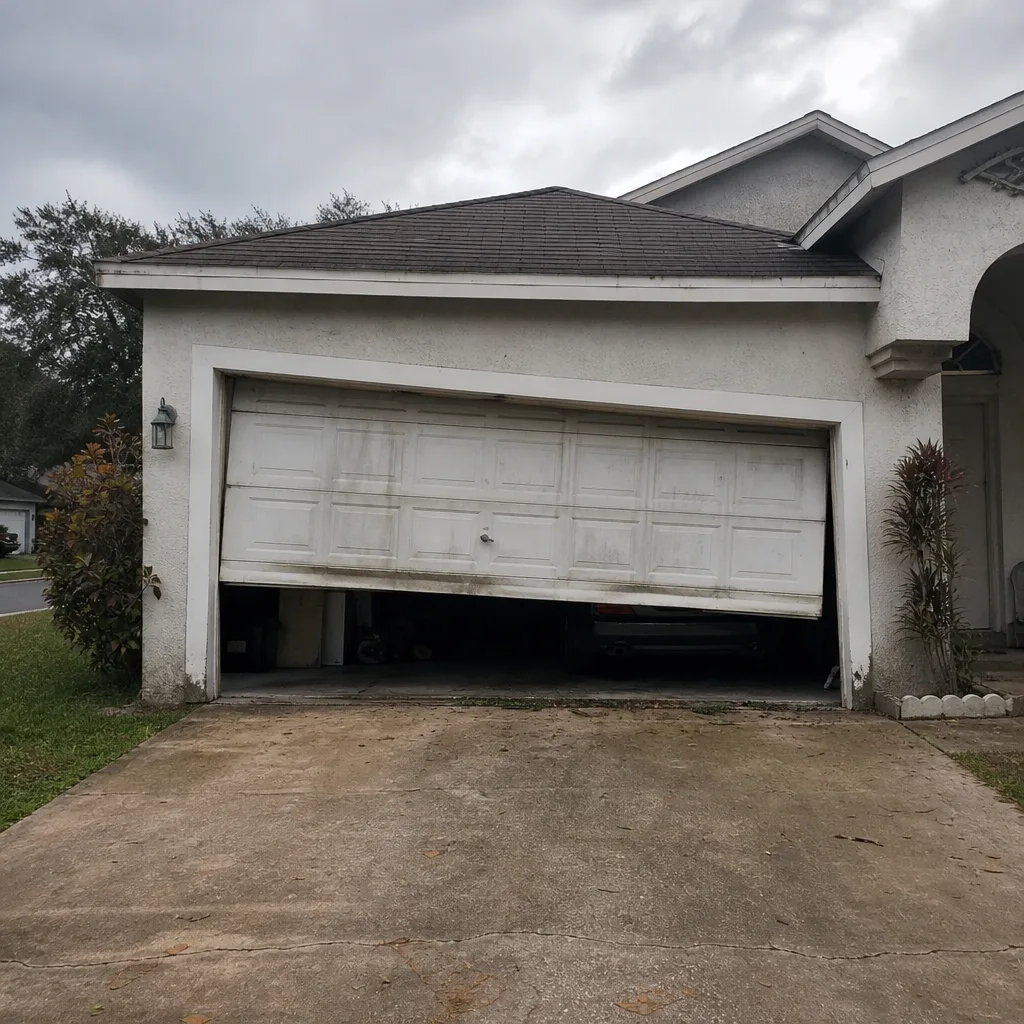 Before
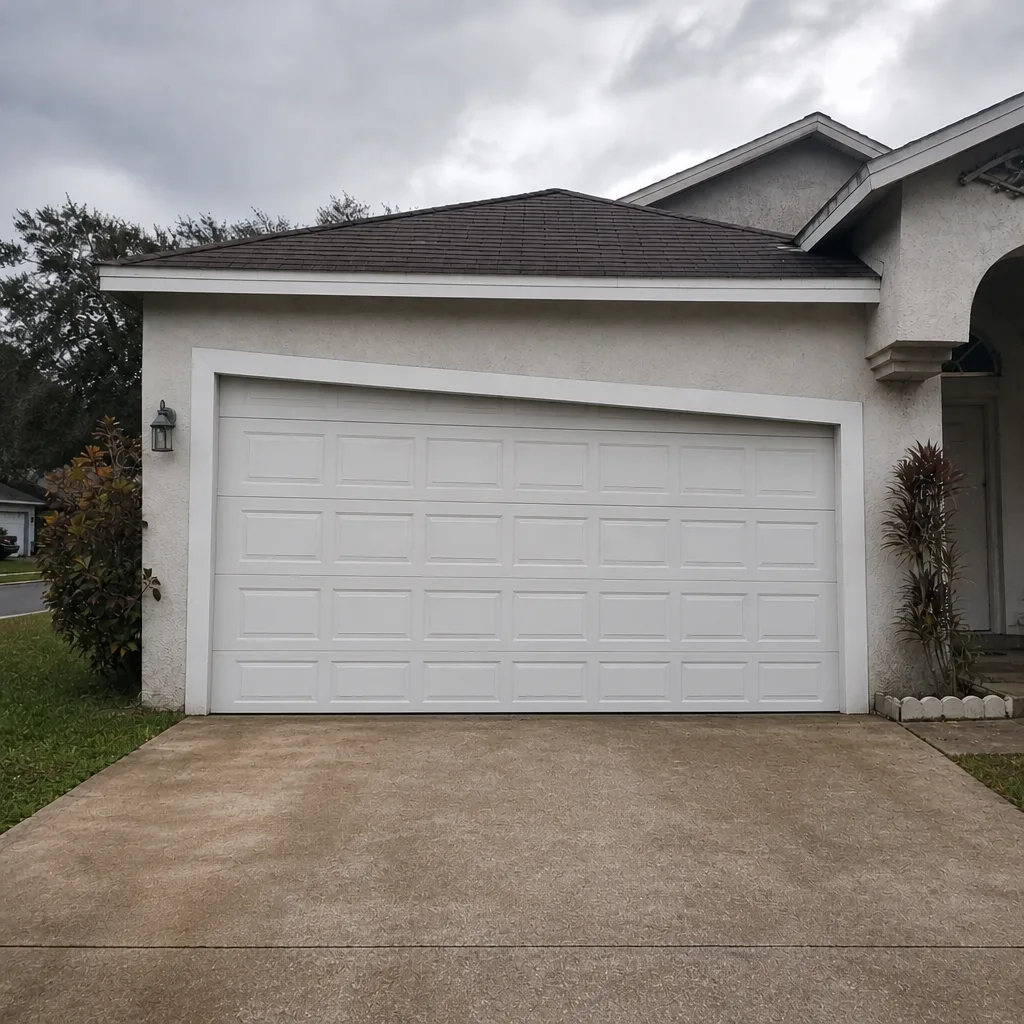 After
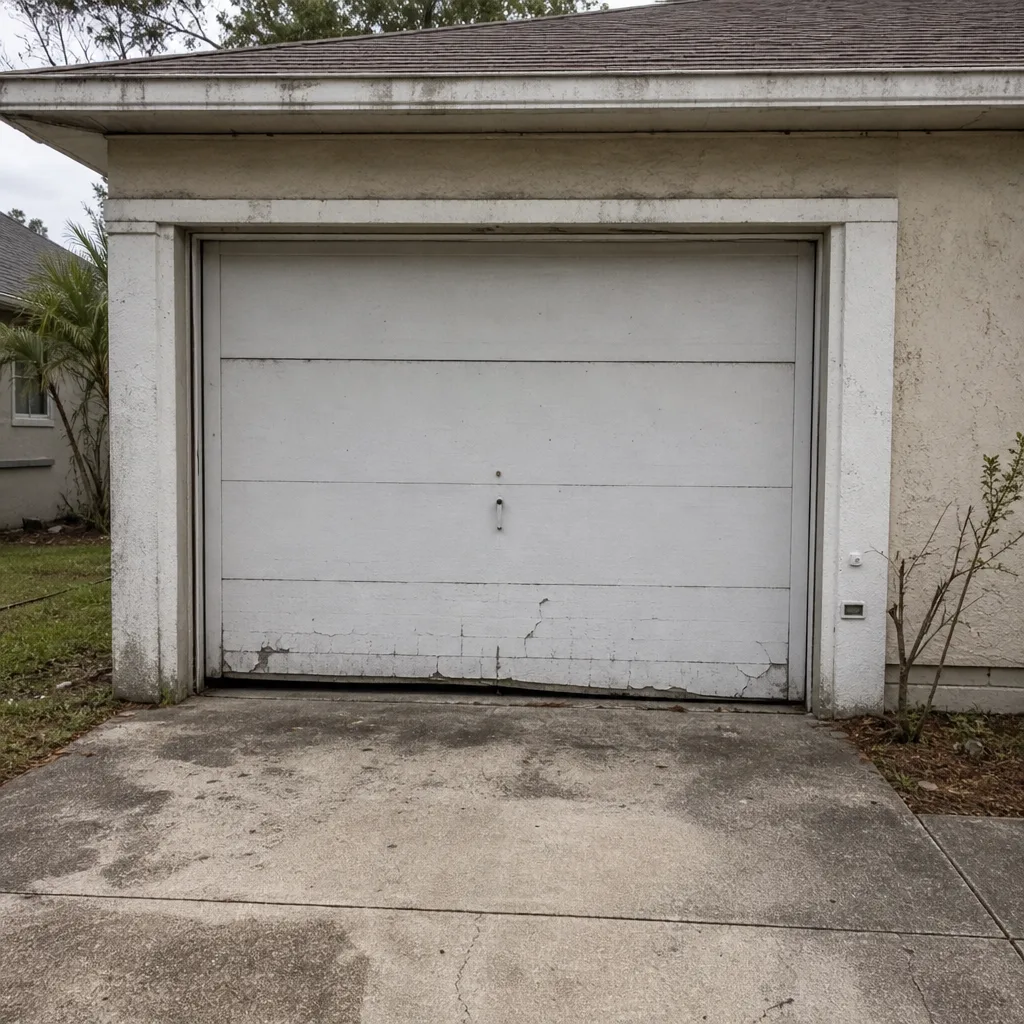 Before
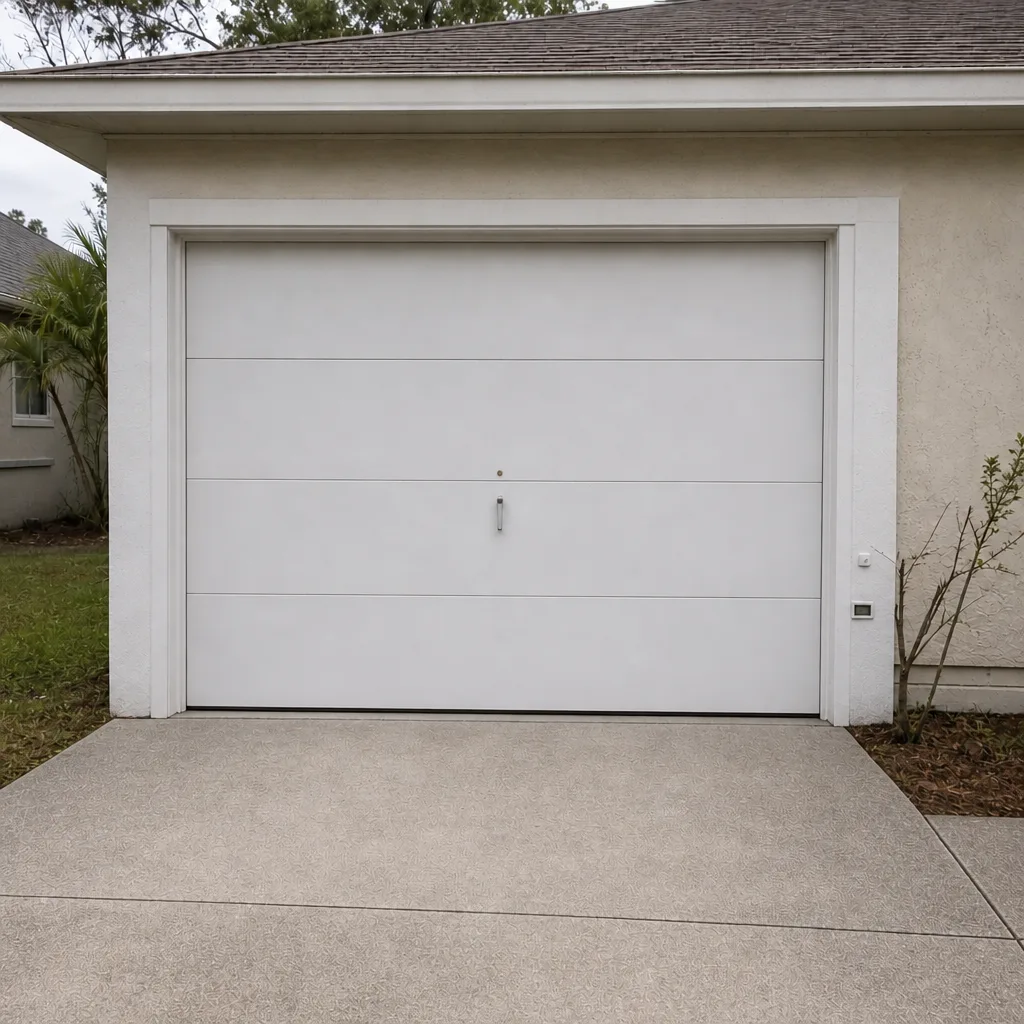 After
When to Call a Professional
Some of this you can handle yourself: the county records request, the HOA rulebook, the phone call to the building department about your specific scope. What we’d steer you away from is the door itself. Torsion springs and cables are under extreme tension, and the hardware that anchors a door to the framing is exactly what the county’s wind-load requirements are about. Getting that wrong is not a cosmetic problem, and it’s not a job for a general handyman who happens to own a ladder.
We’ve seen this before across Spring Hill, from older doors with unclear histories to newer homes where the HOA approval and the county permit were handled in the wrong order. Our technicians have up to 13 years of experience across LiftMaster, Chamberlain, Genie, Clopay, Amarr, Wayne Dalton, Craftsman, and Raynor equipment, and we diagnose the actual problem rather than defaulting to replacement. We’re a garage door specialist, not a general contractor, so we stick to what we know.
Carrington Garage Door Repair offers free estimates in Spring Hill. Call (844) 560-6506. We answer 24/7. Fast dispatch from 7am to 7pm, Sunday through Friday. Closed Saturday.
Frequently Asked Questions
Most full garage door replacements in Spring Hill require a permit through Hernando County, because the door is a structural opening with a wind-load requirement under the Florida Building Code. Simple repairs like spring, cable, and roller replacement generally do not. Confirm your specific scope with the county’s building department before ordering material. If you’re not sure which category your job falls into, call (844) 560-6506 and we’ll walk through it with you. Estimates are free.
Request the permit history from Hernando County’s building department using the property address. Permit records are public and the staff can tell you whether any garage-related permits were issued and closed. Cross-check that against your seller’s disclosures and any labels on the door itself. Call (844) 560-6506 if you’d like a technician to look at the installation and tell you what they see. Estimates are free.
They’re separate approvals with different purposes. The HOA’s architectural review controls appearance and community standards; the county permit controls code compliance and wind-load requirements. You generally need HOA approval first, so the product is confirmed before the permit is filed. Skipping either one creates a problem later. Call (844) 560-6506 for an exact quote on the work itself. Estimates are free.
It can. Buyers and their inspectors compare county records to what’s on the property, and a door replacement with no permit on file raises questions that take time to resolve during a closing period. It doesn’t automatically kill a sale, but it’s avoidable exposure. Call (844) 560-6506 if you want the installation reviewed before you list. Estimates are free.
It depends on how many and what else is changing. One panel swapped with a matching section is typically treated as repair. Replacing most or all panels, or changing the track and hardware along with the panels, usually moves the job into replacement territory. Hernando County’s building department can confirm for your specific door. Call (844) 560-6506 for an exact quote on the work. Estimates are free.
A final inspection verifies the installed door matches the permitted product, including wind-load rating, and that the attachment, balance, operation, and safety functions meet code. For an opener-equipped door, sensor and reversing function are part of it. The inspector isn’t grading appearance. Call (844) 560-6506 if you want to know what a compliant install looks like on your door. Estimates are free.
The Bottom Line
Garage door permits in Spring Hill come down to one question: is the door’s structural assembly being preserved, or replaced? Repairs generally don’t need a permit. Replacements, opening changes, and substantial panel or hardware swaps generally do, and the Florida Building Code’s wind-load requirements are the reason. Check the county records on any home you’re buying, get HOA architectural approval before you order a door, and settle who pulls the permit and who meets the inspector before work starts. None of it is bureaucratic trivia. It’s the difference between a door you own and a question you inherit.
If you’re not sure where your job lands, the team at Carrington Garage Door Repair works on the full system, door panels, springs, tracks, and openers, and we’ll tell you honestly whether a permit applies. We serve homeowners throughout Spring Hill and the surrounding area. Call (844) 560-6506 for a free estimate. We answer 24/7. Fast dispatch from 7am to 7pm, Sunday through Friday. Closed Saturday.
Written by the team at Carrington Garage Door Repair.