
Last updated November 16, 2026
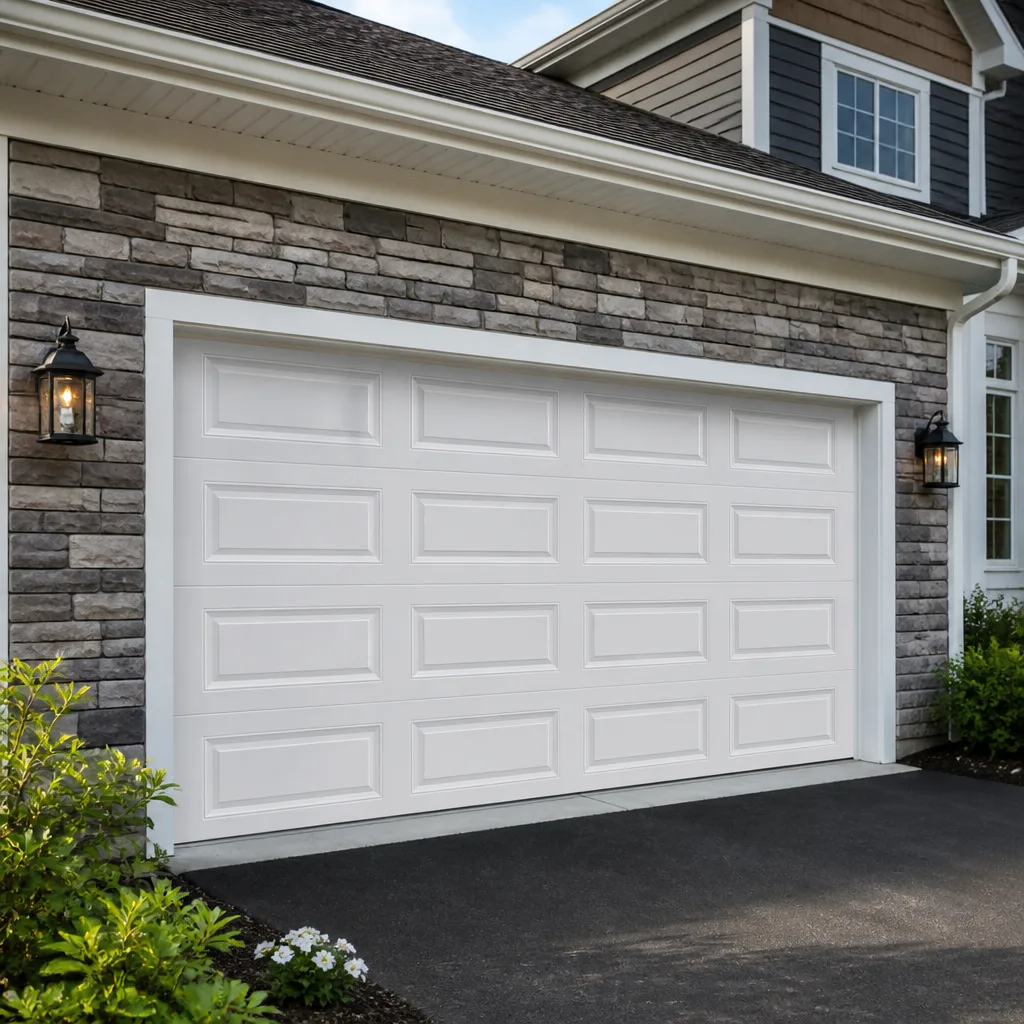 Raised-panel steel
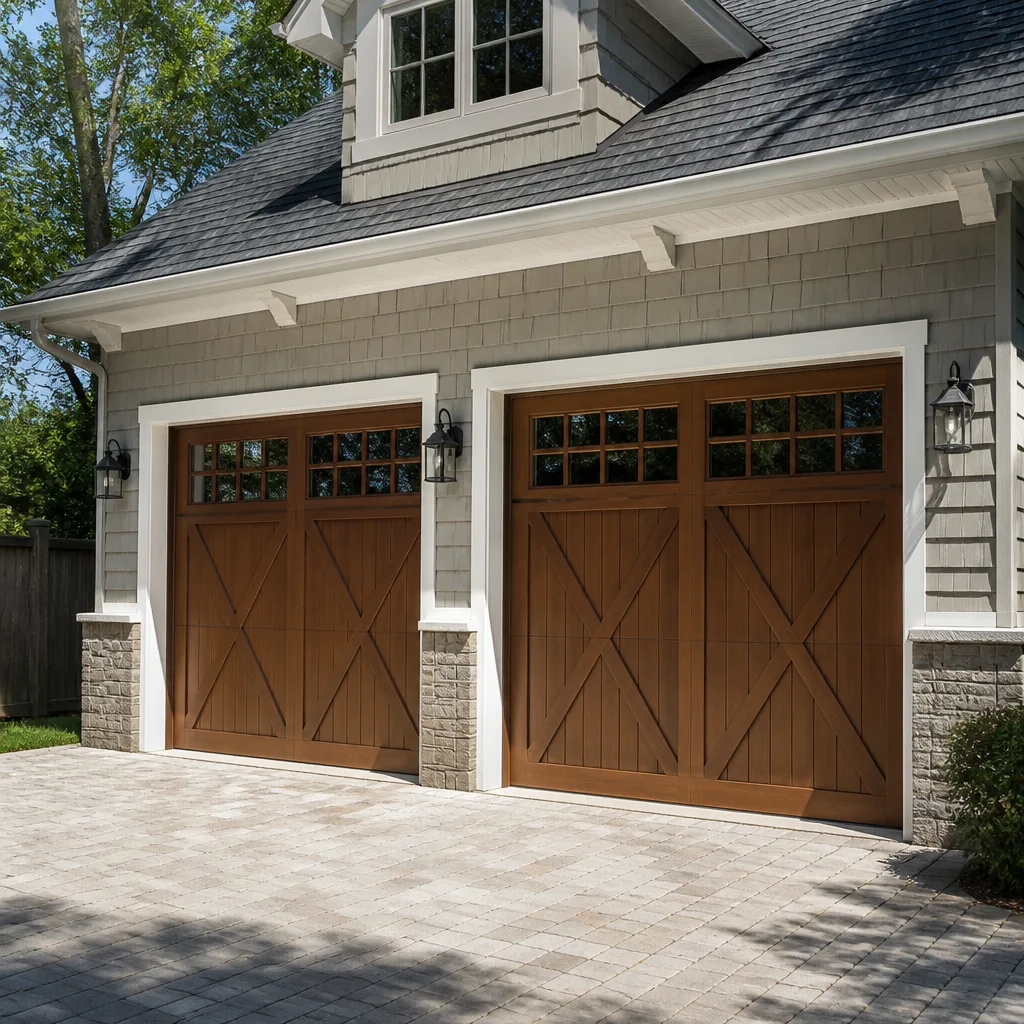 Carriage house
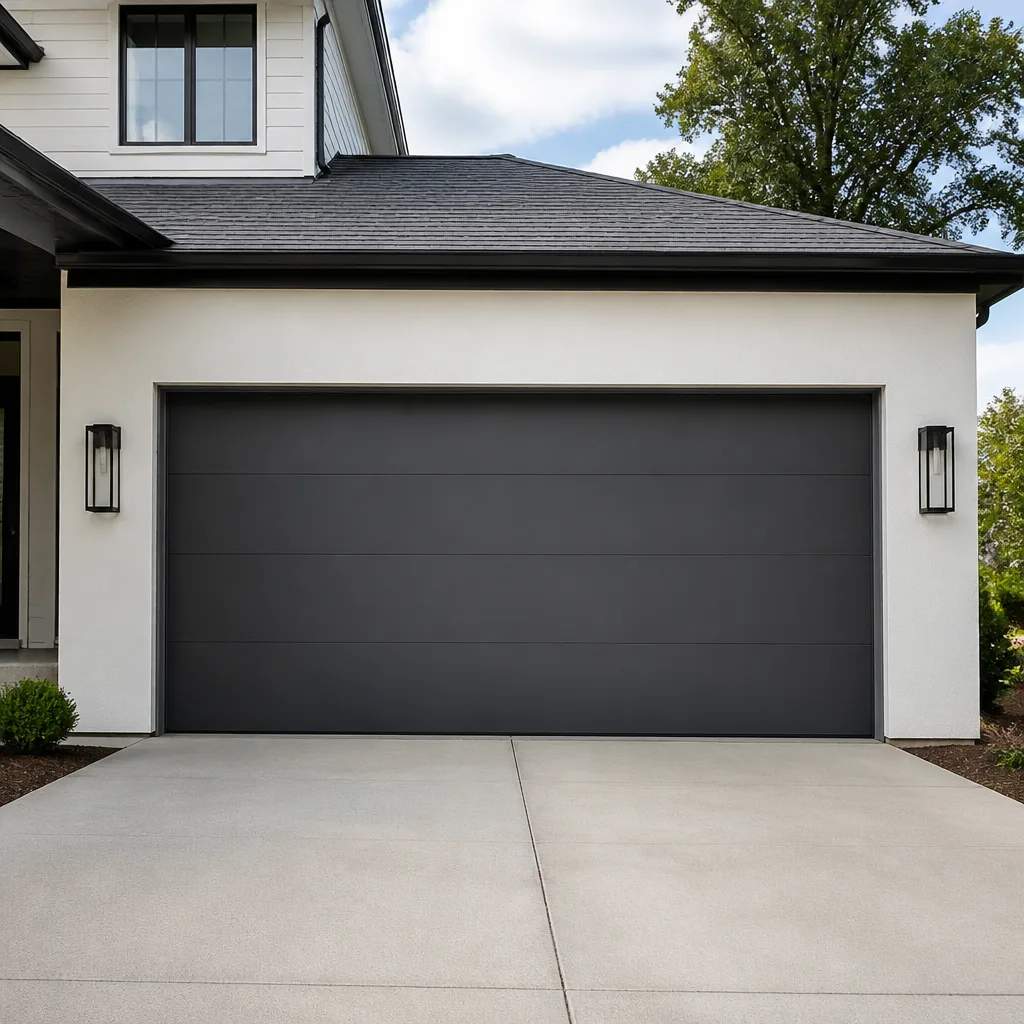 Modern flush
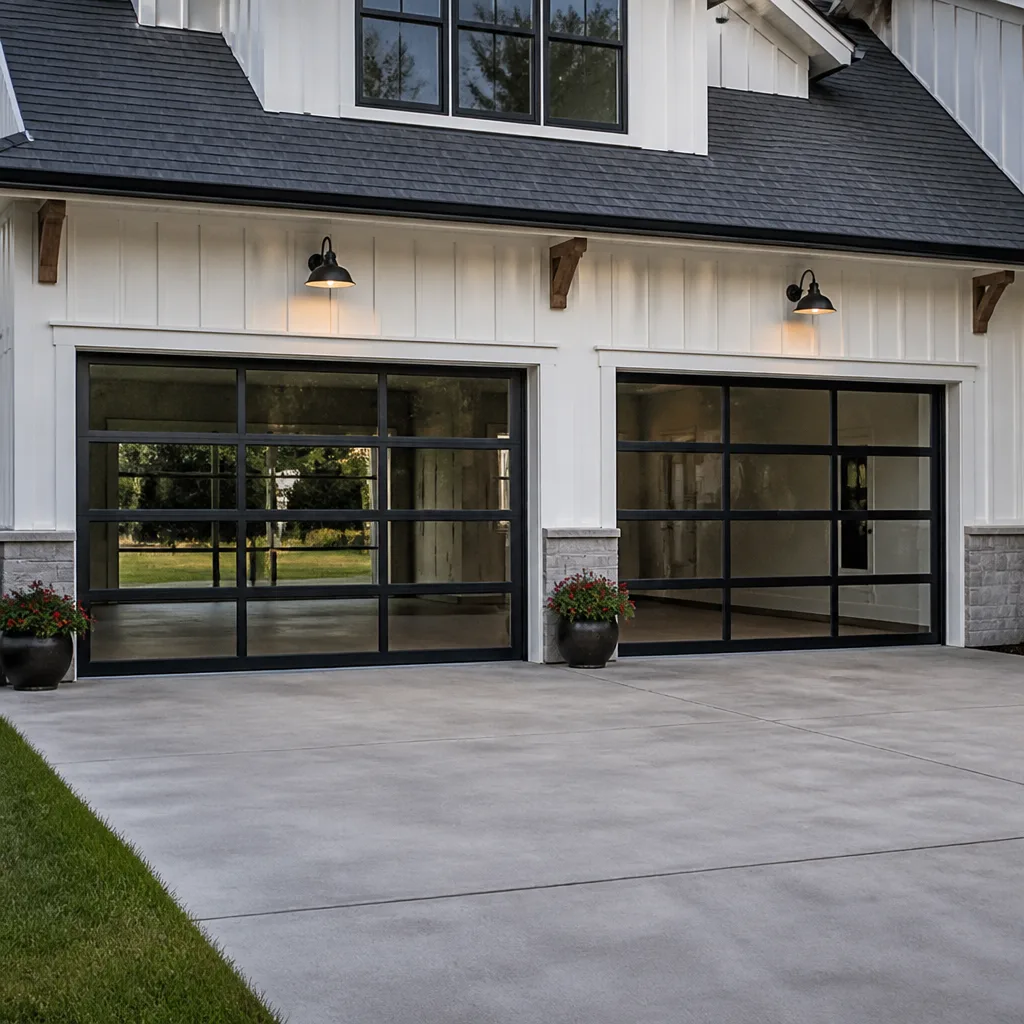 Full-view glass
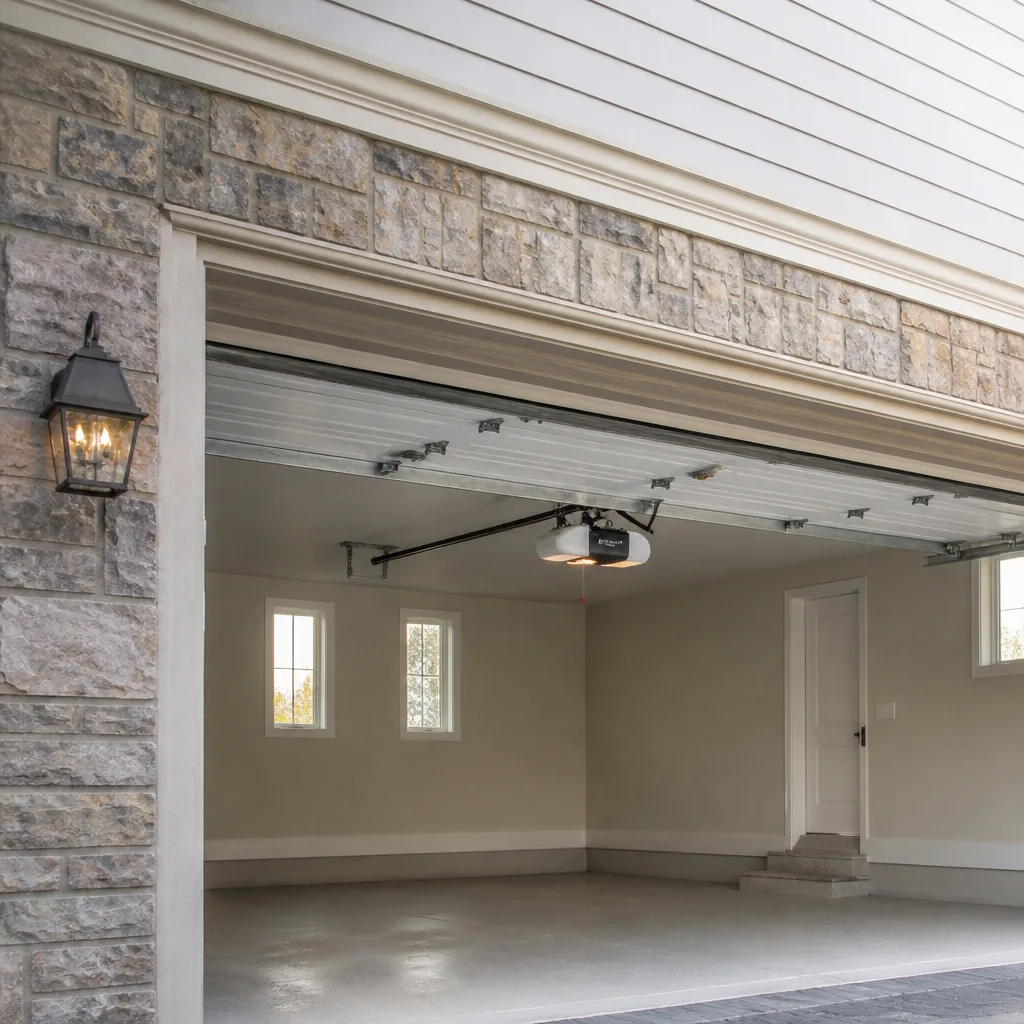 LiftMaster openers
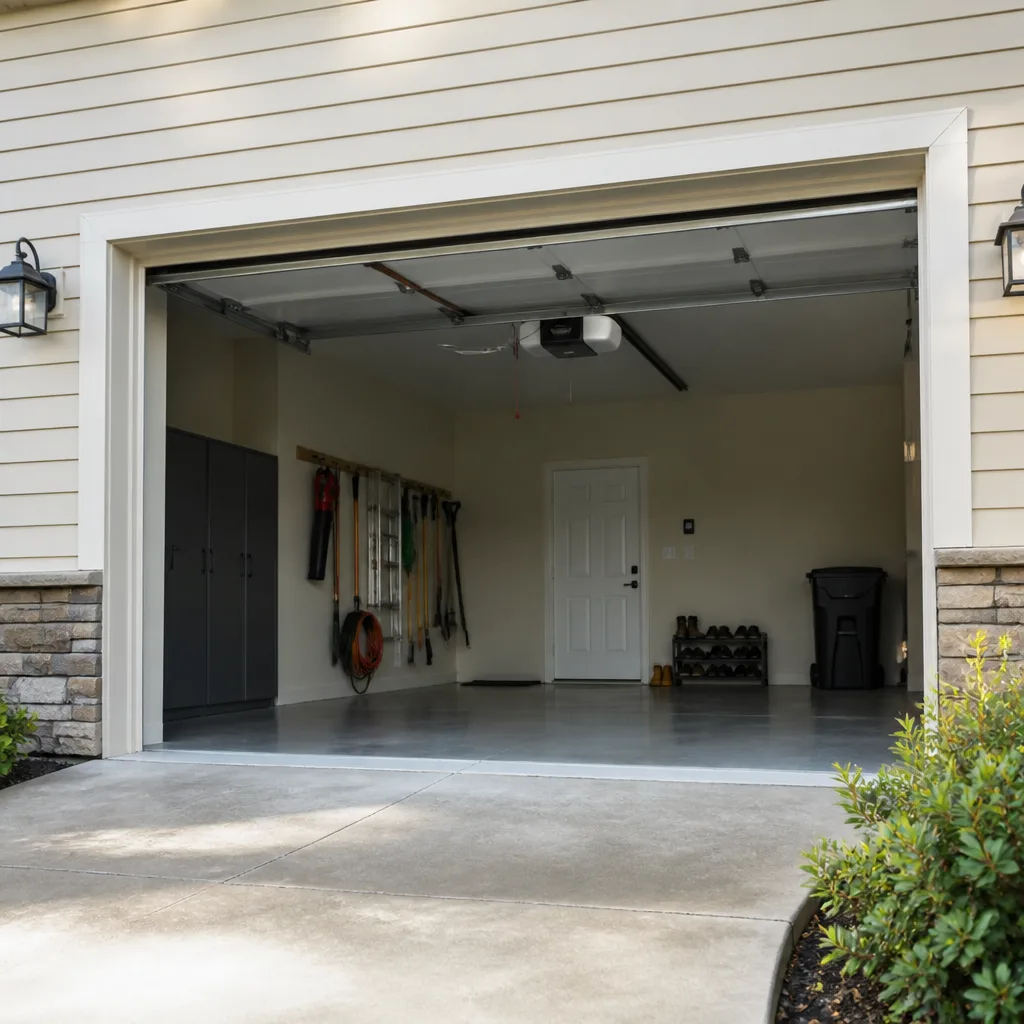 Chamberlain openers
Full 25-point door and opener safety check with every visit - springs, cables, rollers, tracks, and your LiftMaster or Chamberlain opener included
You get a price before we start. It does not change when the pro arrives.
Get your free estimateGarage Door Emergency Preparedness Guide for Spring Hill Homes
Most homeowners in Spring Hill think of storm prep as a checklist for the roof, the windows, and the generator. The garage door barely makes the list. That’s a mistake, and it usually shows up at the worst possible moment. When a named storm knocks out power for days, an electric opener with a dead backup leaves a heavy door stuck shut, and a family that never practiced the manual release can’t get a car out. In our experience, the garage door is the one part of the house you interact with every single day and the one part almost nobody rehearses before a storm. This guide walks through the twenty-minute setup that changes that: how the manual release actually works, which openers support battery backup, how to check your door’s wind rating, what to do when a panel gets damaged, and how to document the whole thing for insurance. No scare tactics. Just the pieces most people skip.
Quick Answer
Garage door emergency preparedness in Spring Hill means four things done before storm season: knowing how to operate your opener’s manual release by hand, confirming whether your opener has a working battery backup, verifying your door’s wind rating for Hernando County, and photographing the door and its labels for insurance. Together these take about twenty minutes and cover the failures that leave a home stranded after a storm.
Styles & brands we work with
- Raised-panel steel
- Carriage house
- Modern flush
- Full-view glass
- LiftMaster openers
- Chamberlain openers
Table of Contents
- How the Manual Release Works (and Why You Should Practice It)
- Battery Backup Openers: What Works and What to Expect
- Wind Ratings for Hernando County: How to Check Your Door
- What to Do When the Power Goes Out Mid-Storm
- If a Panel Gets Damaged: Temporary Securing Without Making It Worse
- Documenting Your Door for Insurance Before the Storm
- The Storm Season Checklist: A 20-Minute Walkthrough
How the Manual Release Works (and Why You Should Practice It)
Every automatic garage door opener has a manual release, and almost no one has ever pulled it. The release is a cord or lever hanging from the opener trolley near the top of the door, usually red, and pulling it disconnects the door from the motor so you can lift the door by hand. That’s the whole idea. The problem is that a door most people have never lifted feels much heavier than they expect, and lifting it wrong can damage panels, bend a track, or hurt your back. The time to learn is on a clear afternoon, not in the dark after a hurricane.
Most openers found in Spring Hill homes fall into two families, and the release is similar on both:
- Chain and belt drive openers (common on LiftMaster, Chamberlain, Genie, and Craftsman units): the release is a cord hanging from the trolley. Pulling it down and slightly toward the door disconnects the carriage.
- Screw drive openers (found on some Genie and Chamberlain models): the release mechanism sits on the trolley in much the same spot. The cord still works the same way, though the motion to reconnect can be stiffer.
Here’s how to practice it safely:
- With the door fully closed and the opener idle, pull the release cord straight down. You should feel the carriage disengage.
- Lift the door slowly by hand to about waist height, then lower it gently. Get a feel for the weight. If it’s hard to lift or wants to slam, that’s a sign of a spring or balance issue worth having checked before a storm rather than during one.
- With the door down, re-engage the carriage by pulling the cord toward the door or running the opener briefly until the trolley grabs. Test that the opener operates normally again.
- Repeat the whole sequence once more so everyone in the house who drives knows it.
The safety side matters here. Garage doors carry enormous spring tension, and the springs and cables that make a door feel light are exactly what make them dangerous to adjust. Only the release cord and the door itself belong in your hands during a practice run. Never try to adjust springs, cables, or the opener’s force settings to fix a heavy door. If the door feels wrong, that’s a job for a trained technician. For anything that needs repair on the door or its hardware, our garage door repair page covers what’s typically involved.
Battery Backup Openers: What Works and What to Expect
Battery backup is the single most useful upgrade for a Spring Hill garage door, and it’s also the one most often installed and forgotten. A battery backup opener runs the door on a rechargeable battery when the power is out, typically for a limited number of open-and-close cycles rather than hours of continuous use. In an area where storms and extended outages are part of the routine, that limited number of cycles can be the difference between getting the car out and being stuck. The caveat is simple: the battery has to actually be alive.
Which openers support it depends on the model, not just the brand. Here’s the general landscape:
- LiftMaster and Chamberlain make battery backup in many of their current residential openers. Their battery backup models use an integrated battery that recharges from house power and switches over automatically when the power drops.
- Genie offers battery backup on select models, but the feature is model-specific. If your Genie opener was installed by a previous owner, the only reliable way to know is to check the model number on the unit’s label.
- Craftsman models vary widely by generation. Some older units had no backup option at all, and others support an add-on. Check the manual or the label before assuming.
- Amarr, Wayne Dalton, and Raynor are primarily door manufacturers, not opener brands, so their doors pair with whatever opener you have. If your door is an Amarr or Wayne Dalton and you’re thinking about backup, the question is really about the opener, not the door.
What to expect from backup duration: think in cycles, not hours. Most backup systems are designed to open and close the door a handful of times on battery power, enough to get vehicles out, load the car, and get things secured. They are not meant to run the door dozens of times over the course of a multi-day outage. Test your battery now by unplugging the opener and running the door once. If it doesn’t move, the battery needs attention. Some units use a sealed lead-acid battery that needs replacement every few years; others use a lithium pack. Your opener’s manual will tell you which and how to change it.
If your opener doesn’t have backup, or the battery won’t hold, we repair openers rather than defaulting to replacement. Diagnosing whether a battery or the charging circuit is the problem is part of what we do through garage door opener repair. A backup that fails a simple unplug test is the most common issue we see in this area, and it’s worth checking before the season starts.
Wind Ratings for Hernando County: How to Check Your Door
A garage door is the largest opening in most homes, and in a high wind it’s also the most vulnerable. Its wind rating tells you how much pressure a door is built to withstand, and for Hernando County homes that rating matters. The specifics depend on the age of the home, the original builder, and whether the door is original or a replacement. Rather than assume, check the door itself and, where the rules apply, confirm with the county. Building departments are the authoritative source for what your home is required to have.
Here’s how to find your door’s rating:
- Look for a wind-load label or sticker. Many rated doors carry a label on the inside of the top panel or near the bottom bracket. If the label is faded or missing, that’s your first clue you need to dig further.
- Note the door’s make and model. Doors from Amarr, Clopay, Wayne Dalton, and Raynor vary by line, and the model number lets you find the manufacturer’s published wind rating.
- Check the door’s construction features. A reinforced door will have visible struts, heavier hinges, and usually a center reinforcement bracket. A door with layered steel faces and a reinforced frame is generally rated higher than a basic single-layer panel.
- When in doubt, ask. Your city’s building department can tell you what your home was permitted for. If the door was replaced, the permit record should show what went in.
The checking part is yours; the fixing part is ours. If your door is old, unrated, or showing damage to the frame or panels, a replacement may be the more reliable option than reinforcing something that was never designed for wind. A free measure and a written price come before any installation work, so there’s no guessing what it costs. We install new doors as well as repair them, and we handle the full system, so the question of rating, hardware, and opener all get looked at together. See our main page for how the process works at Carrington Garage Door Repair.
What to Do When the Power Goes Out Mid-Storm
The most important thing when the power goes out is the same as before the storm: stay calm and don’t force the door. Most opener models will lose power and leave the door in whatever position it was in. If the door was closed, it’s still closed, and the manual release is your tool. If the door was open, it’s still open, and the release lets you lower it by hand if you need to. Never pry, kick, or repeatedly hit the opener. That bends tracks and strips gears, and every one of those problems adds cost and time after the storm.
The sequence when the power drops:
- Wait a few seconds. Some openers retry after a momentary outage. If the door is mid-travel, let it finish.
- Use the release. Pull the cord, lift or lower the door by hand, and re-engage when you’re done.
- Protect the door’s position. If you know a storm is coming and the power is still on, leave the door closed. An open door is the biggest pressure on the opener and the frame in high wind.
- Keep the opener’s power off if the door has been forced or has come off the track. Running an opener against a damaged door can make a repair turn into a replacement.
- If the battery backup works, use it sparingly. Save cycles for when you actually need to get the car out.
Spring Hill’s storm seasons have taught us that a dead opener isn’t usually a damaged opener, it’s just out of power. The difference matters for a repair call. If the townhome community off Spring Hill Drive loses power for a few days, an entire block can have the same symptom. That’s the point of the manual release and a backup battery: not to fix the storm, but to keep you from being trapped by it. If your opener runs when the power is on but acts strange after an outage, that’s often a logic board or battery issue rather than a dead motor.
If a Panel Gets Damaged: Temporary Securing Without Making It Worse
A damaged panel after a storm can be a large enough gap for rain to enter, or it can be a structural risk. A hole the size of a fist is rain. A panel that’s torn away from the frame is a structural concern, and the right instinct is to secure the opening without doing more damage. The trap most people fall into is reaching for the door’s springs and cables when something looks out of line. Those parts aren’t the fix. Touching them is the way to get hurt.
Safe temporary measures, in order of least risk:
- Leave the door closed if it will close. A closed door is your best barrier. If it’s stuck partway, don’t force it down. A bent panel pushed by an opener will buckle the whole door.
- Use a tarp and tape on the outside. A heavy tarp over a damaged panel with construction tape along the edges keeps rain out. Don’t drill into the door to attach it.
- Brace the door temporarily if it won’t close. A brace against the inside face can hold a panel in place, but only if you can do it without stepping under the door. If the door is hanging from a tensioned spring, the weight can drop.
- Keep the opener off. An opener cycling against a damaged panel can twist the torsion tube or pull the door off the track and turn a panel job into a whole-door replacement.
- Call for repair early. A damaged panel is usually a one-day repair, but it sits in the queue after a storm, so the sooner you call, the sooner it’s fixed.
Water damage is the second act. If a panel leak lets rain in, the opener motor and its circuit board can get wet. Unplug the opener before the storm if your garage has a history of leaks, and don’t restore power until it’s dry and a technician has looked at it. Electrical components and water don’t mix, and an opener that gets wet should be handled by someone trained to inspect it safely. We handle door panels and opener systems as one job, so damage that crosses both doesn’t get split between contractors.
Documenting Your Door for Insurance Before the Storm
Insurance claims go smoother when the pre-storm condition is documented, and the garage door is often the largest single line item on a storm claim. The photos most people take (a wide shot of the driveway) don’t tell an adjuster anything they can use. What adjusters want is a record that proves the door’s condition, make, model, and rating before anything happened. That’s a ten-minute job with a phone.
What to photograph before the season:
- The whole door, straight on, with a ruler or tape measure along the bottom edge so the adjuster can see the width. A standard single door and a double door aren’t the same claim.
- The wind rating label, close enough to read every character. If it’s faded, get a better angle or a light on it.
- The make and model plate on the door, usually on the inside of a panel or near a hinge.
- The opener’s model and serial plate, on the motor housing.
- Each panel on its own, inside and out, so the pre-existing condition of the door is clear. This avoids a dispute later about whether that ding on panel three was there before the storm.
Measurements adjusters use: the door’s width and height in inches, the number of panels, the number of sections (a double door is often four sections, a single is often three), and the door’s color. That’s enough for them to match the door to its replacement cost without a second visit.
Add a short written note with the date of the photos. Keep a copy on your phone and another in the cloud. A claim can take weeks, and a phone that dies or gets lost is no good if the photos only lived there. This is one of the cheapest pieces of storm prep there is, and in Spring Hill it’s worth doing every year before the first named system of the season.
The Storm Season Checklist: A 20-Minute Walkthrough
The whole preparedness routine takes about twenty minutes if you do it once and a few minutes every year after that. Run through this list before hurricane season arrives, and again when a named storm enters the forecast. It covers the door, the opener, the hardware, and the record. If any item fails, that’s your cue to book a repair now rather than hope the door holds through a storm.
- Practice the manual release. Pull the cord, lift the door by hand, re-engage, and let everyone in the house do it once.
- Test the battery backup. Unplug the opener, run the door once on battery, plug it back in. If it doesn’t move, the battery is the problem.
- Check the door’s balance. With the door halfway up and the release disengaged, it should hold roughly in place. A door that wants to fall is a spring or balance issue.
- Look for damage. Walk the inside face of your door for dents, cracks at the hinges, and anything rusted. Note the panel number of any problem.
- Confirm your wind rating. Find the label or the model number, and check with the county if it’s missing.
- Take the photos. Door straight on, labels, panel by panel, opener plate. Date the record.
- Clear the tracks. Wipe the tracks clean and check that the rollers aren’t worn flat. A clean track is quieter and less likely to bind under stress.
- Mark the release. Make sure the release cord is visible and not tangled, and that the door hasn’t been blocked by stored items.
One more thing most lists skip: if the opener fails in the middle of a storm and you need someone, we answer the phone around the clock. Our Spring Hill dispatch runs from 7am to 7pm Sunday through Friday, and we’re closed on Saturday. That means an emergency call on Saturday goes to the next opening on Sunday. Plan the actual checks before the season, not on the night the power goes out.
Common Mistakes to Avoid
- Never touch the springs or cables. They hold the door’s weight, and they fail violently. A door that won’t operate smoothly is a call to a technician, not a DIY adjustment. This is the single most dangerous part of any garage door and the one most people underestimate.
- Assuming the battery works because it’s installed. Batteries age out. Unplug the opener and run the door once. In Spring Hill, a backup that’s never been tested is the most common cause of a stranded car after an outage.
- Treating the manual release as a last resort. Pulling it during an emergency with no practice is how people rip the cord out of the carriage or hurt their shoulders. Practice it once in daylight and you’ll know what it feels like.
- Blocking the path to the release cord. The cord hangs from the opener; if a shelf or a stack of boxes has grown under it, you won’t reach it in the dark. Keep the trolley clear.
- Forcing a stuck door with the opener. Hitting the button over and over against a jammed door strips gears and can drop the door. Disengage first, then figure out what’s wrong.
- Taking wide-angle photos only for insurance. An adjuster needs the measurements and the labels. A driveway photo that shows a door exists isn’t a record of its model or rating.
- Waiting until a storm is named to book a repair. Storm-season demand spikes, and a loose panel that’s a quick fix in May can turn into a whole-door replacement in August. Spring Hill fills up quickly in the weeks around a storm.
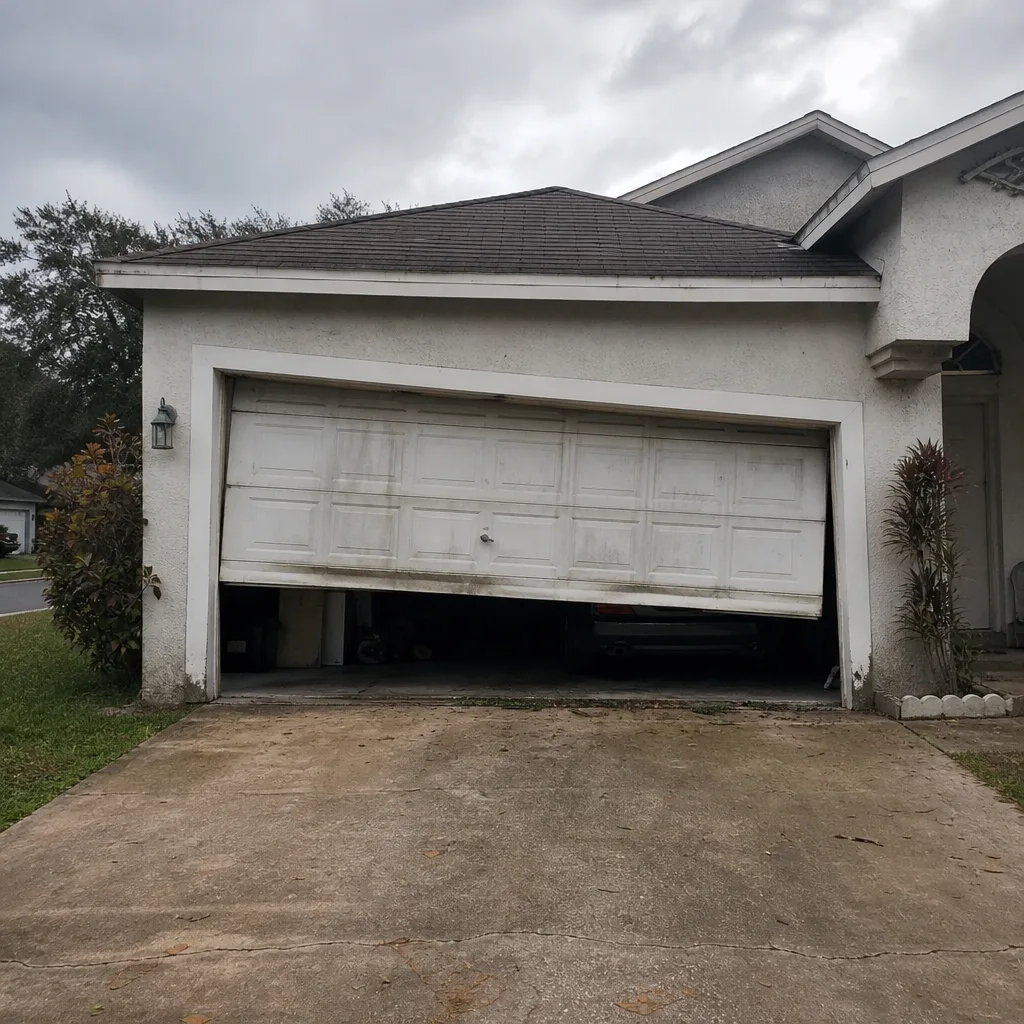
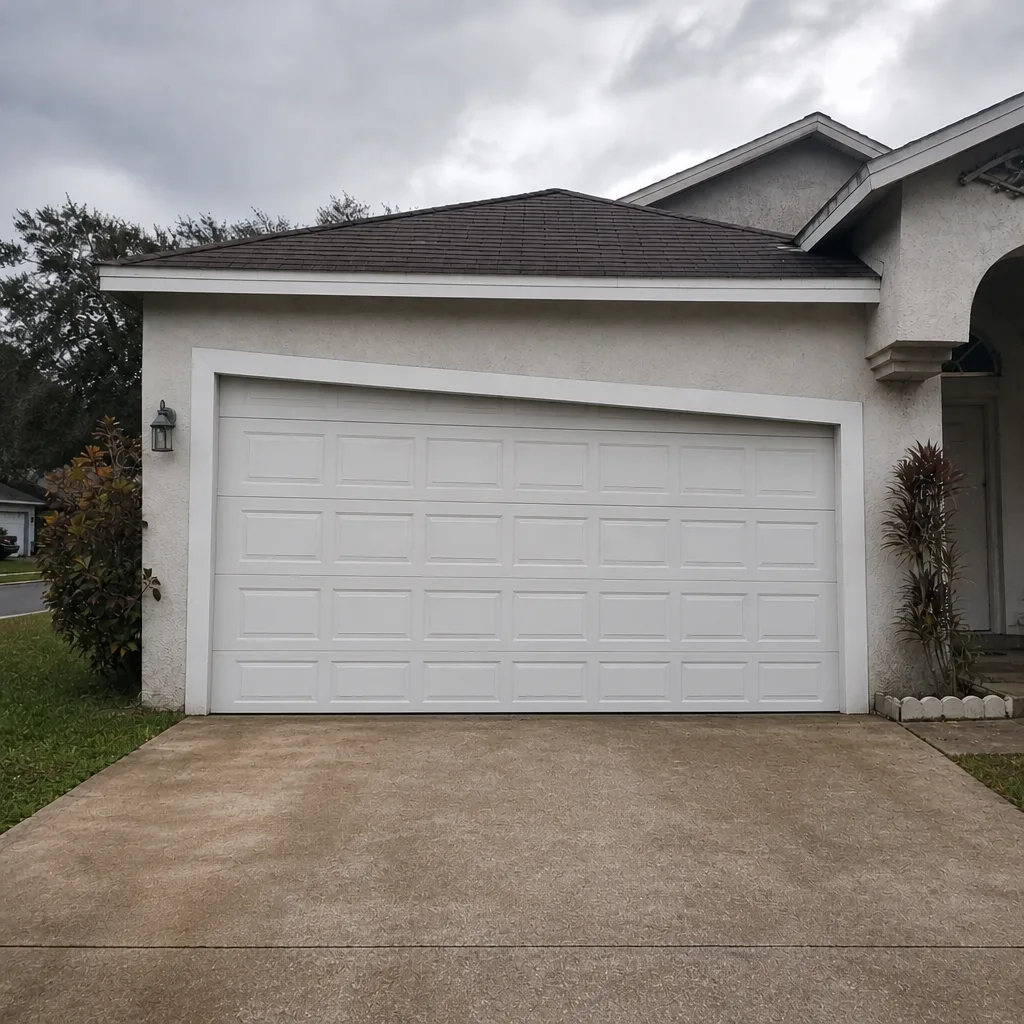
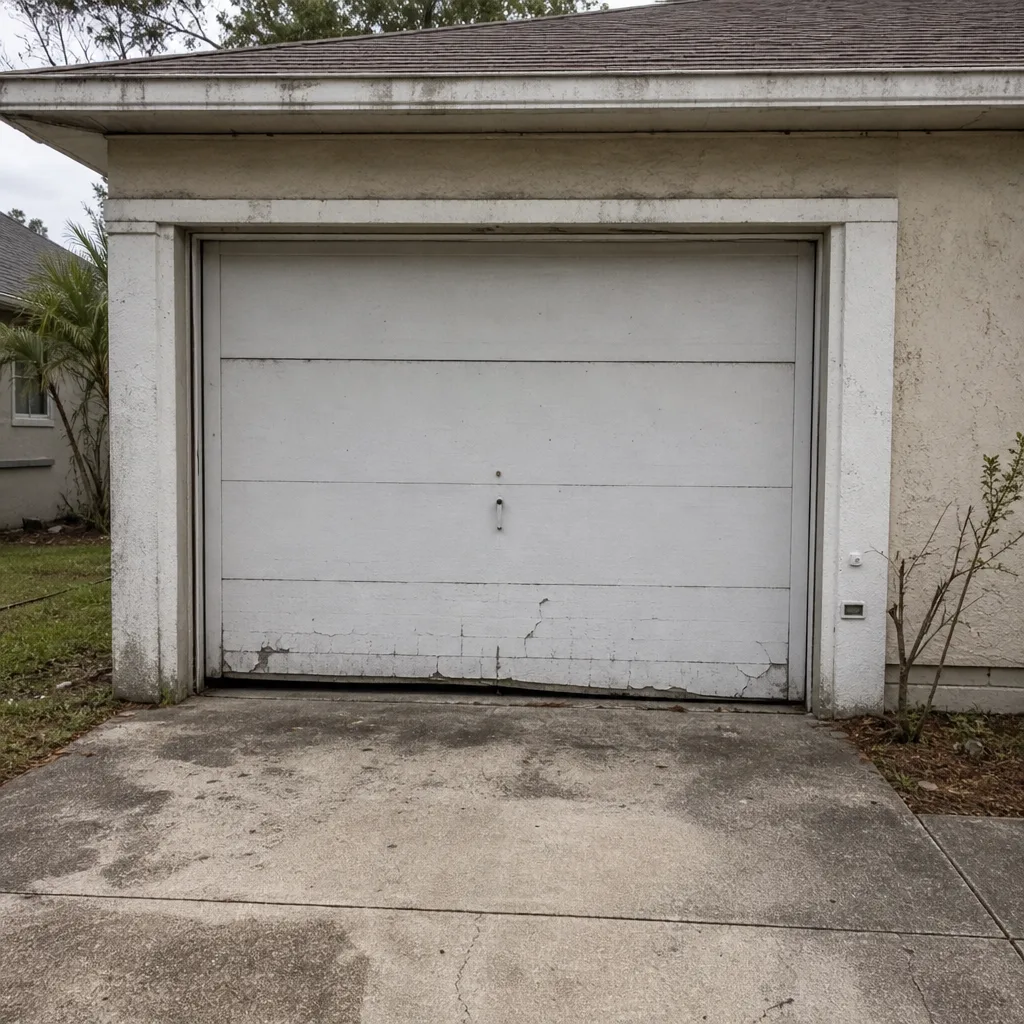
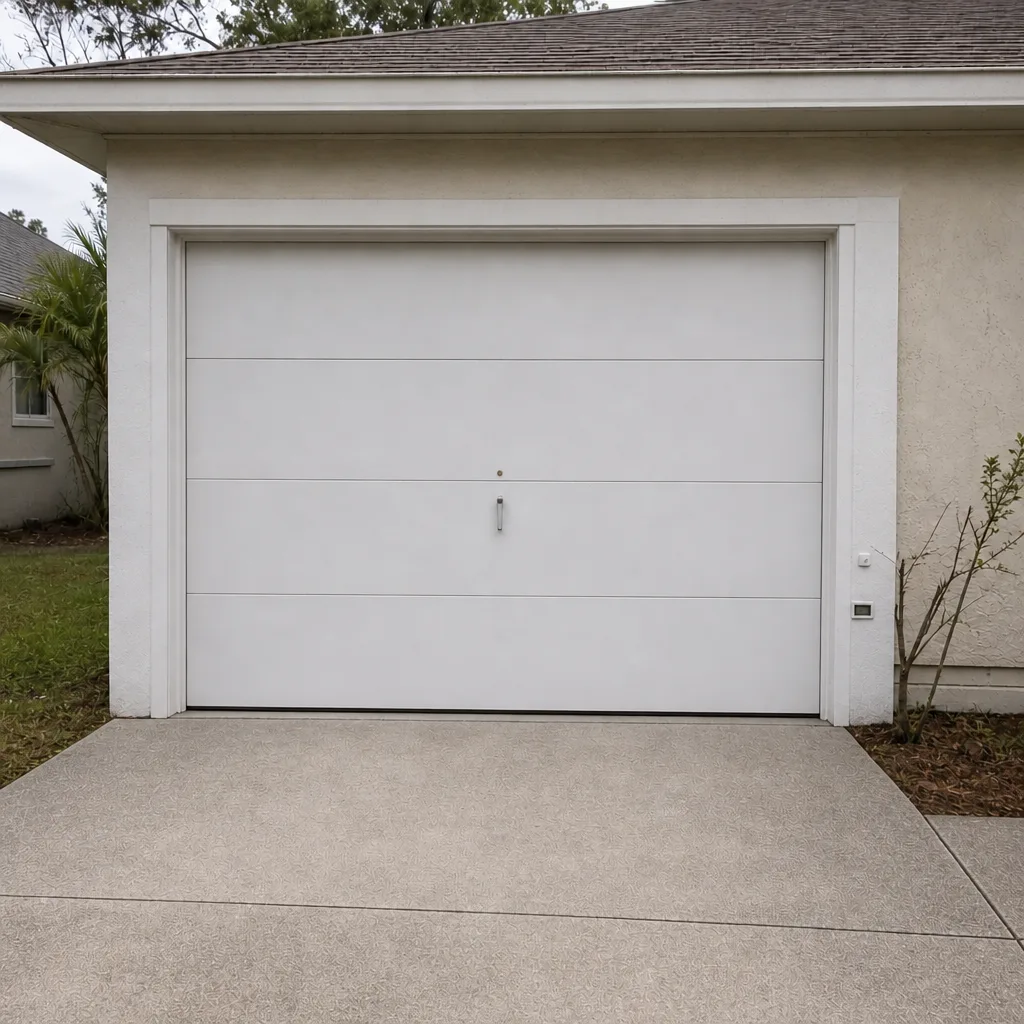
See the difference
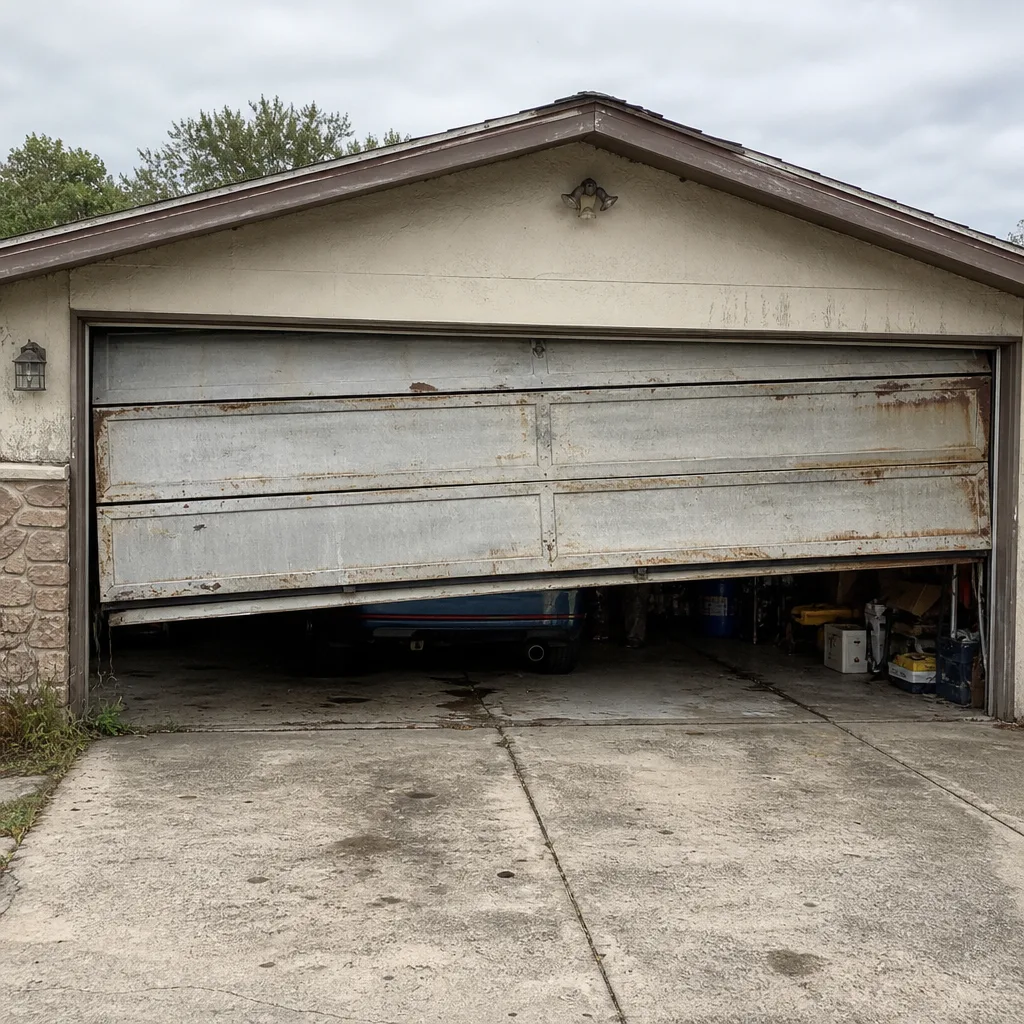 Before
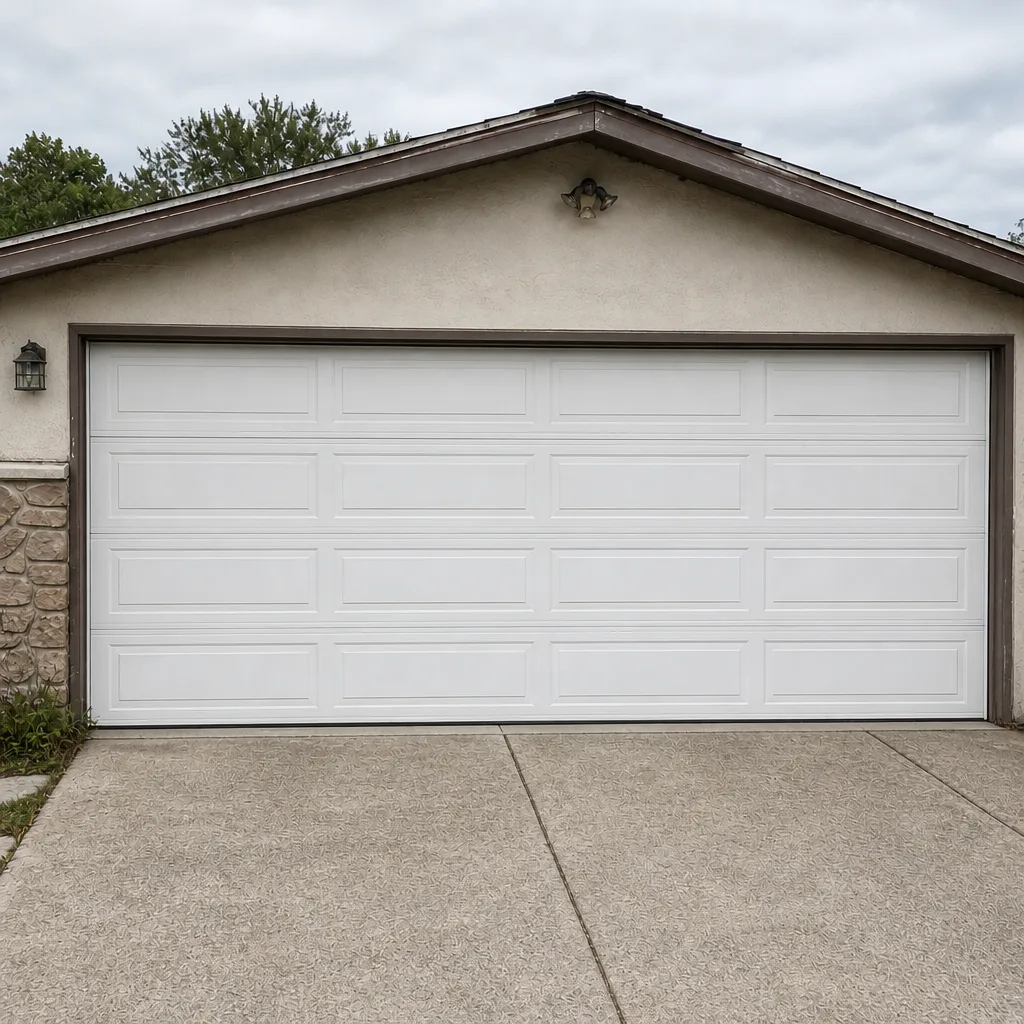 After
 Before
 After
 Before
 After
When to Call a Professional
Some jobs are yours: the release practice, the battery test, the photos, the label check. Others belong to a trained technician because the risk is real. Call when a door is hard to lift, when it won’t stay up on the release, when it’s come off its track, when the opener runs but the door doesn’t move, when a panel is torn from the frame, or when the opener got wet. Don’t try to adjust springs or force a damaged door. Each of those is a safety issue first and a repair bill second. We handle the door, the opener, and everything between them as one system, so you talk to one team instead of two contractors. If you’re not sure whether a problem is serious, call and describe it. Carrington Garage Door Repair offers free estimates in Spring Hill and serves homeowners through the Spring Hill area. Call (844) 560-6506 and we’ll help you figure out the next step.
Frequently Asked Questions
The four essentials are practicing the manual release so everyone in the house can open the door by hand, testing that your opener’s battery backup actually works, verifying your door’s wind rating, and photographing the door and its labels for insurance. Do the checks before the season starts and you cover the failures that leave a home stranded after a storm.
Sometimes. It depends on the model, not the brand. Many current LiftMaster and Chamberlain openers support it, some Genie models do, and Craftsman units vary widely. The only reliable answer is to check your opener’s model number. If your unit can’t take a backup, we’ll tell you that rather than sell you a battery that won’t fit. Call (844) 560-6506 for a look at your specific unit.
First check whether the power is actually out, and whether the opener has a working backup battery. If the power is out, use the manual release, lift or lower the door by hand, and re-engage when you’re done. If the door still won’t move when the power is on, stop forcing it and call a technician. Never touch the springs or cables to troubleshoot.
Think in cycles, not hours. Most backup systems are designed to open and close the door a handful of times on battery, enough to get the car out and secure things. They aren’t built to run the door repeatedly over a multi-day outage. That’s why the manual release still matters, and why testing the backup once a season is worth the minute.
We’re closed on Saturday. If a door fails on a Saturday, call us and we’ll book you into the next opening, Sunday through Friday from 7am to 7pm. The phone is answered 24/7, so a Saturday call gets a Sunday visit rather than a voicemail. Plan your pre-season checks for a weekday if you can.
Yes. Carrington Garage Door Repair works with licensed and insured technicians, and every price is quoted and agreed before any work starts. We give free estimates, so you’ll know the cost before we touch the door. Call (844) 560-6506 for an exact quote on your repair or installation.
The Bottom Line
Garage door storm prep isn’t a big project. It’s a practice pull of the release cord, a one-minute battery test, a label check, and a few photos with a tape measure. Those four habits cover the failures that strand a Spring Hill household after a named storm: a dead opener, a stuck door, an unrated door, and a claim that can’t be proven. Do them before the season, not during it. If any piece turns up a problem you can’t fix yourself, especially anything that touches springs, cables, or the opener’s electrical components, that’s a job for a qualified technician. Now is the time to call, while the weather is calm and the schedule has room.
Whether your opener needs a new battery backup, your door needs a repair, or you’re considering a wind-rated replacement, Carrington Garage Door Repair can help. Call (844) 560-6506 for a free estimate. We answer 24/7. Fast dispatch from 7am to 7pm, Sunday through Friday.
Written by the team at Carrington Garage Door Repair.